New clients! For a limited time, Get 13 Classes for $78 (only $6 per class)

General
Try These Stability Exercises for Long-Term Strength and Balance
June 29, 2026
We all have moments when our balance feels shaky — whether it’s pushing through a leg lift or standing on one foot to reach the top shelf at the grocery store. Spoiler alert: Building strong, stable muscles and joints isn’t just for older adults. Stability exercises are a powerful fitness tool for anyone who wants to move better, train longer, and prevent injuries over time.
In this blog, we’ll break down the why and how of stability work. We’ll cover:
- What are stabilizers, and why are they important?
- What’s the difference between active and passive stabilizers?
- How are balance and stability related?
- How often should you do stability training?
- Nine of our favorite stability moves from The Bar Method
First: What are the stabilizer muscles?
Put simply: Stabilizers are often overlooked but very important muscles. They are the deep, supportive muscles that keep joints steady and help you stay balanced while larger, primary muscles perform movements. Stabilizer muscles aren’t responsible for big, powerful movements; instead, they provide control, alignment, and injury protection. Think of them as built-in spotters for your working muscles.
Here’s how the stabilizer muscles make a difference:
-
- Shoulder stability: Shoulder stabilizers like the rhomboids, serratus anterior, rotator cuff, and middle/lower trapezius keep the joint in place while you lift or press.
- Glute and hip stability: Muscles like the gluteus medius, gluteus minimis, piriformis, and quadratus lumborum keep the pelvis level while walking or running.
- Core and back stability: Core stabilizers like the transversus abdominis, erector spinae, pelvic floor muscles, and diaphragm protect the spine during almost every movement.
- Foot and ankle stability: Muscles like the anterior and posterior tibialis, gastrocnemius, and soleus brace the feet and ankles during activities like walking, running, and jumping.
Going deeper: Active stabilizers vs. passive stabilizers
Your body relies on two types of stabilizer muscles, each playing a vital role in how you move and perform. These powerhouse muscles work together to keep you strong, balanced, and ready for action.
Active stabilizers are the muscles that keep your joints in line and control how you move. Think of the rotator cuff, gluteus medius, and those deep abs and spinal muscles. They’re always working behind the scenes to handle all the shifting and moving your body does.
Passive stabilizers are structures that don’t actively contract but still provide crucial support. These include the ACL, shoulder ligaments, hip ligaments, and spinal joint capsules. Their main job? Keeping your movements in check by limiting excessive motion during lifts and other activities.
Together, the active and passive stabilizers ensure efficient, safe movement and help prevent injury. Imagine conquering your barre class, smashing your weightlifting goals, or effortlessly carrying all your groceries in one go — you can do it all with the confidence that your body is fully supported.
Stability training: Building a strong foundation
Stability training is any exercise that improves your body’s ability to maintain control and balance. But it’s not just about strengthening your muscles — stability training is the foundation for a strong, resilient body, helping you move better, feel more powerful, improve your mind-body connection, and grow more confident from the inside out.
Stability training can take many forms, from bodyweight exercises to lifting weights to our personal favorite: barre. Barre targets stabilizer muscles through controlled, high-repetition, low-impact movements that require balance, alignment, and sustained engagement.
Balance and stability exercises: What’s the difference?
While there’s a strong connection between balance and stability, they’re not exactly the same:
- Stability: Your body’s ability to maintain control and resist unwanted movement during motion.
- Balance: Your body’s ability to maintain its center of gravity over your base of support (e.g., your legs or the barre), especially when standing, walking, or responding to shifts in position.
Stability provides the foundation for better balance, as your stabilizer muscles control the joints and core to keep your body upright and moving efficiently. Balance becomes weaker without stability, making movements less efficient and increasing your risk of injury. The good news: Regularly practicing barre helps improve both balance and stability.
How often should you do stability training?
For best results, we recommend doing a stability workout at least three to four times per week. This could be a workout finisher after a gym session or several Bar Method classes per week. (Hint, hint!)
How does barre target the stabilizer muscles?
Isometric holds, pulses, and small-range motions keep muscles like the gluteus medius, deep hip rotators, and core stabilizers active for extended periods. At the same time, one-sided and balance-focused exercises activate the stabilizers around the hips, ankles, shoulders, and spine to maintain proper alignment (examples include: foldover, arabesque, and standing pretzel).
Then, we take things a step further at The Bar Method. Every class is programmed by our expert instructors — along with a team of kinesiologists and physical therapists — to build full-body strength and target your deepest muscles (including the stabilizers) with every exercise.
This combination of precision, balance, and continuous muscle engagement leads to benefits like improved posture, increased joint stability, and better functional movement. That means you’ll stand taller, feel more resilient, and take your form and alignment up a notch — and we love that for you!
The 9 best stability exercises to watch for in barre class
Let’s look at a few examples of stability exercises that have been hand-picked by our barre experts to challenge your stabilizer muscles in the studio — and strengthen them for life outside the studio.
1. Kickstand RDL
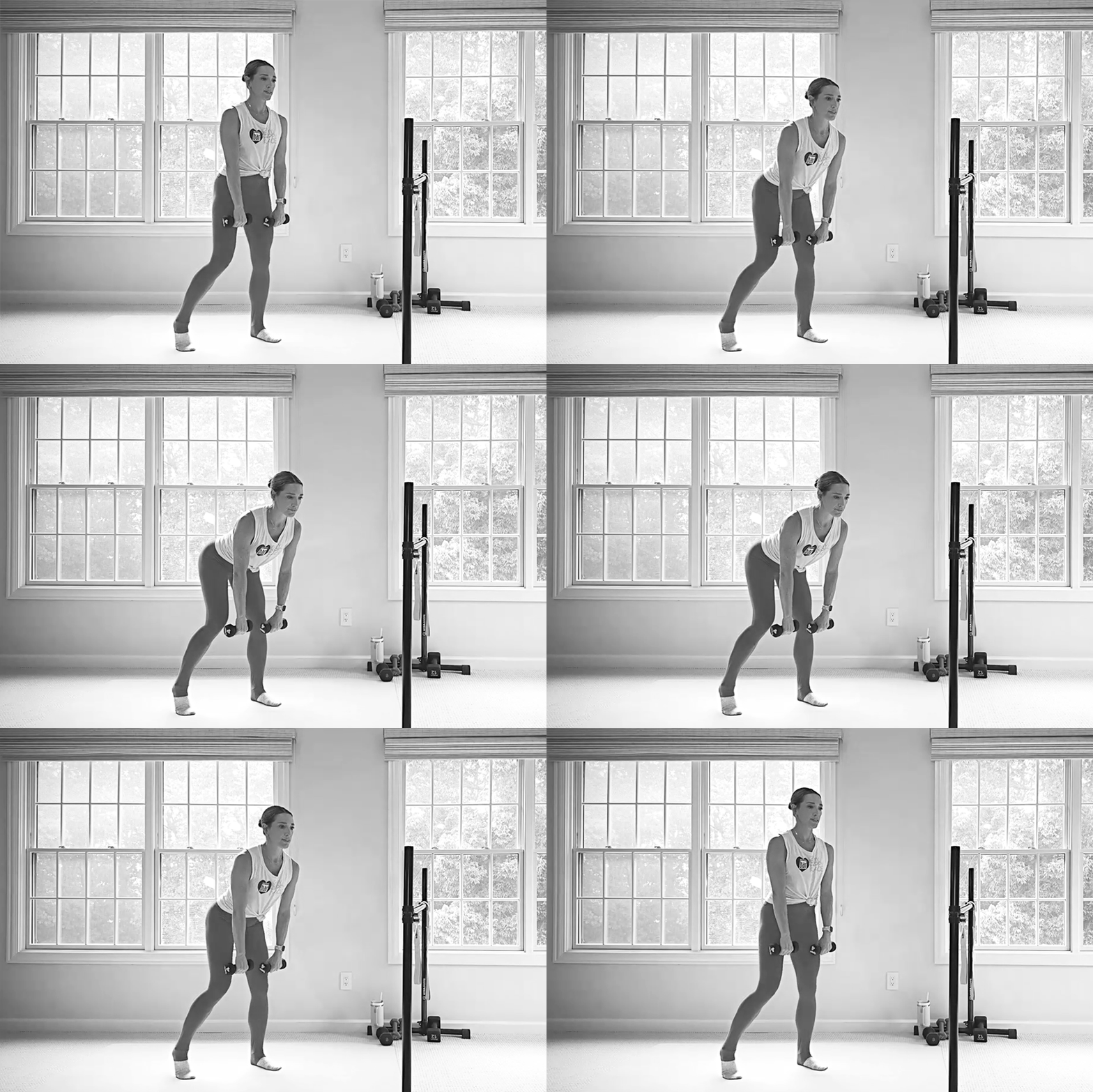
How to:
- Pick up a set of weights that challenges you without sacrificing form and stand with your feet hip-width apart.
- Step one foot back a few inches with the ball of your foot on the floor to maintain balance.
- Shift your weight to your opposite leg, keeping your knee soft. Place your palms on top of your thighs.
- Keep your core engaged and hinge your torso forward, allowing the weights to travel down your legs.
- Continue to hinge forward at a slow, controlled pace, then squeeze your glutes to stand back up.
- Perform for up to one minute, then switch legs.
Challenge option: Once you’ve mastered the hinge movement, you can add a variety of arm exercises like upright rows, bicep curls, and reverse fly lifts.
2. Floor zinger with opposite arm extended
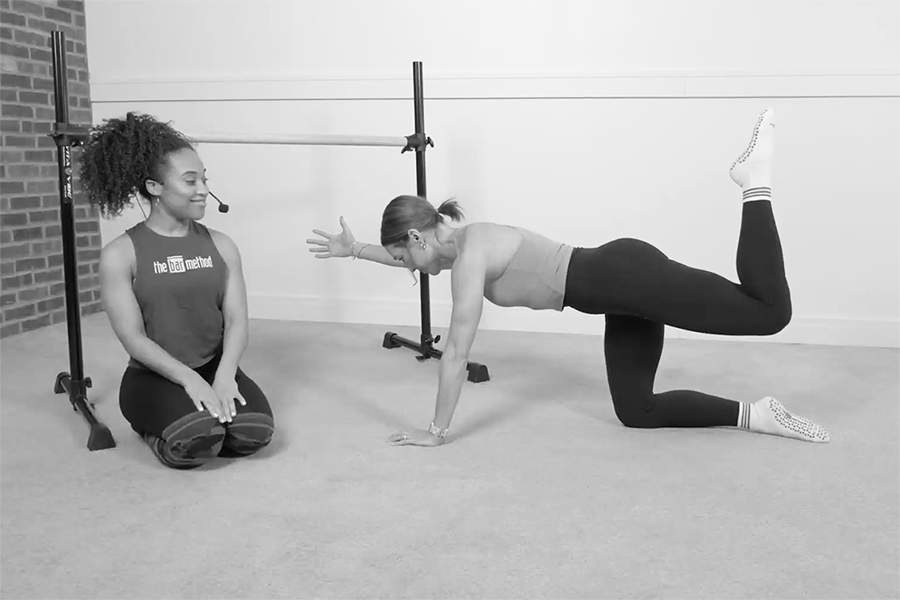
How to:
- Come onto your hands and knees, keeping your hands under your shoulders and knees under your hips.
- Raise one leg behind you to hip height.
- Center your body weight and draw your abs inward to support your back.
- Perform small leg lifts at varying tempos to engage your glutes.
- Work your way up to 1 minute per side, then stretch your hamstrings when you’re done.
Challenge option: Extend your opposite arm forward to deepen the core engagement.
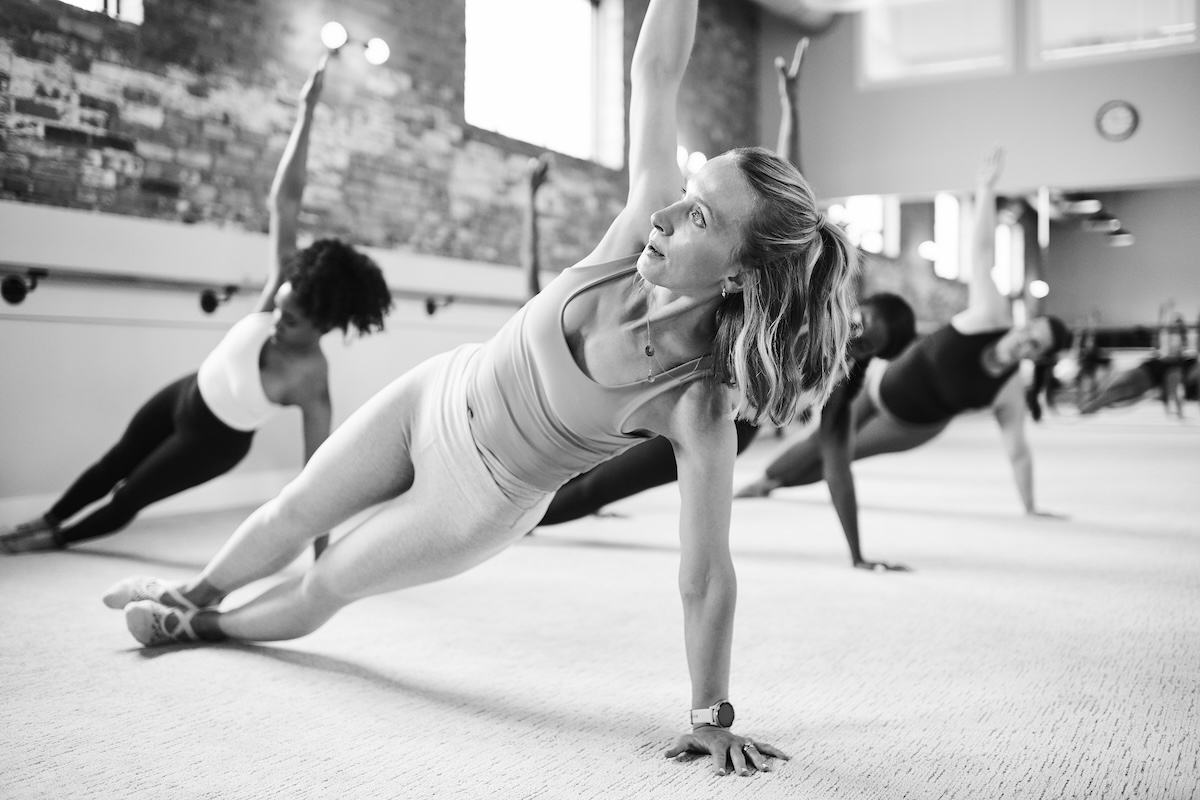
3. Side plank
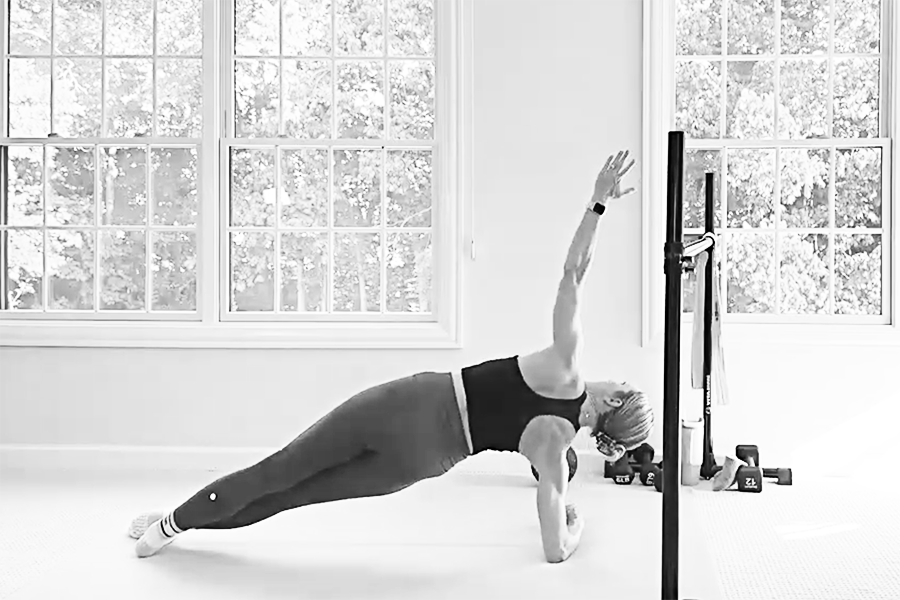
How to:
- Lie on your side with your legs straight out and stacked on top of one another. For more stability, cross your ankles.
- Rise onto your forearm, keeping your elbow stacked under your shoulder.
- Use your forearm and legs to lift your hips until your body is in a straight line. Pull your abs in to support your core.
- Hold for 30-60 seconds per side.
Modification: If keeping your legs extended causes discomfort or hinders your form, side plank on your knees instead.
4. Walking plank
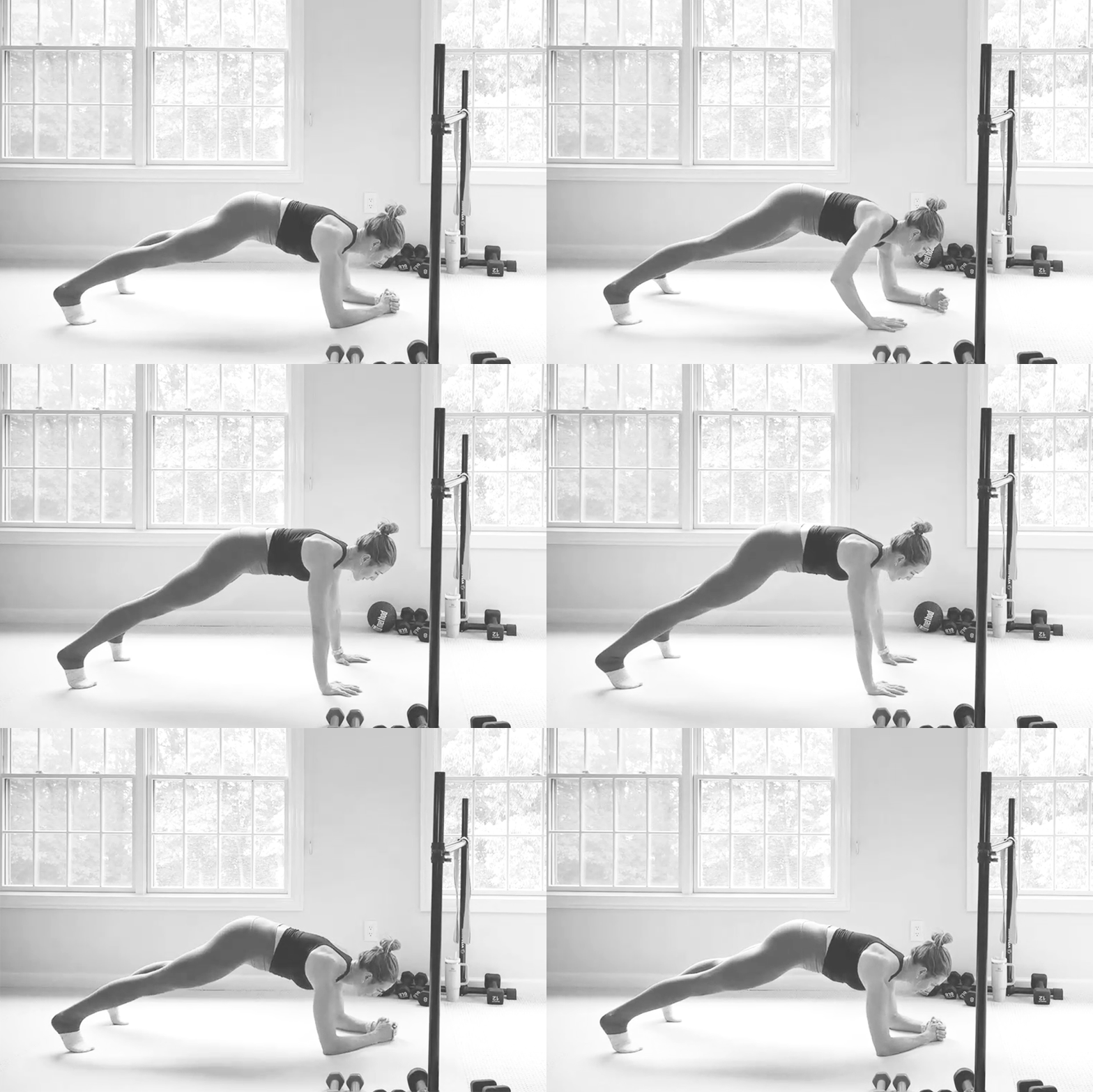
How to:
- Get set up in a forearm plank on your knees or the balls of your feet.
- From there, come into a straight-arm plank by extending one arm under your shoulder, then extending the other arm.
- Hold for five counts.
- Come back to your forearm on your leading arm, then lower to your other forearm to return to the forearm plank position.
- Hold for five counts.
- Repeat five times, alternating the lead side each time.
Challenge option: Perform this plank series on the balls of your feet.
5. Forearm plank slides with slider
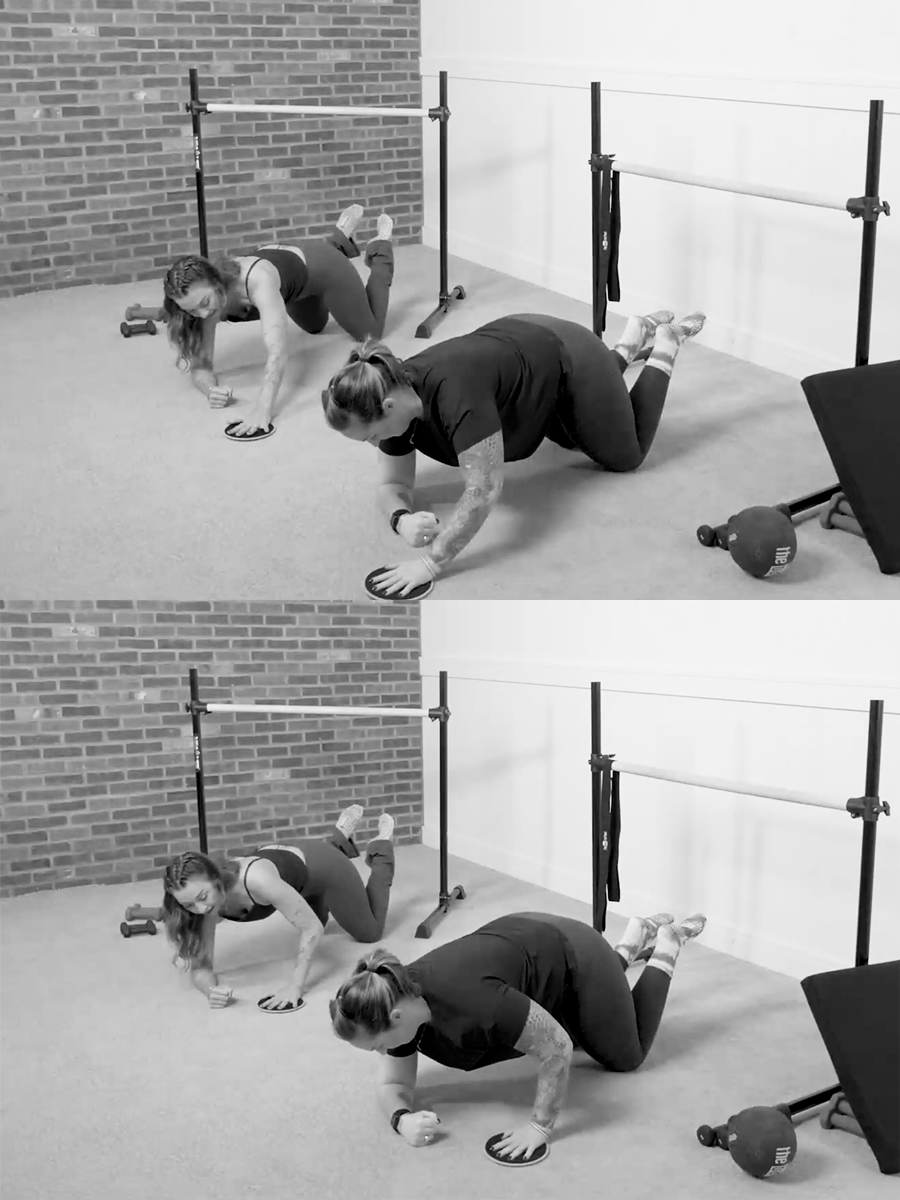
How to:
- Get set up in a forearm plank on your knees or the balls of your feet. Keep your legs slightly farther than hip-width apart to add stability.
- Place one hand on a slider and apply pressure to engage your upper back. Stay on your forearm on your non-working side.
- Extend your arm to move the slider forward, then bring it back below your shoulder. Use slow, controlled movements and consistent pressure throughout the exercise.
- Repeat for five to 10 reps, then switch to the other arm. Rest between sides if needed!
Challenge option: Perform this plank series on the balls of your feet and apply firmer pressure into the slider.
6. Flatback curl table top
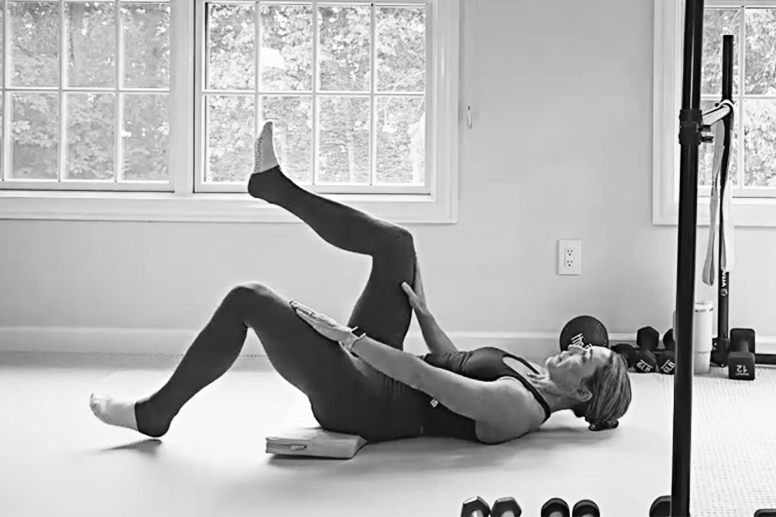
How to:
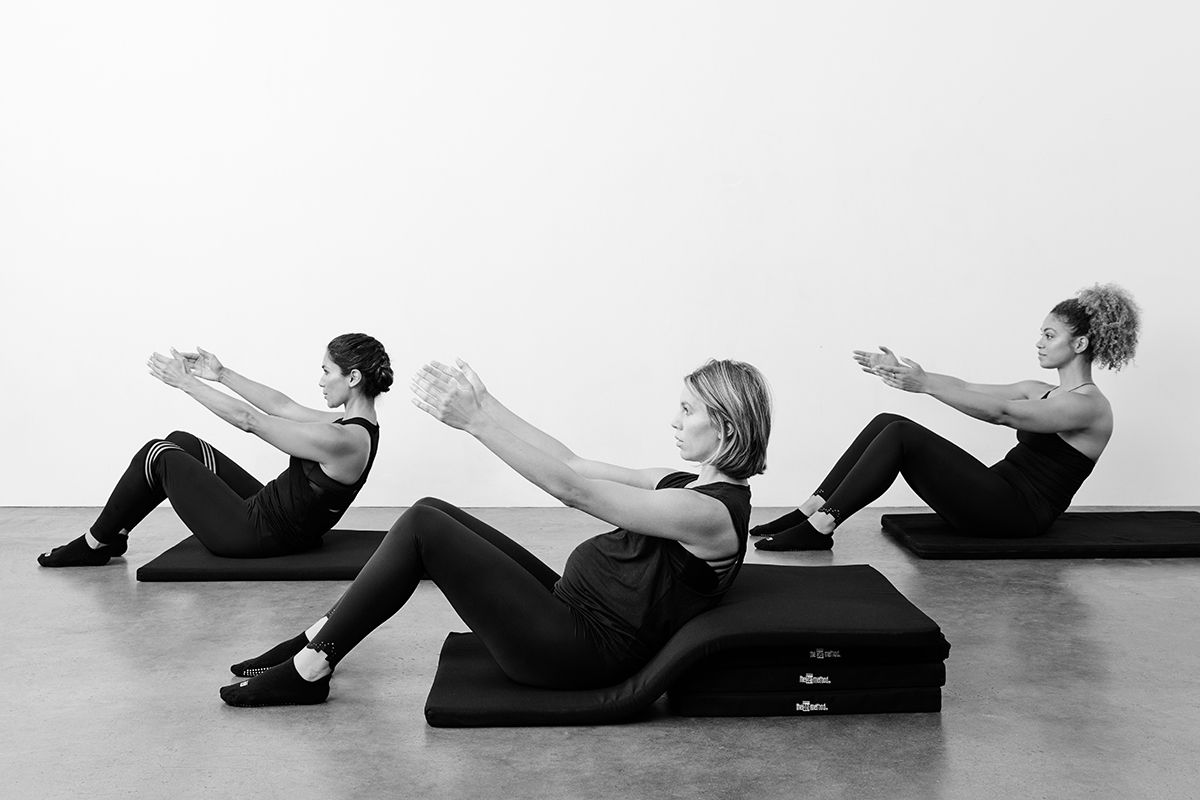
- Lie down and place a small mat under your glutes.
- Extend your legs over your hips and keep them hip-width apart. Bend your knees to 90 degrees and flex your feet.
- Pull your abs in to secure your lower back and create a pelvic tilt.
- Keep your head down and press your hands into your thighs.
- As you lower one leg, reach your same-side arm overhead as far as is comfortable for your shoulder, then return to the starting position.
- Alternate sides as you focus on your breath and pelvic tilt.
- Perform up to three sets of 10 to 20 reps.
Challenge option: Lower each heel closer to the floor, but only if you can keep your pelvic tilt!
7. Weighted tilted lateral lunge
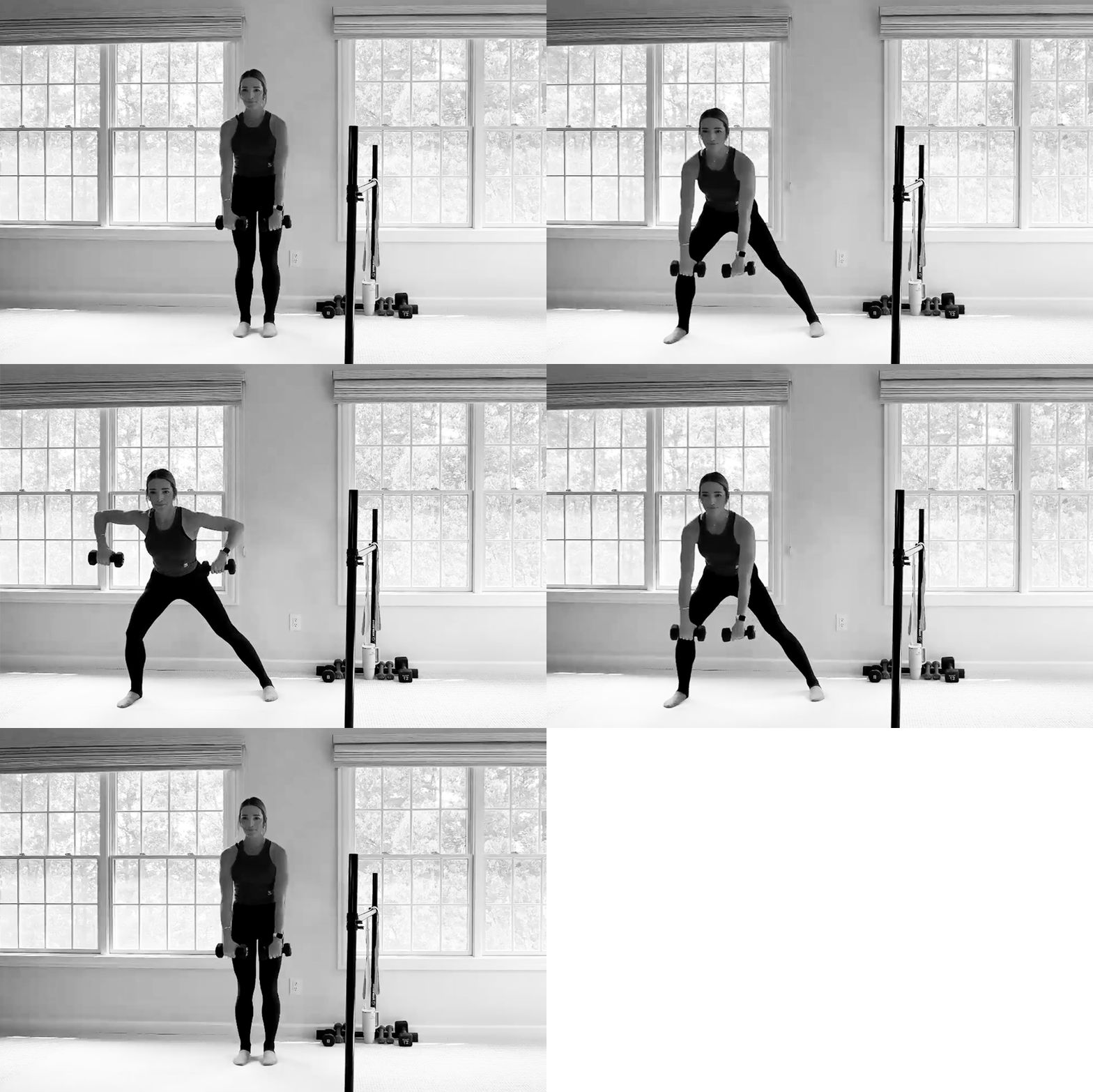
How to:
- Pick up a set of weights that challenges you without sacrificing form and stand with your feet together and arms at your sides.
- Step your right foot a few feet out to the side and hinge your torso slightly forward as you bend your right knee.
- Press off the ball of your right foot to return to standing.
- Repeat and perform at a slow, controlled pace for about one minute before switching to the other side.
Challenge option: Once you have the lunge movement down, add an upright row. Step out to a lunge and row your weights to your shoulders, bending your elbows at a 90-degree angle and keeping them close to your body. Lower your arms as you stand.
8. Back dancing
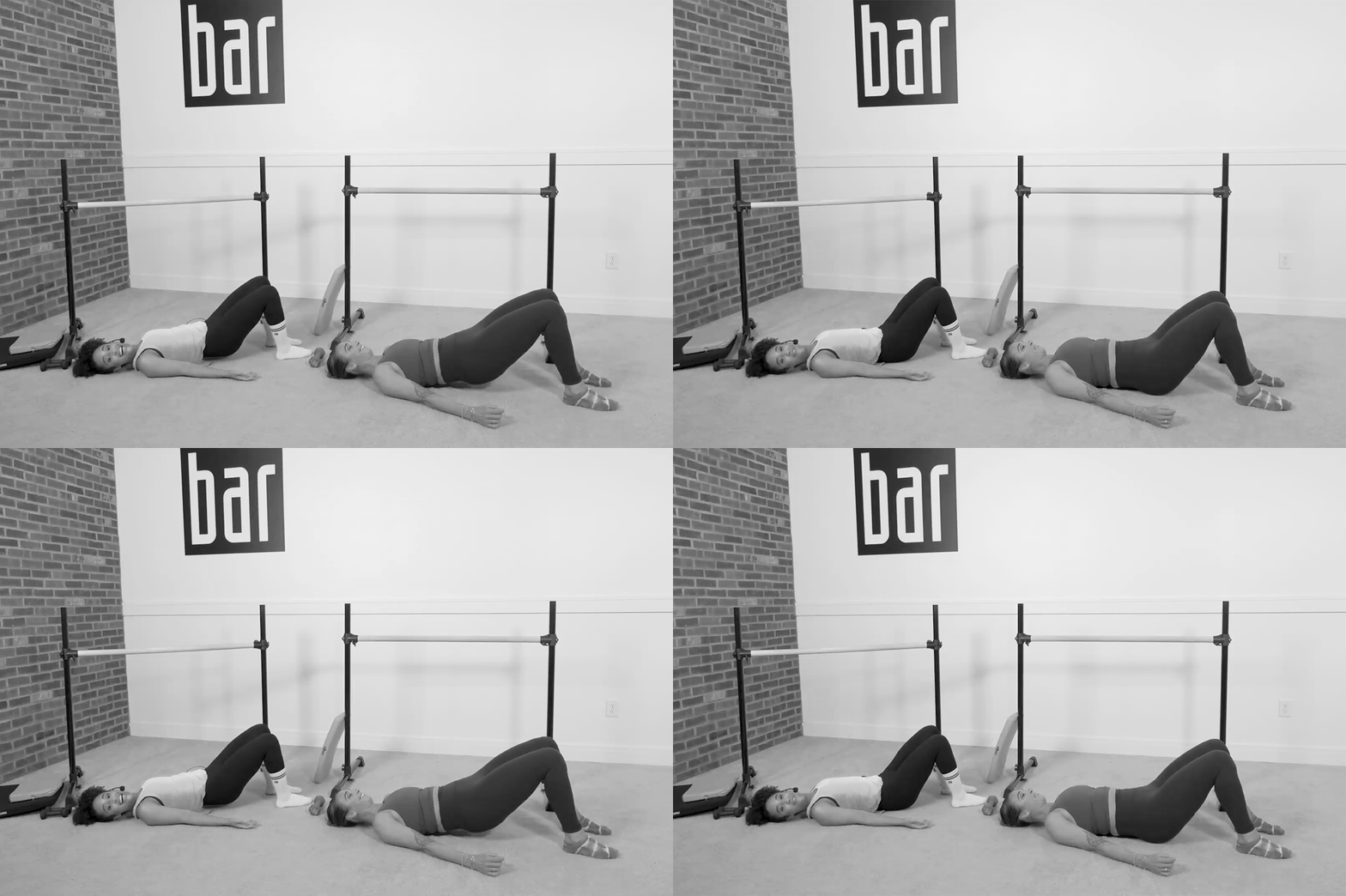
How to:
- Lie on your back.
- Bend your knees with your feet flat on the floor, hip-width apart.
- Press your ribcage down and lift the rest of your torso off the floor using your glutes. Lift and lower your glutes rhythmically up and down, tapping the floor each time.
- Continue for two to four minutes.
Challenge option: Lengthen your legs to decrease the leverage of your feet on the floor.
9. Foldover dead lifts
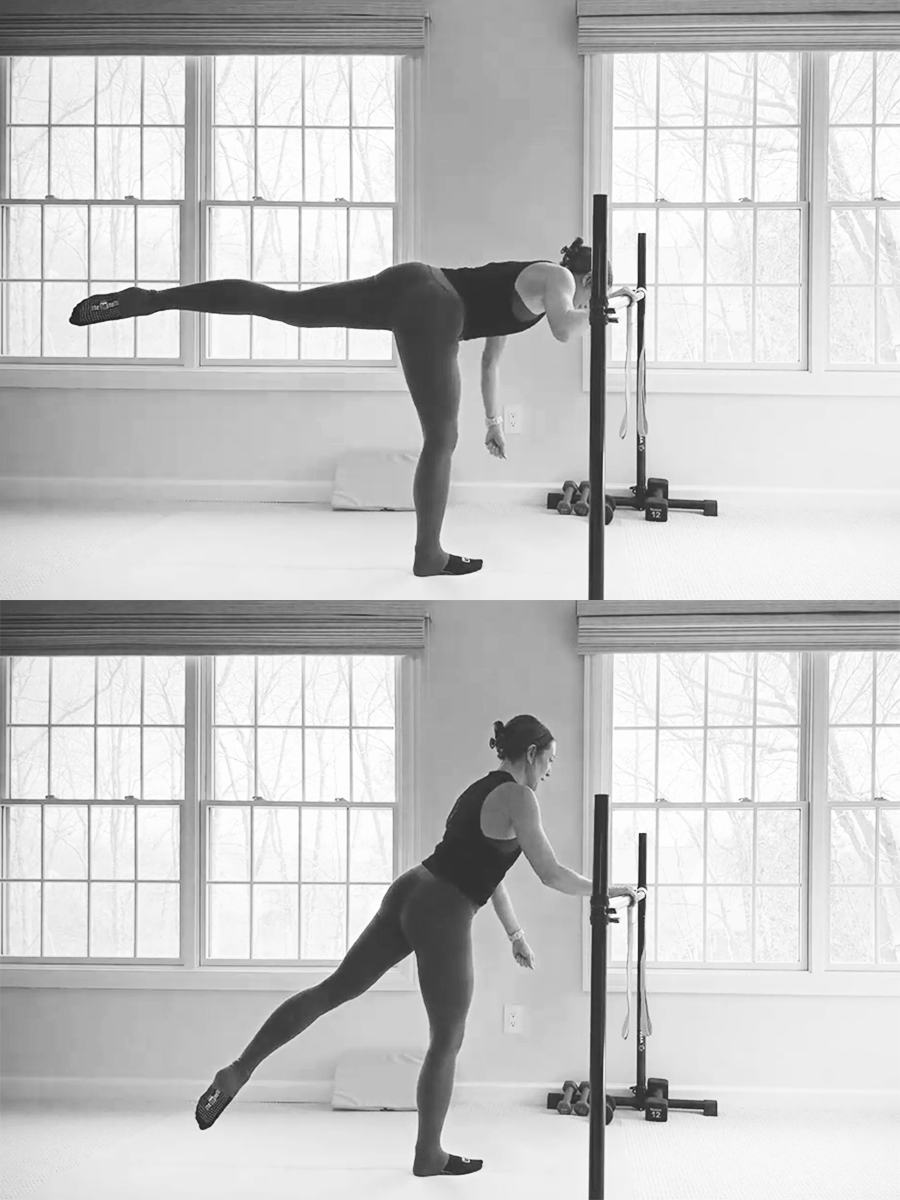
How to:
- Turn diagonally toward your support and stand an arm’s length away. Keep your feet hip-width apart and soften your knees.
- Place your hands comfortably on your support and hinge forward until your back is nearly horizontal.
- Rest the foot farthest from your support on the floor and exhale to pull your abs in.
- Raise your leg to seat height and extend the same arm toward the floor, aligning it under your shoulder.
- Raise your torso an inch while your leg lowers down an inch (think of this movement like a seesaw). You should feel this in your standing leg and glute.
- Perform for 30 seconds, then reset your hands on the bar and repeat twice on the same side.
- Repeat all reps on the other side.
Challenge option: Concentrate on keeping your ribs level with the floor and your abs pulled in.
Build stability, build strength for life
Increased stability doesn’t just help you maintain balance at the barre or develop stronger muscles — it’s your ticket to feeling stronger and more resilient for life. That’s where our Method fits in.
Each exercise in our classes is designed to engage your largest muscle groups, but rest assured your stabilizers are always working behind the scenes to provide a strong foundation for every movement.
That’s no coincidence! Our team of kinesiologists and physical therapists vet every movement, so whether you’re a dedicated member of our community or supplementing your fitness routine with barre, you know you’re getting the most efficient and powerful results — and ultimately building a stronger you.
More fitness tips you’ll love
- Achieving Together: Benefits of Working Out in a Group
- What to Eat Before a Workout: How to Fuel Your Next Bar Method Class
- How Does Barre Help With Posture?
- The Essentials of Muscle Healing
Ready to add barre stability exercises to your fitness routine and level up your strength? Find a studio near you to get started.