New clients! For a limited time, Get 13 Classes for $78 (only $6 per class)

The Method
Unlock the Benefits of Flexibility (Like Balance & Longevity) With Barre
March 1, 2019
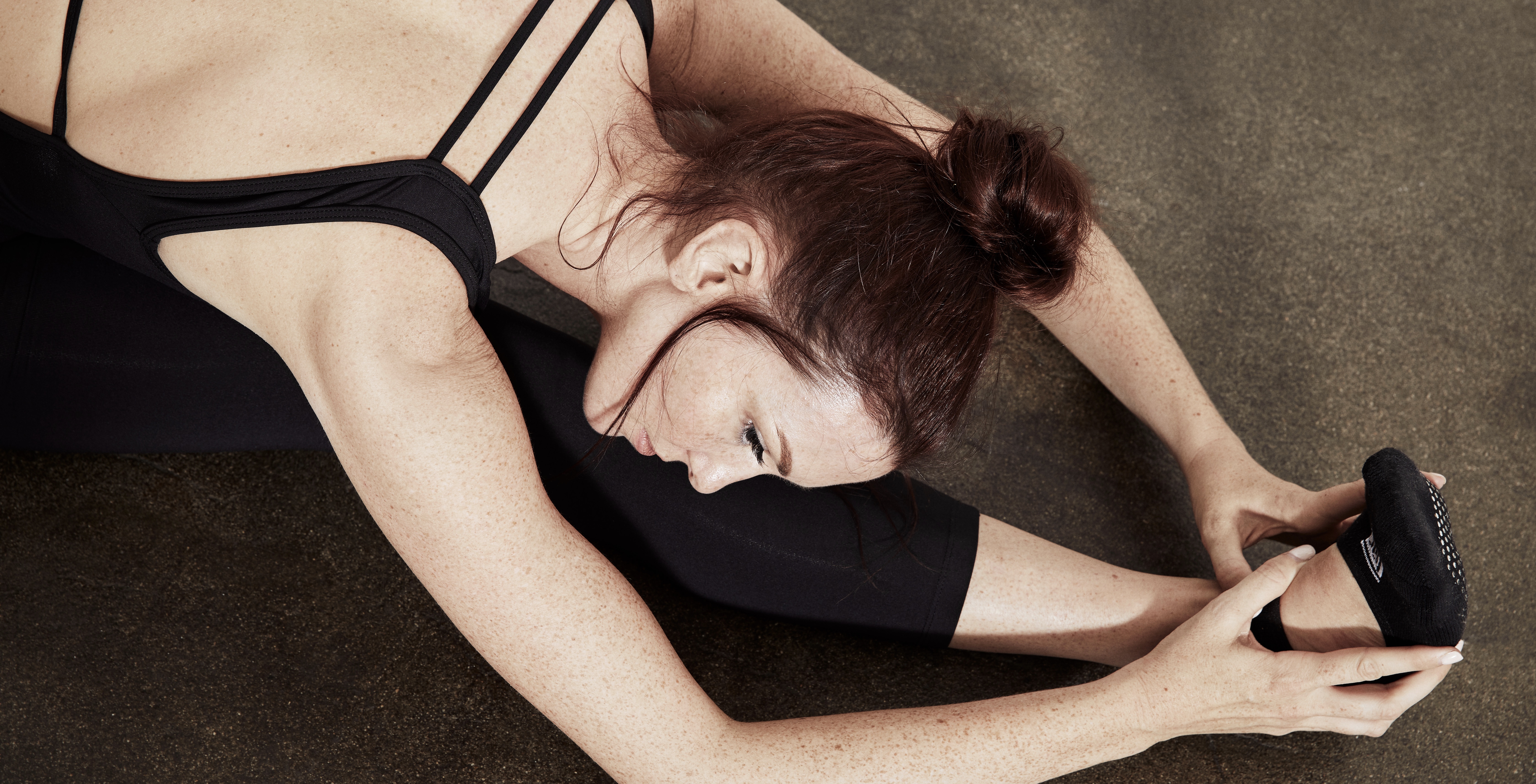
Often when it comes to fitness, flexibility and stretching are overlooked pieces of the puzzle. (We get it — it can be tempting to jump right into a workout!) With barre, these key practices are built into the workout, making stretching feel engaging while the benefits of flexibility become a consistent part of your routine.
Ultimately, flexibility is about more than how far you can reach — it’s about improving how your body moves, recovers, and performs. When strength and flexibility come together through barre, it creates a balanced, efficient approach to fitness that enhances results while improving your overall well-being.
Let’s explore:
- Why is flexibility important? (Can’t-miss benefits)
- What to know about the relationship between strength and flexibility
- Three ways barre classes promote flexibility
- Tips for focusing on flexibility during barre classes
- Flexibility improvements you’ll notice after doing barre classes consistently
Benefits of flexibility for your overall health
Flexibility is a practical tool for maintaining and advancing strength, supporting functional ability throughout life (allowing you to do other types of physical activities like running and swimming for longer), and more. Let’s take a look at three ways flexibility plays an important role in overall health and well-being:
Supporting muscle health
Strength training shortens and stiffens muscles over time when not supplemented with flexibility training. According to Harvard Health, these tighter, shorter muscles can lead to lower back pain and can also pull on other nearby parts of the body.
Improving flexibility helps restore the optimal muscle length and joint range of motion, which allows strength to be expressed more effectively and safely. The results? It can improve your performance, control, and efficiency in both training and daily movement.
Promoting longevity
Flexibility is also essential for longevity and quality of life along the way. Tight or imbalanced muscles place excess stress on joints and connective tissue, increasing the risk of stalled progress and overuse injuries — which can cause pain and potential complications, according to Johns Hopkins Medicine.
Preventing these is crucial for preventing and reducing day-to-day pain, and maintaining flexibility also supports healthier alignment, balanced muscle recruitment, and consistent training. Research has even shown that flexibility is linked to a lower risk of premature death.
Enhancing balance and coordination
Finally, flexibility enhances balance and coordination, making strength more functional and controlled. Strength paired with mobility improves stability, body awareness, and movement confidence. These are all key factors for sustaining performance and independence both in and out of the barre studio. (Think: Going on that hike or joining that beach volleyball game.)
Understanding the relationship between flexibility and strength
In any conversation around stretching and flexibility, strength also comes into play. Rather than choosing to focus exclusively on one or the other, the two go hand in hand, and are interdependent in order to achieve the maximal benefit each has to offer.
Without flexibility, strength has limitations in terms of how effectively force can be produced and controlled. This is because restricted range of motion reduces movement quality, while also increasing stress on joints and connective tissue. Over time, this can cap workout performance and increase injury risk.
At the same time, flexibility without strength lacks stability and control. Muscles need strength to support joints, maintain balance, and translate mobility into functional movement.
When flexibility and strength are trained together, they enhance one another, allowing the body to move powerfully, efficiently, and with greater resilience over the long term.
3 ways barre classes promote flexibility
Every barre class and studio is different. At The Bar Method, our approach to flexibility is rooted in science and designed to complement your strength training. By prioritizing proper alignment, incorporating a variety of proven stretch techniques, and using contract/release methods to maximize results, classes are designed to help you safely and steadily increase your range of motion.
Here are three ways barre promotes flexibility in a way that supports your strength and overall fitness:
1. Safety is the ultimate priority (preventing over-stretching)
Overstretching or poor alignment can trigger a protective stretch reflex, causing the muscle to contract in order to protect itself and the surrounding ligaments and joints. To make sure you stretch safely, our Method adheres to education and guidelines around stretching and proper alignment, provided by physical therapists. We also typically hold stretches for a short amount of time, based on the recommendation of exercise physiologists, to allow muscles to begin to relax and lengthen.
2. We use a variety of research-backed stretch techniques
The Bar Method uses three kinds of stretches, each of which plays a unique role in making you more flexible.
The first stretch technique is known as “contract/release.” (It also has a long scientific name, “proprioceptive neuromuscular facilitation” or “PNF” if you’re interested.) This type of stretch typically has you alternating between passive and active stretches, which we’ll cover next. (Examples of these alternating stretches that you’ll come across in class include round-back and curl.) Most of our exercises involve actively strengthening one area and then actively stretching the area. This type of stretching tends to be the most practical and beneficial way to improve flexibility.
Another stretch technique used in barre classes is called passive stretching. You perform a passive stretch when you use a force other than the body part itself to do the work of stretching. Depending on the stretch, this outside force could be a ballet barre, the floor, or your hand (for example, during “standing quad stretch”).
The third type of stretch is called active stretching. Experts say that this is the most effective way to increase flexibility. You do an active stretch when you contract the muscles on the opposite side of a limb or your torso. When you’re strengthening a muscle group during a barre class, you’re also sometimes actively stretching the muscles on the opposite side.
A few examples of Bar Method active stretches are: “kneeling seat” or “standing seat” (these stretch your quads and hips) and “round-back” with both hands pressed up under the bar (this stretches your hamstrings and glutes).
3. Stretching happens throughout class to target all muscles
Last but not least, our Method gives you many chances throughout class to stretch each muscle group. This is because muscles don’t release all at once — instead, they require repeated stretches as they become increasingly warm and more exhausted, allowing them to fully relax and extend.
By the end of a Bar Method class, you will have performed, among other stretches, 10 to 11 hamstring stretches and nine to 10 hip and quad stretches. That’s enough to make a significant difference in your flexibility!
Bonus tip: Once you’re familiar with certain stretches learned in barre classes, you can continue practicing them at home. We recommend daily stretching durations of just a few minutes to start building consistency with this practice.
What founder Burr Leonard has to say about barre and flexibility
If you say the name Burr Leonard to long-time Bar Method members, chances are they’ll give you major heart eyes. (Burr Leonard is the founder of our well-loved Method.)
After being introduced and falling in love with Lotte Berk’s barre classes, Burr reworked the exercises in collaboration with physical therapists. Their goal? Making the workout safer on the joints and sustainable for daily practice.
In Burr’s words, here’s exactly why The Bar Method supports a greater range of flexibility:
“Life tightens your muscles. Walking and jogging tighten your hamstrings by repeatedly contracting them. Sitting for long hours holds your hip-flexors in a shortened position. Lack of movement and wearing high heels tend to stiffen your back and ankles. If your goal is to become more flexible, life is not making it easy!
“A good stretch class like The Bar Method can reverse life’s tightening effect. (Yes, The Bar Method is a stretch class — and it is the best one I know!) Years ago, Bar Method classes enabled me to achieve a full split after years of trying unsuccessfully in yoga classes.
“The Bar Method’s strength exercises are, in fact, just what make it so effective at increasing flexibility. The strength work warms up and exhausts muscles right before you stretch them, thereby preparing them to release more deeply.”
How to focus on flexibility during exercises in barre class
Now, let’s put these ideas into practice. To focus on flexibility during barre class, prioritize proper form and alignment over depth or intensity. Staying within a range where you can maintain control and engagement allows muscles to lengthen safely and effectively, rather than forcing a stretch.
Breath and awareness also matter. Slow, steady breathing helps reduce unnecessary tension, while paying attention to how your body feels encourages supported, intentional movement that builds flexibility alongside strength.
To assess whether you’re at your limit, focus on how a stretch feels in your body rather than chasing a visual of where you think you should be. In a hamstring stretch, for example, some barre students will easily bring their hands to the floor while others hold the bar. Both of these are “correct,” as long as you feel manageable tension in the backs of your legs while maintaining proper alignment.
See and feel the difference: What you’ll notice when training for flexibility
With consistent flexibility training, barre students often notice easier, more fluid movement in daily life (think: reaching, bending, and twisting feel smoother). Muscles also feel less tight after long periods of sitting or activity. In addition, improved flexibility can help with balance and coordination, making walking, lifting, or carrying objects feel more controlled and stable.
These changes also show up during class as better posture, greater range or depth in exercises, and more precise alignment. You may find yourself able to engage muscles more effectively, move with more confidence, and perform movements that previously felt restricted, all while reducing tension and strain on joints.
When will you notice flexibility improvements from barre exercises?
With consistent barre classes, some people begin to notice that this improves range of motion and reduces muscle tightness within two to four weeks. Early progress often shows up as feeling less restricted in everyday movements or being able to ease deeper into stretches.
More meaningful, lasting flexibility improvements (where you can move with greater control, balance, and joint freedom) typically develop over at least six to 12 weeks of regular practice. Because The Bar Method combines small, controlled movements with active stretching, these gains build gradually but sustainably, supporting both strength and long-term mobility.
Key takeaways: Achieve balance and strength with the power of flexibility
Flexibility isn’t just an add-on to your fitness routine — it’s a vital component of strength, balance, longevity, and health. The Bar Method seamlessly integrates flexibility training into every class, making it both effective and enjoyable.
Here’s a quick recap of the key takeaways:
- Flexibility enhances strength by improving muscle recovery, range of motion, and movement efficiency.
- Barre combines strength and flexibility, creating a balanced approach that supports long-term performance and reduces injury risk.
- Our Method prioritizes safety and alignment, ensuring stretches are effective and controlled.
- Contract/release stretching techniques used in barre are practical and highly effective for improving flexibility.
- Consistent barre practice delivers results, with noticeable improvements in flexibility, balance, and mobility over time.
Ready to put the benefits of flexibility into practice? We look forward to seeing you in the studio!
Start your journey to a stronger, more flexible you — book a class with The Bar Method today!