New clients! For a limited time, Get 13 Classes for $78 (only $6 per class)

The Method
Want to Unlock Flexibility? Try Active Stretching With Barre
April 30, 2026
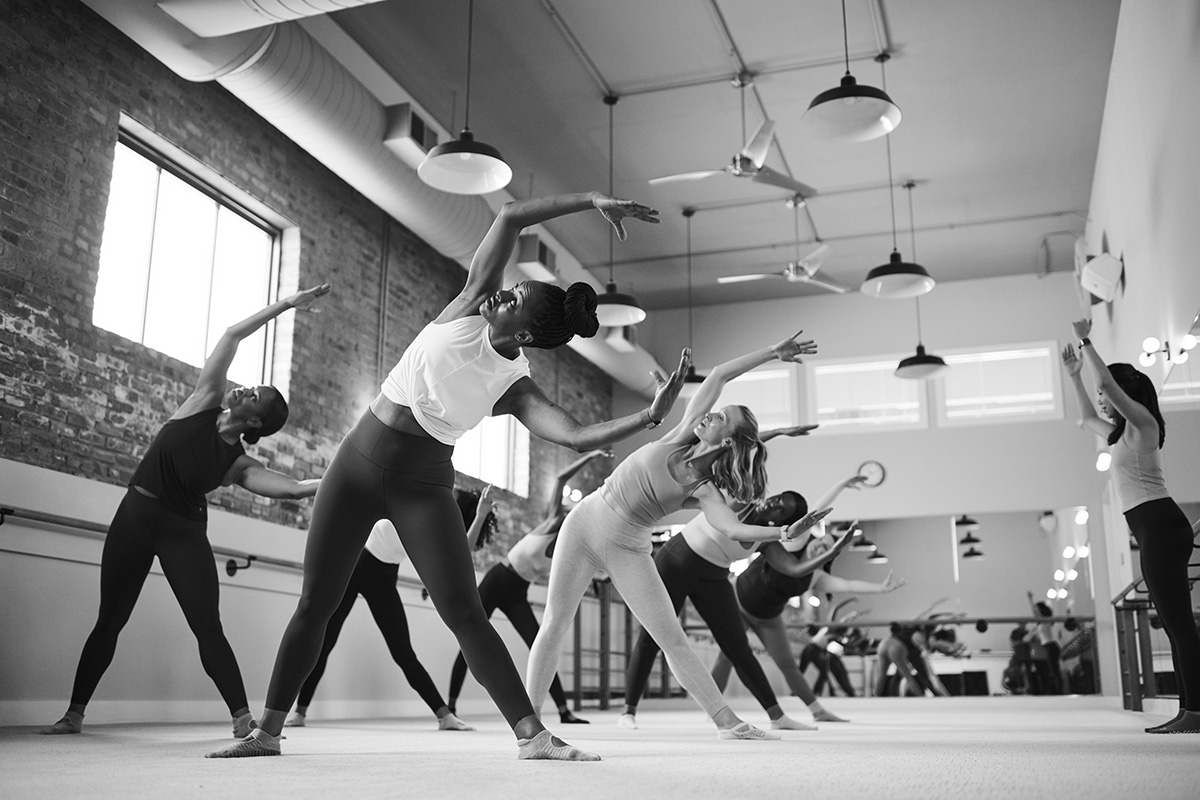
When it comes to improving flexibility and mobility, we all know that stretching is key. If your mind has wandered to a steaming hot yoga room filled with people holding poses for what feels like forever, we’re here to tell you there’s a different way. It’s called active stretching (aka dynamic stretching), and it can give you the gains of a more traditional, long-hold stretching while providing other surprising benefits as well.
Active stretching is about using your own muscles to hold a stretch, keeping them engaged every step of the way — and it’s built into Bar Method classes. This approach builds strength and boosts flexibility simultaneously, improving your range of motion, control, and stability in the process. The result? You’ll level up what you’re capable of in the barre studio, and daily activities become a breeze. Let’s dive in deeper.
In this blog, we’ll cover:
- What is active stretching (aka dynamic stretching)?
- Passive stretching (aka static stretching) vs. active stretching
- What to know about functional stretching
- Types of stretching exercises found in barre classes
- Active stretching examples to try
What is active stretching?
Active stretching, also known as dynamic stretching, is a type of stretching where you use your own muscles to hold a stretch without the assistance of your hands, equipment, or another person. In active stretching, the muscle opposite the one being stretched (called the antagonist) contracts to help lengthen the target muscle. This enhances the strength of the opposing muscle group at the same time.
An active stretch is 50% stretch and 50% strength, so it’s actually a workout for the entire body part you’re stretching. Be advised that this kind of stretching is intense! You’ve likely seen it before: Dancers do it when they extend one leg upward and hold, a move that helps give their legs astounding strength and control, as well as their famously elongated, sculpted muscles and amazing flexibility.
How does active stretching promote flexibility and functional ability?
Active stretching not only feels good — it also promotes flexibility and functional strength by combining muscle engagement with controlled movement. It’s distinctive from other moves because you’re holding a part of your body at or near the edge of its current range of motion the whole time.
Incorporating active stretching into your workout, just as dancers do, gives you benefits that are absolutely worth the effort. For starters, it promotes:
- Increased agility and grace in your movements.
- Improved athletic performance.
- A leaner, more streamlined body.
- Reduced likelihood of injuring yourself and experiencing pain (this is because short muscles make you more vulnerable to strains).
Passive vs. active stretches: How to tell the difference
Now that we’ve covered active stretching, let’s talk about its counterpart. Most workouts rely on a common stretching technique called passive stretching, also known as static stretching, which works only to a point.
You stretch passively when you hold the stretch position in place with a force, such as your own body (e.g., hands), a partner, a ledge, gravity, or a prop like a strap or barre. You may be familiar with common passive stretches such as grasping a foot behind you to stretch your quads, placing one leg up on a ledge, and sitting in a straddle position. Passive stretches definitely play a role in making you more flexible, and all good workouts include some version of them.
But before you jump in, it’s worth noting that passive stretching is not necessarily enough on its own. Here’s why: Passive stretches don’t warm up the muscles enough for them to relax deeply. They also don’t give muscles sufficient control over any increased range of motion you might gain by doing them.
This is why a workout that includes only passive stretches can leave you feeling “loosey-goosey” or not any more flexible than you were before. (The good news is that active stretching can complement passive stretching!)
So, what’s the real difference between passive and active stretching? The main difference lies in who or what provides the force that holds the stretch. In active stretching, you use your own muscles to hold the stretch. The muscle opposite the one being stretched (the antagonist) actively contracts to hold the position. There’s no external help (no hands, props, or partner support). In passive stretching, an external force holds the stretch for you. The stretched muscle is relaxed and not actively working.
How active stretching shows up in barre classes
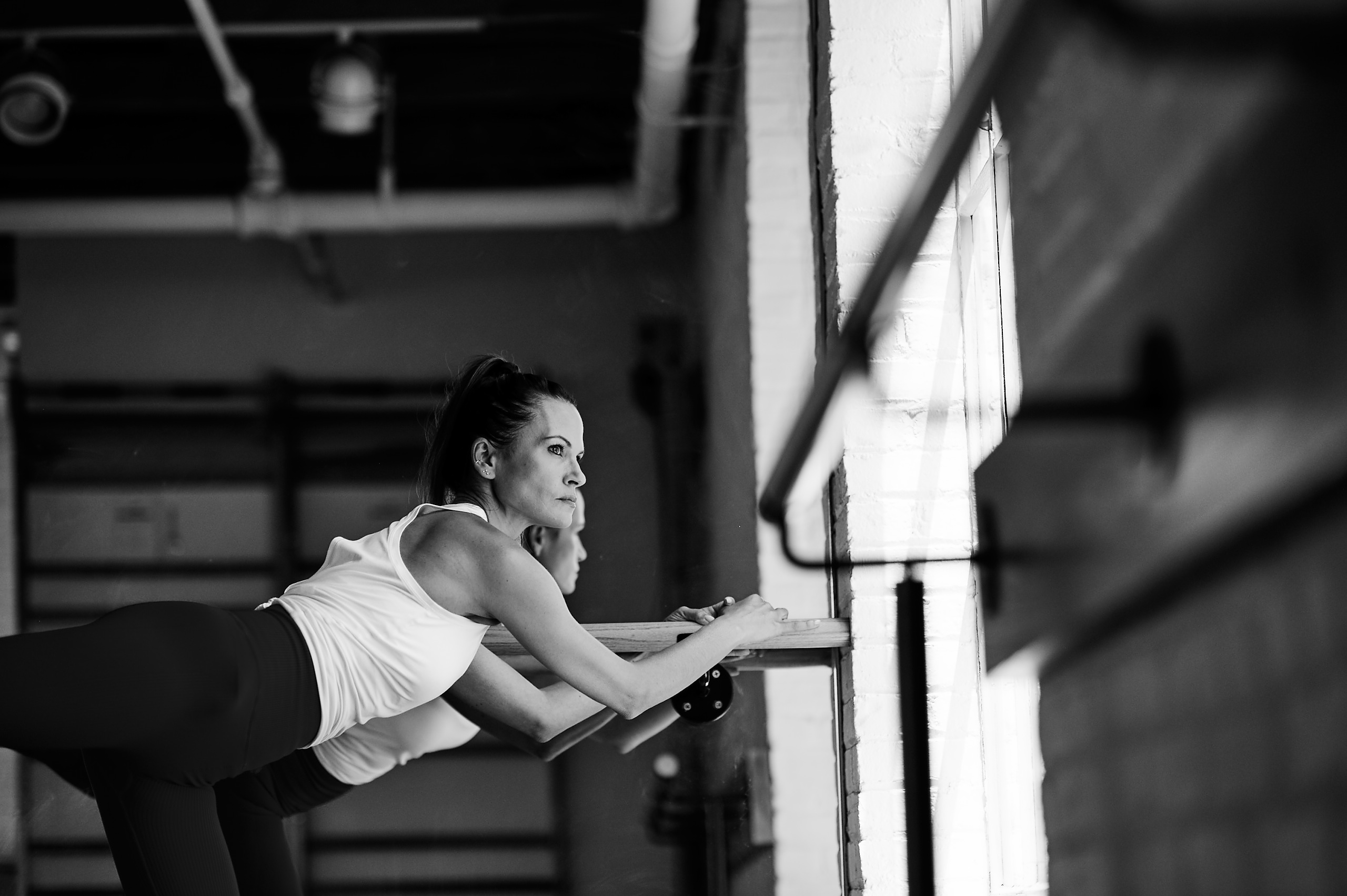
Active stretching is woven throughout Bar Method workouts (and is key to building both flexibility and control). In barre, these stretches are often integrated into small isometric movements (think: thigh work, seat work, and contouring exercises like round back — see the examples below).
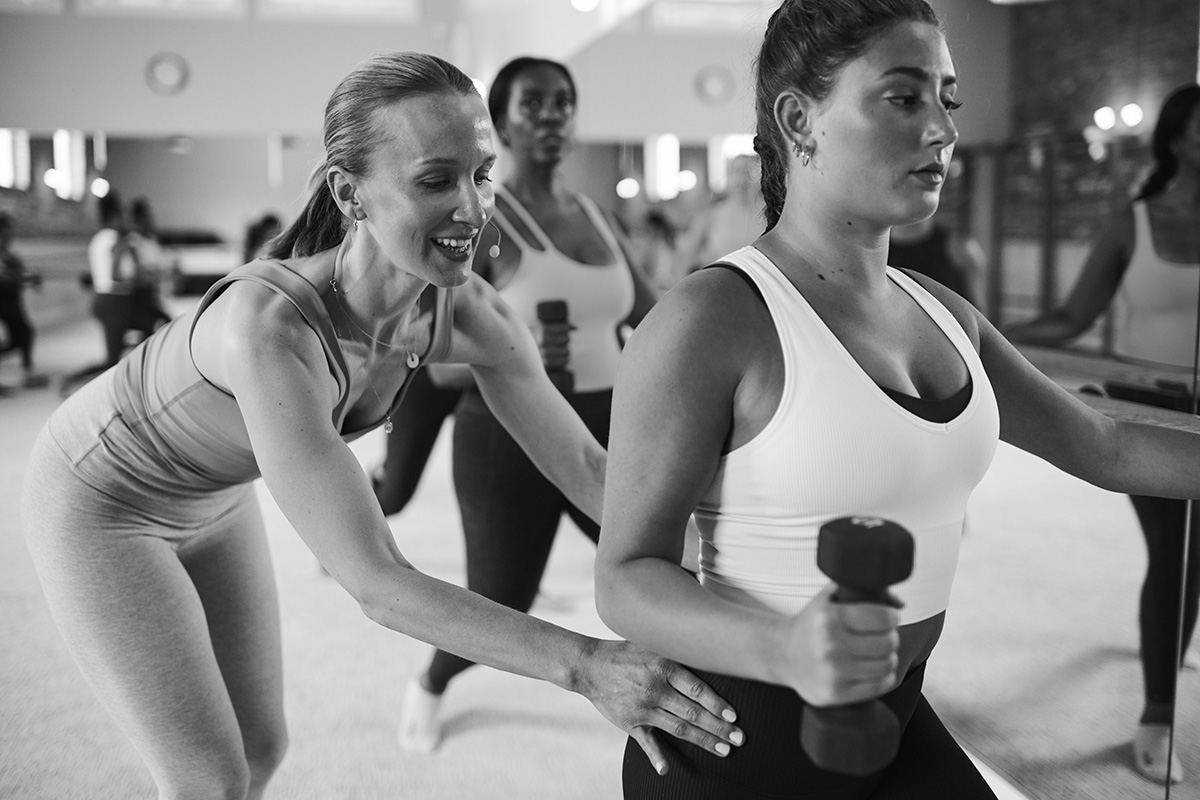
Here’s why these active stretching exercises found in Bar Method classes are so effective: They’re strategically placed in the sequence when the body is already efficiently warmed up. Each exercise is meticulously set up for results, and instructors are trained to help members maintain proper form. This ensures the exercises are both safe and effective, leading to improved functional strength and flexibility with every class — plus a little dopamine boost!
Benefits of active stretching (future you will thank you!)
Active stretching builds beautiful, strong muscles today, with serious benefits that spill over into the future you, too. Active stretching improves long-term mobility and quality of life by building a foundation of strength, control, and flexibility that supports how your body moves in daily life. Unlike passive stretching, which simply lengthens muscles, active stretching teaches your body how to move better (not just feel looser). That means doing exercises today will train your body to be its healthiest for years to come. Intrigued? Here are just a few more active stretching benefits to love:
- Builds strength at the end range of motion.
- Improves active mobility.
- Enhances neuromuscular control and balance.
- Supports joint health.
How to keep your body safe while stretching
When practicing active stretches, proper form, body awareness, and instruction are important to keep your body safe. While active stretching has many benefits, there are a few things to note for safety and awareness:
- Active stretching has limited stretch depth compared to passive stretching, since you are using your own muscular strength to hold a stretch.
- Since active stretching involves sustained muscle contractions, it can lead to muscle fatigue (compared to passive stretching).
- Unlike passive stretching, active stretching is not ideal for cool downs since it is actively utilizing the muscle, rather than allowing the muscle to relax and recover.
Flexibility exercise examples from The Bar Method
Ready to put active stretching into practice, to boost your flexibility and enhance long-term quality of life? Let’s get into it, with step-by-step instructions for three Bar Method exercises: leg lifts, round back, and second position thigh.
1. Leg lifts
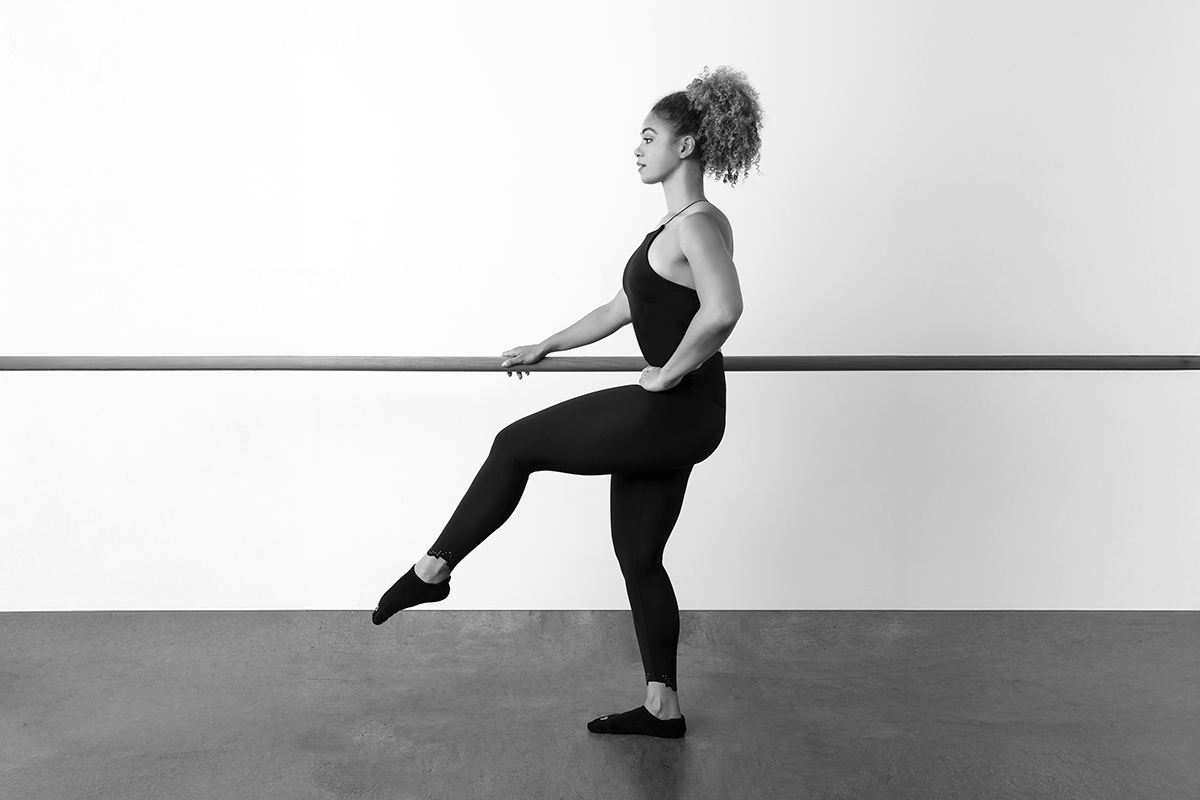
These exercises contract the quadriceps while actively stretching the hamstrings.
How to:
- Stand on profile (with one side parallel) to your support (barre, countertop, back of a sturdy chair).
- Place your feet in a parallel stance and soften your knees.
- Extend your leg farther from your support in front of you and use your quad to raise it up to a challenging height. (The height is not important, but the feeling is! If you feel your hip flexor engage or your posture suffers, work with your leg at a lower height.)
- Lift your leg up one inch and down at varying tempos for up to 30 seconds. Reset your foot down between sets. Repeat two to three times and follow immediately with a stretch before turning around to do the other side.
Note: To transition into standing quad stretch, hold onto the foot/ankle of the leg just worked using your same-side hand. Soften your standing knee and tuck under. Keep your knees close to provide a stretch along your working quad.
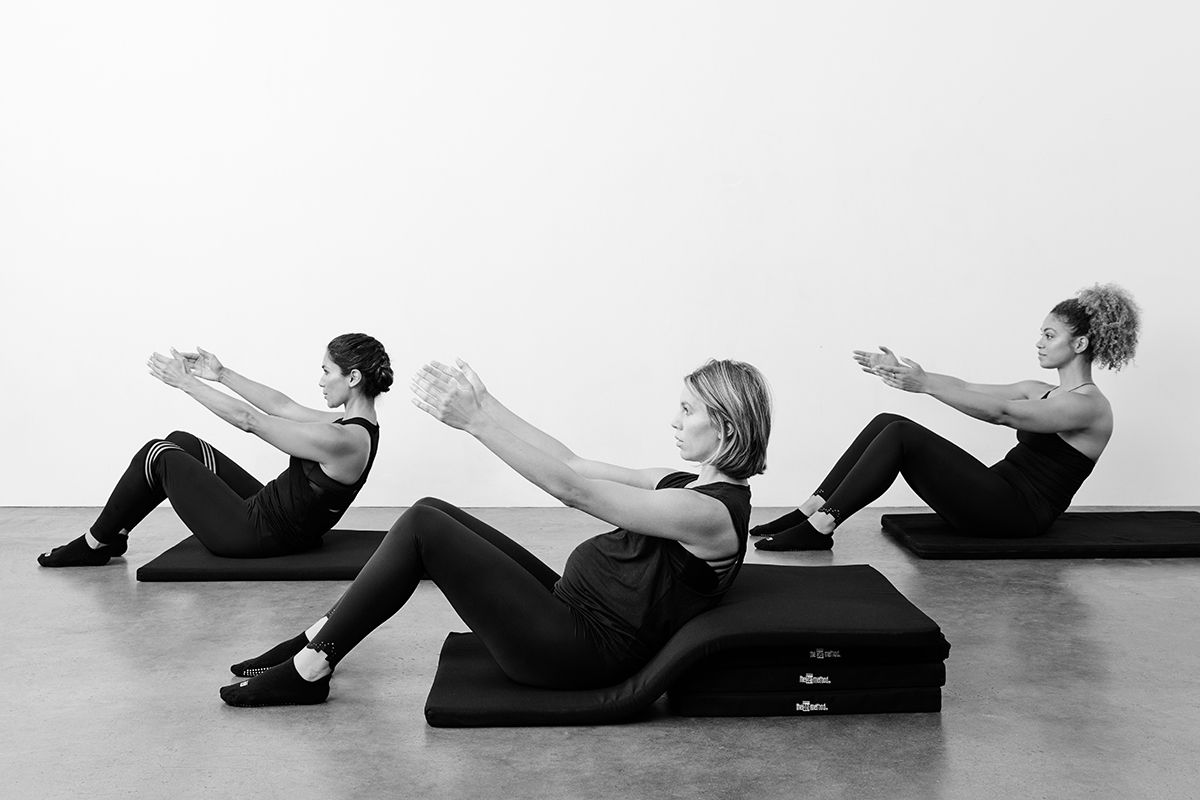
2. Round back
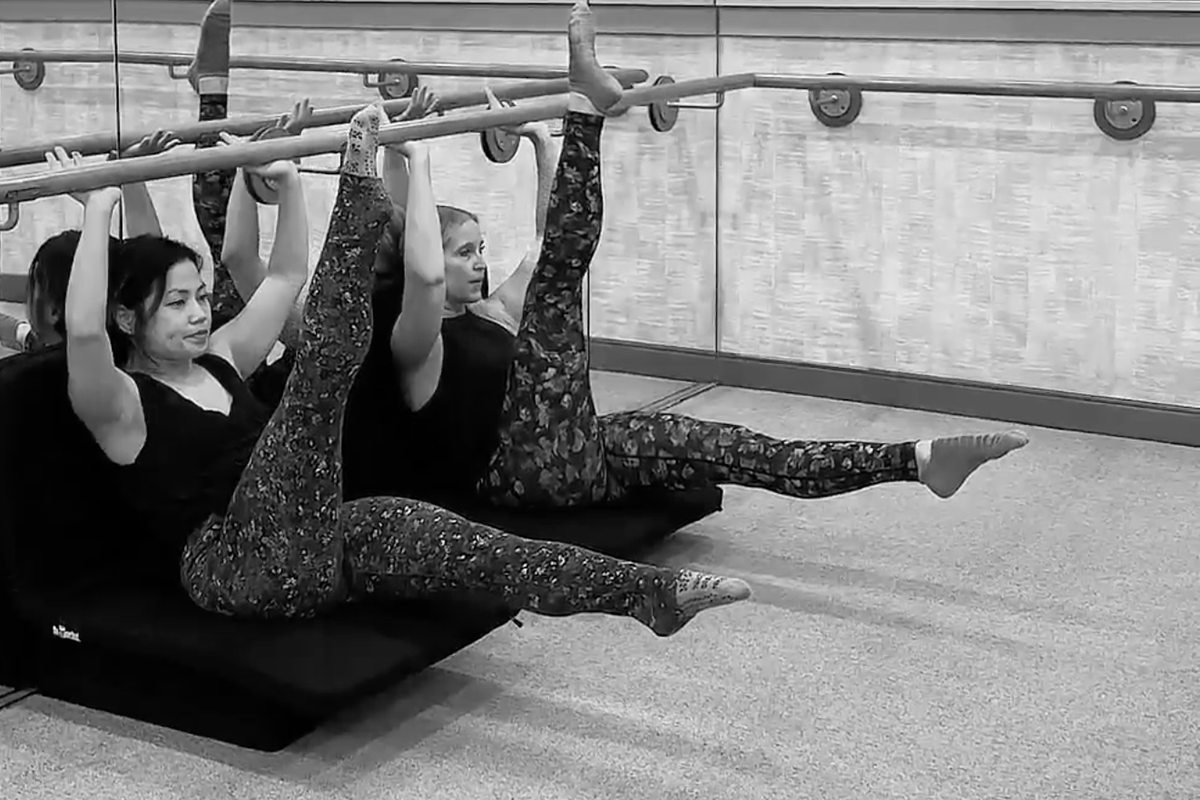
This exercise actively stretches and lengthens the hamstrings and glutes while engaging deep abs and quadriceps.
How to:
- Sit below the barre with your back to the wall. If you’re at home, you can also use a countertop or the back of a chair.
- Recline back and slide forward until your torso is roughly at a 45-degree angle and you are resting on the top part of your glutes. If it’s difficult to reach the bar or you feel you need more padding, sit on a riser or two and use a long mat as a cushion.
- Raise one leg up and hold onto it with your same-side hand while your other hand presses up beneath the bar to activate your posture muscles. Your other (bottom) leg can stay comfortably bent with your foot flat on the floor.
- Keep your top leg straight and draw it closer to you at varying tempos.
- Press both hands up for 10-30 counts before resetting. Perform two to three rounds, then change sides, this time keeping the opposite foot flat on the floor.
- For more challenge, extend your lower leg in line with your hip for the L-shape. Only worry about this if you can keep your top leg straight and vertical. It’s okay if you’re not there yet!
Note: Once both legs are done, stretch by sitting cross-legged and arch your back with your fists pressed into the floor behind you. You may also lift your hips with your knees down on the floor to deepen the stretch for your hips, abs, and lower back.
3. Second position thigh
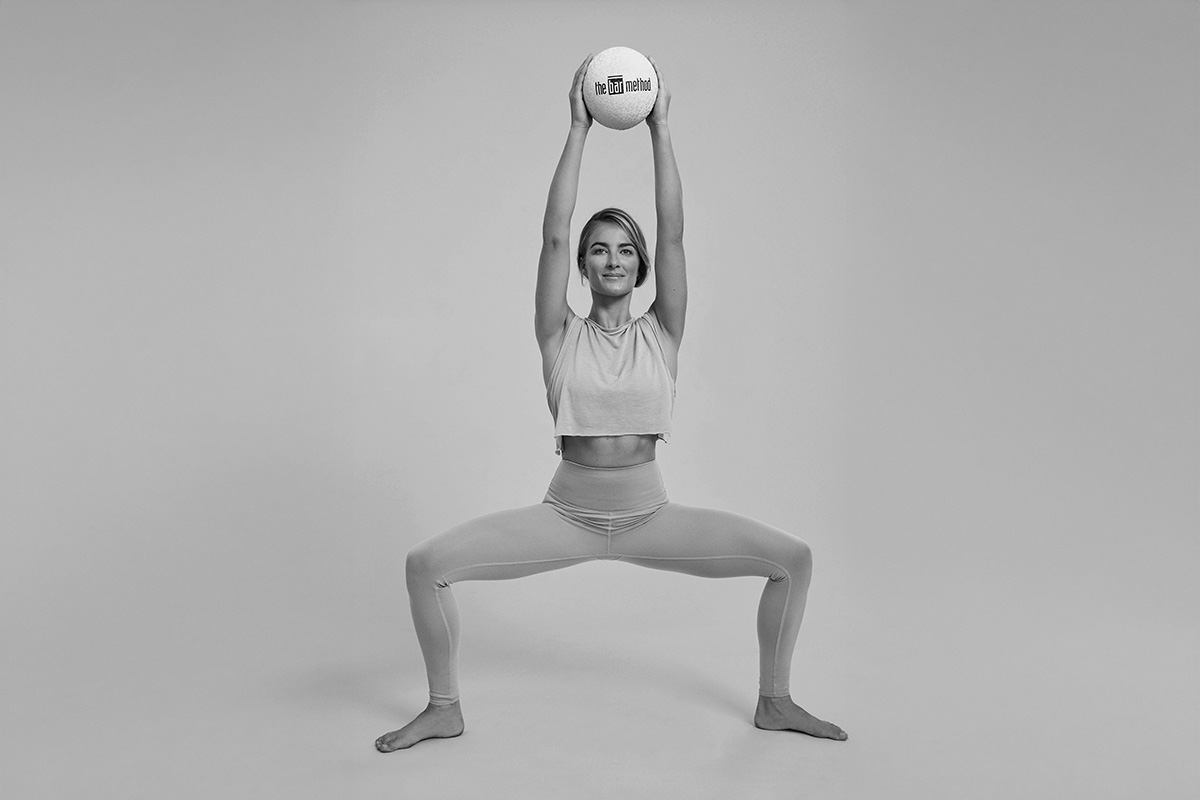
This exercise actively stretches the inner thighs and hamstrings while strengthening quads and outer glutes/thighs.
How to:
- Turn your feet out comfortably and step out wide.
- Bend your knees until they stack over your heels. Widen your stance if you feel unstable.
- Squeeze your glutes for stability and keep your back upright.
- Bend your knees more and less at varying tempos for up to two minutes.
Note: If you feel wobbly, you can hold onto your support during this exercise. Just like with the leg lifts sequence, you may also transition into standing quad stretch from second position thigh.
Active stretches: The key to flexibility and long-term functional ability
Think of active stretching as a simple yet powerful way to feel stronger and move better today while preventing pesky aches and pains well into the future. Whether you’re looking to take your workout to the next level or just want to feel good in your body, adding active stretching to your routine through barre classes could be a game-changer. Your body will thank you for it!
Ready to experience the benefits of active stretching firsthand? Stop by a Bar Method studio for your first class!