New clients! For a limited time, Get 13 Classes for $78 (only $6 per class)

The Method
Static Hold Exercises: Build Strength With Targeted Isometric Moves
February 3, 2026
Standing for long periods at work, lugging your suitcase around the airport, keeping up with your kids — daily life often requires a special kind of strength and endurance. It’s all about static training, a type of muscular strength that most of us rarely think about.
We all need muscular strength to build endurance and do daily tasks, like lifting objects and maintaining balance. One of the ways we do this at The Bar Method is by incorporating static hold exercises (also called isometric exercises) into your workout routine.
You may be surprised at the benefits these movements can give you. So, let’s take a closer look at:
- How static hold exercises work
- Why static exercises work
- The top four static holds for strength
What exactly is static exercise?
First, let’s talk about what we mean when we talk about static exercise. Unlike other movements where your body actively goes through a range of motion, a static hold is the ultimate low-impact exercise because you maintain a fixed position while you keep your muscles contracted.
This sustained contracting forces your muscles to work hard without the help of momentum, which makes static hold exercises an effective way to build strength, endurance, and stability. Think of what happens when you hold a plank: Your muscles stay engaged the entire time, creating a deep burn that leads to increased muscular hypertrophy (aka growth).
Since these exercises rely on time under tension (TUT), a key contributor to hypertrophy, they help improve muscular endurance, reinforce proper alignment, and challenge your body and mind. Whether you’re strengthening your core, legs, or upper body, static training demands focus, control, and determination, resulting in stronger, more sculpted muscles over time.
The science behind static training
Wonder why static hold exercises produce such an intense feeling without moving? That’s because the longer your muscles stay active without relying on momentum, the harder they work, and the more you target deep muscle fibers that improve control and posture.
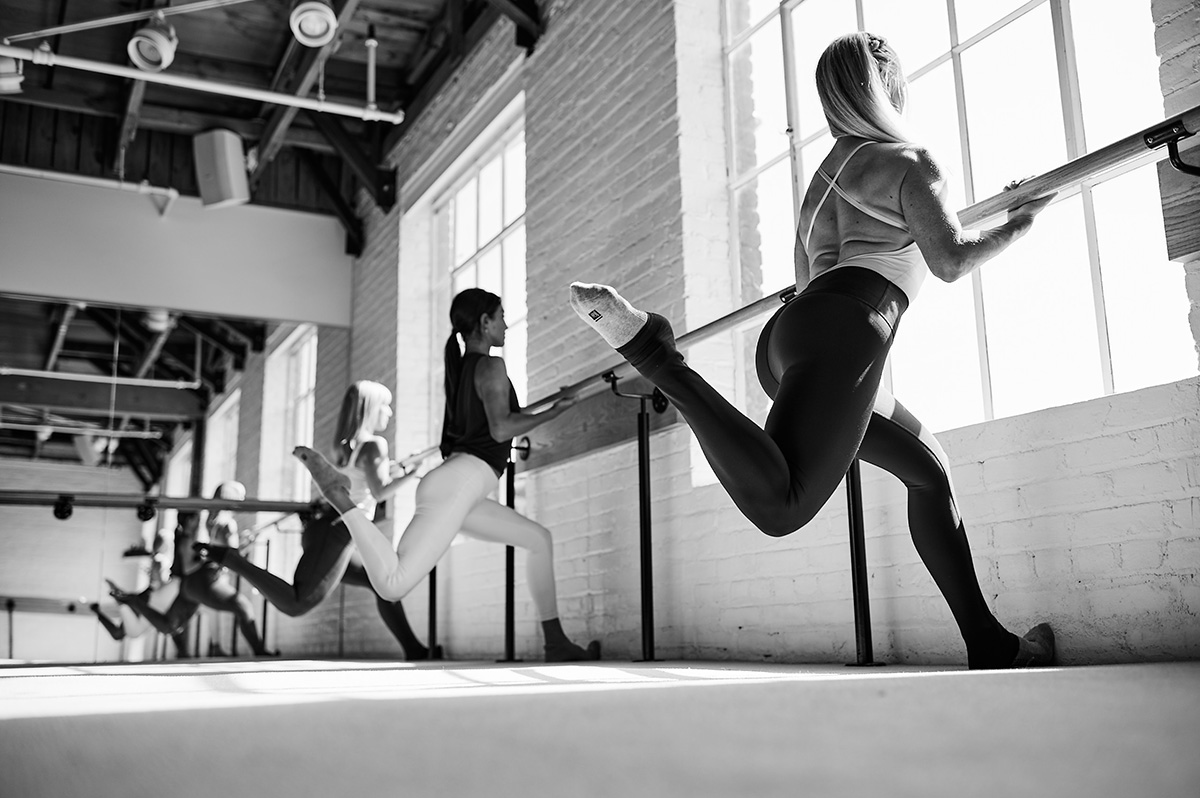
Technically speaking, static holds are effective because all the deep muscle fibers in the targeted muscle group are activated at the same time to create significant muscle tension. At The Bar Method, static (or isometric) training is carefully designed to incorporate precise, controlled holds into each workout. Your instructor will lead you through slight movements and pulses that are small enough (1-2 inches) to keep your muscles contracted. This helps you deeply engage your muscles and maximize TUT for lasting results.
Here’s how your muscles are affected:
- Isometric exercises activate slow-twitch muscle fibers designed for muscular endurance and maintaining posture.
- They also “train” the fast-twitch muscle fibers that are called into action for activities requiring quick bursts of strength.
So, you build muscle and improve your static strength, which helps you maintain control for everything from barre workouts to everyday movement. Over time, including static weight training in your workout routines will help you hold positions longer and improve your stability. And, before you know it, your entire body feels stronger and more capable.
What results can you expect from static holds?
You’ll find that static holds for strength will soon lead to dramatic changes in your body (and your confidence), and everyday activities will become easier.
What happens when you build muscle?
When you build muscle with static hold exercises, all the activation of muscle fibers leads to some dramatic results, including:
- Muscle definition: As your muscles adapt to holding positions for longer periods, they become more toned and defined, especially in your core, arms, legs, and glutes.
- Fat burning: Isometric training improves muscular endurance and circulation, which can help improve your body’s ability to burn fat and reveal the lean muscle underneath.
- Improved mind-muscle connection: During isometric exercises, there is constant feedback between your muscles and your nervous system. Building that connection helps your movements feel smoother and more controlled.
- Enhanced proprioception: Static training also improves your proprioception, or your body’s ability to sense its position in space. This can help make everyday movements feel more effortless and reduce the risk of injury.
- Better joint stability: Static weight training stabilizes your muscles so you can engage for long periods. It strengthens the ligaments, tendons, and smaller muscles around your joints, increasing stability and reducing the risk of injury.
Muscular strength vs. muscular endurance: What’s the difference?
When you’re in the middle of a static hold exercise in barre class, you’re building both muscular strength and muscular endurance. Both are equally important, but there are some key differences:
- Muscular strength: Muscular strength is all about how much force your muscles can generate in a short burst. Think of it as the ability to use power to take on a physically demanding task like choosing a heavier dumbbell during your workouts or carrying all the groceries in one trip.
- Muscular endurance: Muscular endurance is about how long your muscles can keep working. Think of it as the ability to perform a challenging task without giving up, like remaining in a chair pose until your legs start to shake or holding a suitcase while you wait for the overhead bin to open without your arms getting tired.
The great thing about static hold exercises is that you gain both benefits in one exercise.
Your Bar Method static training session: 4 static holds for strength
Think you’re ready to start building static strength? Here are just a few examples of holds you might try in a Bar Method class. Each targets a different muscle group.
Chair
Chair holds target the quads and glutes for lower body strength and stability.
How to:
- Face the barre and hold on with an overhand grip.
- Walk your feet forward to align your toes with the barre.
- Straighten your arms and bend your knees like you’re sitting in a chair. Keep your back upright as you hold, or perform 1-inch movements down and up.
- Hold for 30 seconds, or as long as you can without sacrificing form.
Bonus: For an at-home alternative, try holding a 30-second wall sit.
Planks
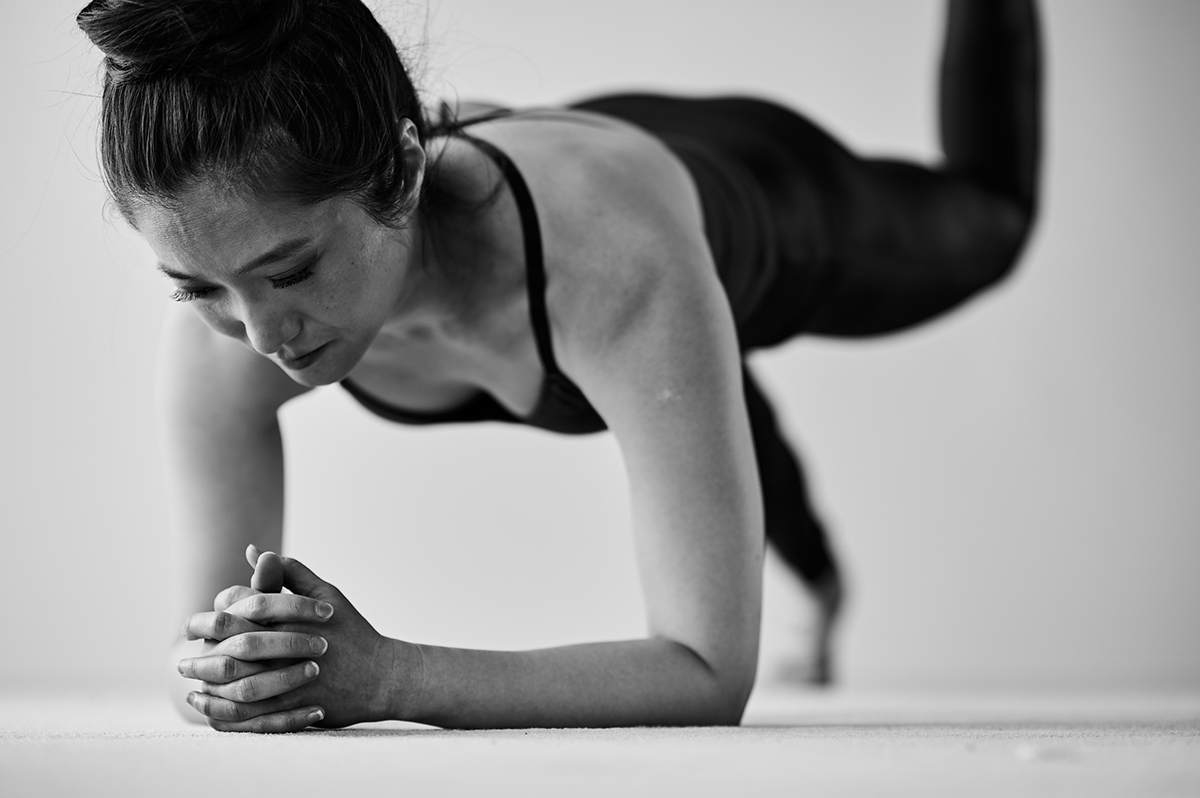
Planks target the deep abdominal muscles for core and full-body stability.
How to:
- Start on the ground, laying flat on your stomach.
- Come to your forearms with your legs hip-width apart. You may be on the balls of your feet or your knees.
- Align your elbows under your shoulders and face your palms inward or clasp your hands together gently.
- Lift your hips until they are in line with the front of your ribcage to protect your lower back.
- Grip your glutes, tuck under, and exhale.
- Hold for 30 seconds, or as long as you can without sacrificing form.
Bicep holds
Bicep holds target the arm muscles for upper body endurance and strength.
How to:
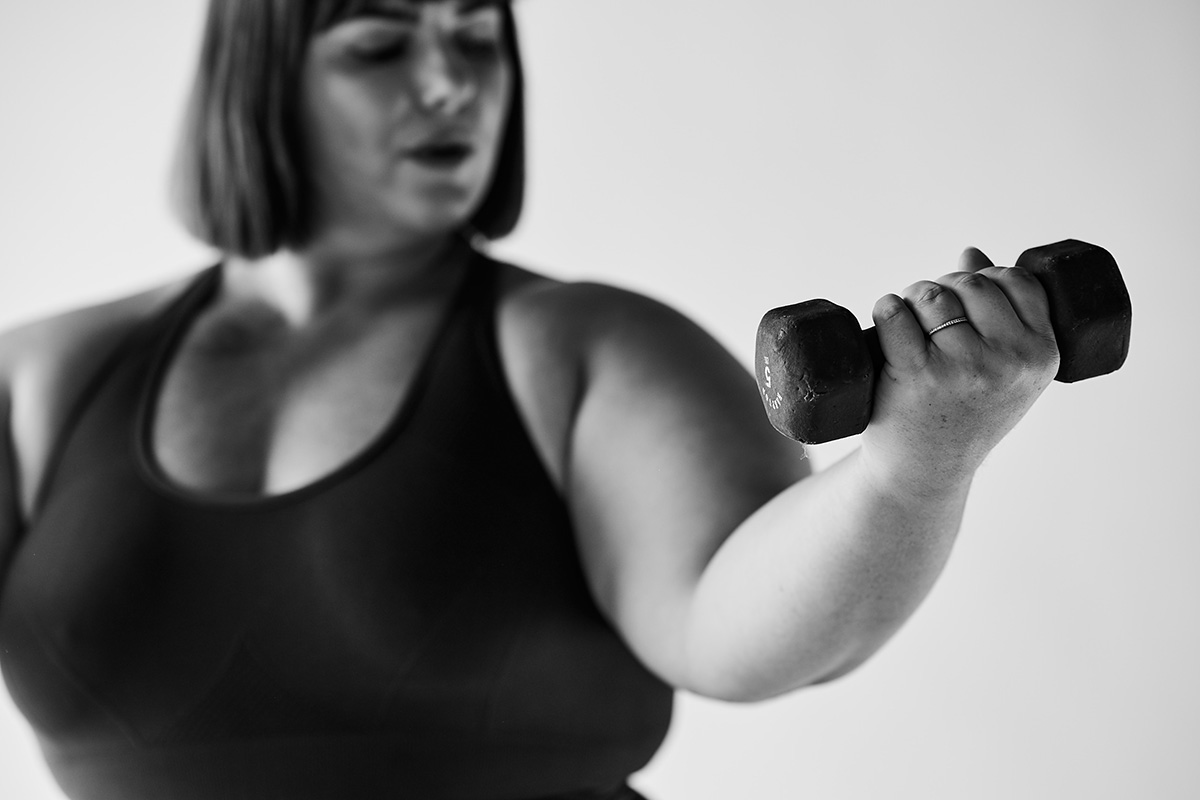
- Hold your heavier set of weights with palms up, elbows bent at 90 degrees, and upper arms steady at your sides.
- Float your elbows away from your sides at a diagonal to create more challenge.
- Hold for 30 seconds, or as long as you can without sacrificing form.
Parallel high holds
Parallel high holds target the quadriceps (front of thigh), hamstrings (back of thigh), and adductor muscles (inner thigh) for toned and sculpted legs.
How to:
- Stand with feet hip-width apart.
- Raise your heels to feel your calves activate, and bend your knees until you feel challenged.
- Keep your spine upright and your heels lifted throughout the hold.
- Hold for 30 seconds, or as long as you can without sacrificing form.
How to get the most benefits from your static holds
Static holds can be a challenge. Here are five tips to maximize the benefits of your workout:
- Maintain proper form and avoid injury by engaging your core and aligning your spine.
- Gradually increase your hold times as you build your strength and increase endurance.
- Breathe properly. Take deep, steady breaths and inhale as you prepare for the hold, and exhale strongly to help you push through the last seconds of the hold.
- Be consistent. Keeping a regular barre routine and doing static holds improves your muscle stability and control over time.
- Take the challenge option when your instructor offers it. It’s a great way to push your limits by increasing the difficulty of the exercise.
How to manage recovery and prevent soreness
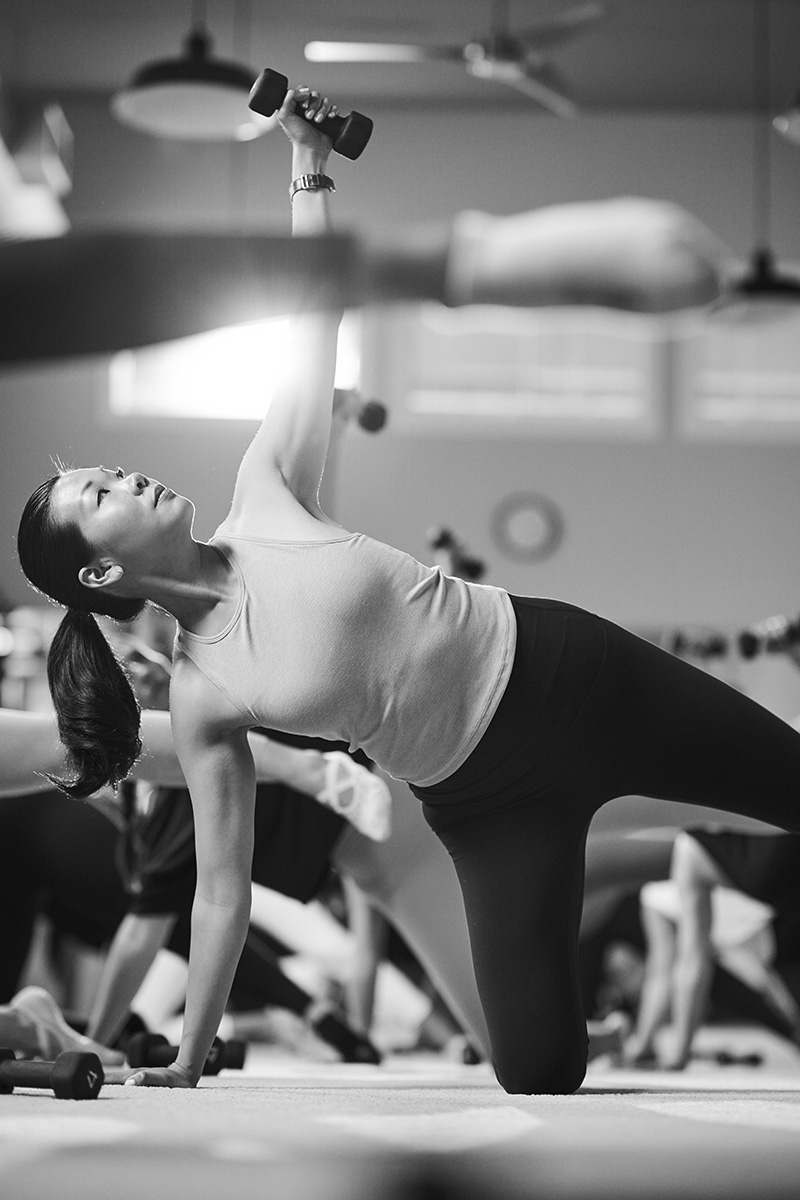
Because of the sustained muscle activation during static hold exercises, they can leave you feeling sore and fatigued, a condition otherwise known as delayed onset muscle soreness (DOMS). Walking, stretching, or foam rolling after your workout routine can help you manage your recovery and keep your body feeling strong. Adding low-impact dynamic stretching and mobility work before your workout can also prevent tightness. And, of course, staying hydrated and eating a nutrient-rich diet can help muscles repair and rebuild so you’re ready to take on your next barre workout.
Common isometric training mistakes to avoid
Maintaining proper form is key to getting the best results from your static hold exercises, but some seemingly small mistakes could reduce the benefits you enjoy or lead to pain or discomfort. Here are three important things to remember:
- Don’t hold your breath. When you’re in a hold position, it is easy to become tense and forget to breathe, but deep, controlled breathing is important for keeping your muscles oxygenated and helping you sustain the hold.
- Don’t give up too soon. Even though you’ll be tempted to drop early, resist the urge. The final seconds of any hold are when the magic — and the shake — happens.
- Check your body’s alignment during the hold. Keep your spine neutral and engage your core. Avoid arching your back or collapsing your chest to prevent strain and promote muscular strength.
Start static training to build resilient muscles — you’ll feel the difference every day
Static hold exercises are low-impact exercises that may seem easy at first, but their impact can actually be quite powerful. By challenging your muscles to sustain engagement without rest, you build strength, endurance, stability, and control — all essential for improving your overall fitness. You also enhance balance, flexibility, and mind-body awareness, making every movement in your workouts (and daily life) more effective.
Whether you’re holding a plank or pushing your back against a wall, these exercises train your muscles to work smarter and longer. So, the next time you’re tempted to shift out of a hold, take a deep breath, embrace the challenge, and know that you’re building stronger, more resilient muscles with every second.
More fitness tips from The Bar Method
The Bar Method is a low-impact workout that produces big results. Ready to experience the power of our Method? Find a studio near you.