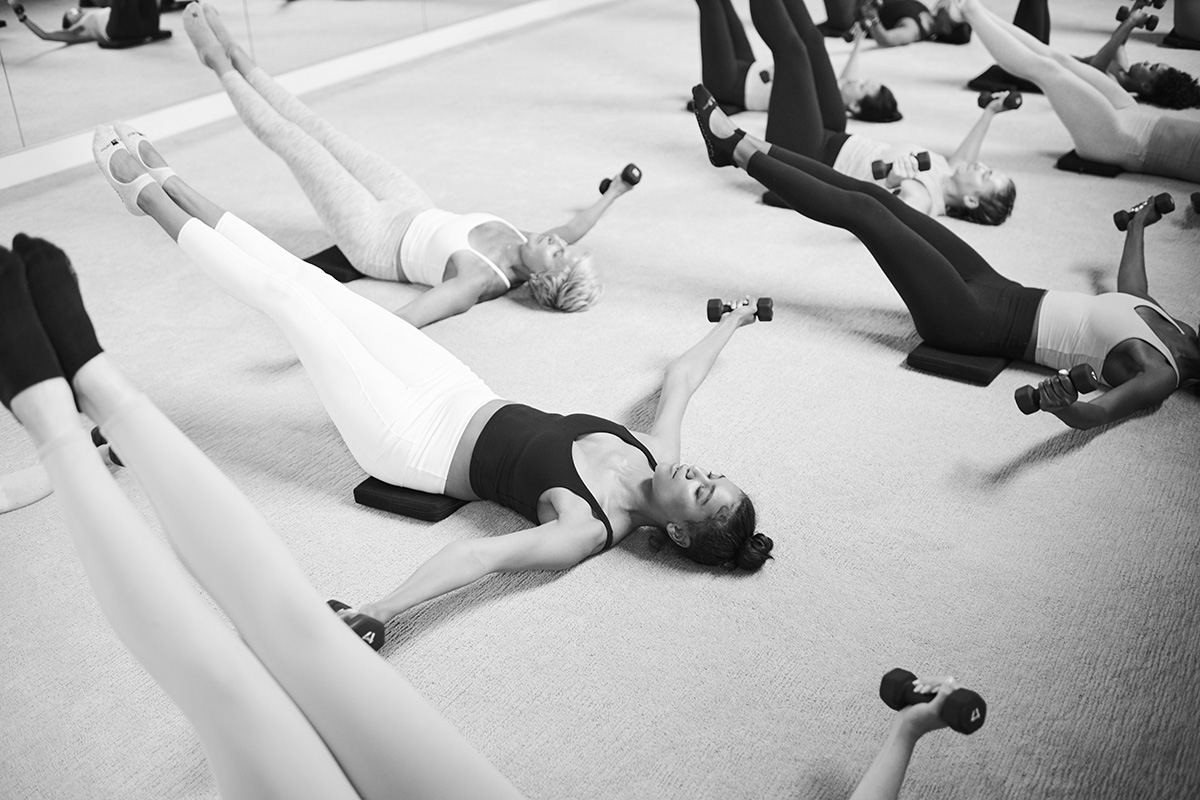
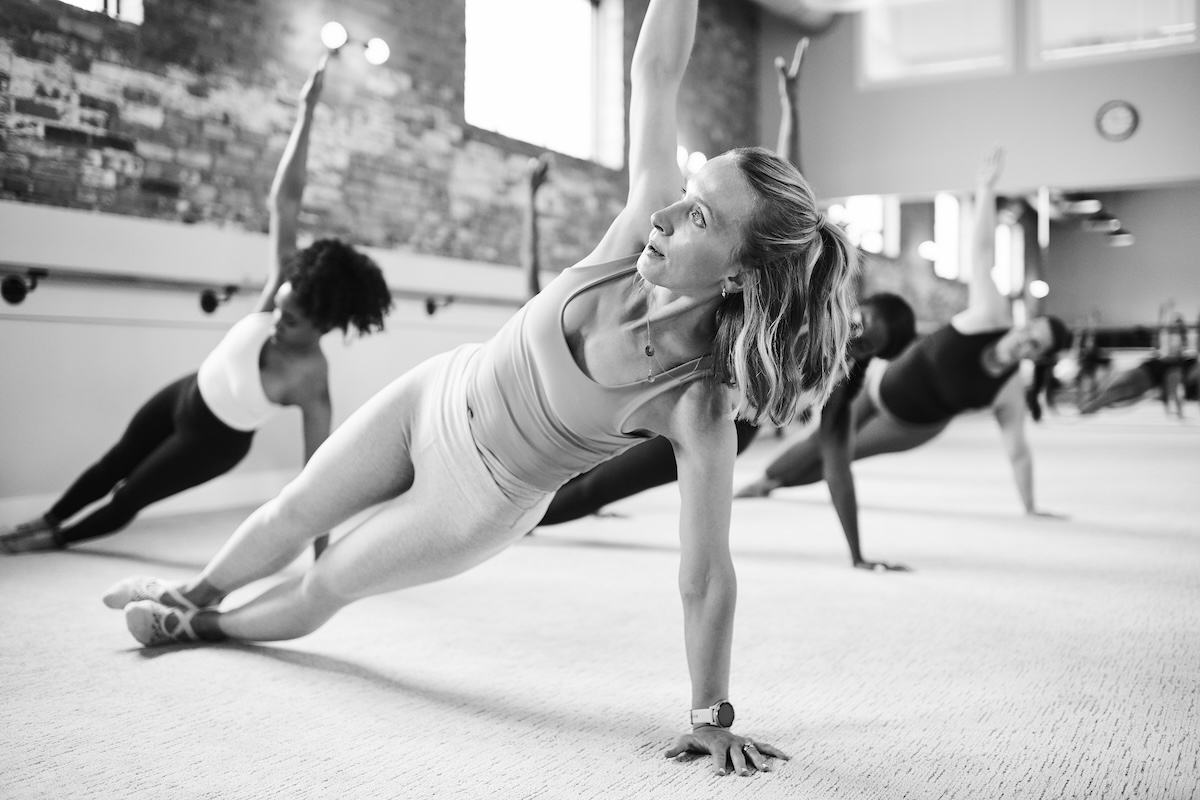
New clients! For a limited time, Get 13 Classes for $78 (only $6 per class)

The Method
Arm Exercises With Small Weights for Big Benefits
July 2, 2026
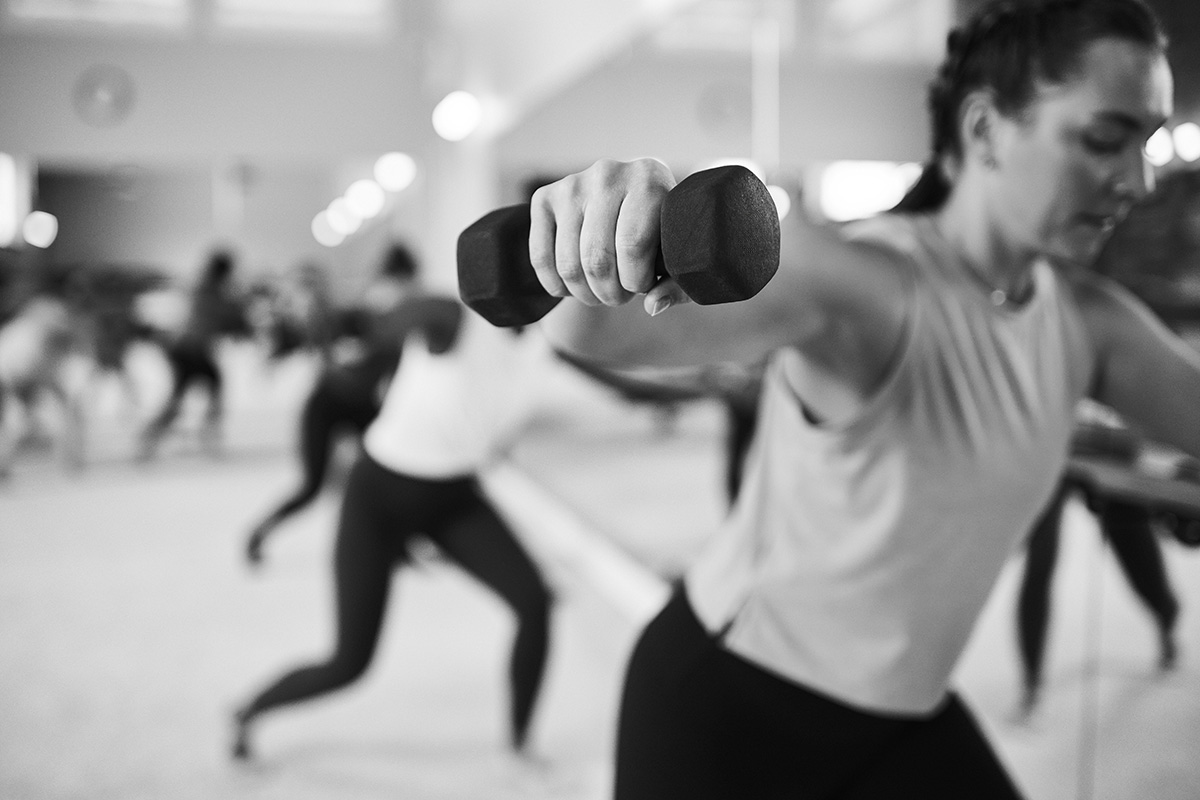
Barre classes are sought after for their precise, shake-inducing movements that make everyone feel the burn and build strength. Arm exercises with small weights are a key part of the equation — while movements may be small, the impact is big, thanks to the low-weight, high-reps nature of the workout.
Let’s dig into the benefits of arm exercises with small weights and explore what makes lifting lighter weights with higher reps so effective.
In this blog, we’ll cover:
- How does barre training engage and tone arm muscles?
- Key benefits of high-rep, low-weight training in barre
- Tips for lifting lighter weights with higher reps
- 10-minute arm workout with dumbbells
- Arm exercises with small weights at home
- And more!
How does barre training engage and tone arm muscles?
Barre classes engage the arms differently than traditional weightlifting by emphasizing high repetitions, small-range movements, and continuous time under tension rather than heavy load (we’ll dive into this more shortly).
Using light weights, barre works biceps, triceps, and shoulders for extended periods. This builds muscular endurance and creates a deep, sustained muscle burn. The focus on precise positioning and controlled tempo also recruits smaller stabilizing muscles around the shoulders and upper arms, helping improve tone, posture, and joint stability.
While the high-reps, low-weight process works triceps, biceps, and other key muscles, barre classes also use bodyweight. This strengthens and sculpts the arms through exercises such as planks, push-ups, and reverse push-ups. These movements require the arms and shoulders to support and stabilize the body, leading to balanced, functional strength.
Key exercise science principles to know about high-reps, low-weight training
Before we dive in further, let’s cover several exercise science principles that support the effectiveness of high-rep, low-weight training used in barre, including:
Time under tension
This means muscles work for longer periods without rest, which helps build muscular endurance.
Metabolic stress
This is the “burn” you feel during high reps (build up of lactic acid), which causes the muscles to adapt and helps maintain strength — no heavy weights needed.
Mind-muscle connection and muscle activation
These are improved during barre classes, helping your body recruit both larger muscles and smaller stabilizers more efficiently for better posture, control, and joint support.
Muscular endurance
This involves teaching muscles to resist fatigue through repeated, low-load contractions. Many movements include small-range or isometric holds, which strengthen muscles at specific positions and improve stability.
How barre complements traditional strength training
If you’re familiar with traditional strength training and already lift heavier weights, barre training can be the ideal complement, improving muscular endurance, overall arm control, and stability.
Traditional weightlifting (heavier weights and lower repetitions) typically focuses on building maximal strength, power, and muscle size, whereas barre’s approach is especially effective for definition, working the muscles in a different way. Similar to traditional strength training, barre also contributes to muscle strength and maintenance.
While both methods strengthen muscle, barre’s high-rep, low-weight format is especially effective for improving endurance, control, and sustained muscle activation, boosting functional strength in everyday movement.
An all-in-one workout for strength, endurance & more
Our Method’s controlled, small-range movements and bodyweight exercises like planks and push-ups enhance mobility, balance, and mind-muscle connection, making it an effective counterpart to heavy lifting.
The high-rep, low-weight format also keeps muscles under tension longer. This helps build fatigue resistance and supports better form during demanding workouts as the muscles are trained to stay engaged for longer periods and sustain effort over time.
Barre also strengthens smaller stabilizing muscles that support posture and alignment while protecting joints and improving movement efficiency. Essentially, it’s your all-in-one workout, whether on its own or alongside traditional strength training.
Core benefits of lifting low-weight dumbbells with high reps
As we’ve seen, lifting lighter weights with higher reps helps tone muscles and build muscular endurance and strength. Compared to lifting heavy weights, light weight and bodyweight movements don’t cause muscle fatigue as quickly, allowing you to perform repetitive motions for a greater period of time. These longer duration sets benefit cardiovascular fitness, too, improving how well your heart and lungs take in oxygen and deliver it to the rest of your body.
Most Bar Method class formats leverage no-weight or low-weight, high-reps movement to improve endurance, build strength, and produce longer, leaner muscles. Additional benefits of low-weight, high-reps training include:
Change in body composition
Barre can improve health and change body composition, which could result from weight loss or muscular changes. During the first few months of class, you may notice fuller, more toned muscles as intramuscular fat is pushed outward. Over time, our low-weight, high-reps format leads to longer, leaner muscles. Paired with a healthy diet, a regular barre routine can also promote weight loss.
Fat burn
With consistent high-rep training and supportive nutrition, you’ll start to see more defined, sculpted muscles as your overall body composition improves.
Better posture
Barre classes will help you stand taller and be more aware of how you move. Instructors are also trained to help you improve alignment and muscle activation.
Bonus: Why core engagement enhances results
When thinking about arm exercises with small weights, the arms, shoulders, and upper body likely come to mind. However, core engagement also plays a key role in upper body and arm exercises (and enhances overall results). Here’s why: The core acts as the body’s stabilizing center.
When the abdominals, deep core, and back muscles are actively engaged, they help keep the spine neutral and the shoulders properly aligned, allowing the arms (biceps, triceps, and shoulders) to work more efficiently.
This reduces strain on the neck and lower back and ensures the targeted arm muscles are doing the work rather than relying on momentum. Engaging the core also enhances overall results by improving posture, balance, and total-body muscle activation.
Most of our Method’s upper-body exercises require holding positions or working through small, controlled movements, forcing the core to stay continuously active alongside the arms. This creates more time under tension, improves stability, and leads to better muscle tone, control, and functional strength throughout the entire body as well as the arms.
Tips for building strength using lighter weights with higher reps
Before we share a few exercise examples to try, keep in mind that lifting lighter weights with higher reps doesn’t equate to an easier workout. Higher reps can quickly prompt muscle fatigue, but maintaining movement helps build muscular endurance and muscle mass. We recommend using the following tips to ensure a safe, fun, and effective class.
Focus on form
As your muscles tire during class, it’s easy to slump or move out of alignment to find some relief. Our instructors are expertly trained to adjust students’ alignment, ensuring the correct muscle groups are working and maximizing the benefits of low-weight, high-reps movement.
Gradually increase weight
If you’re new to fitness and using weights, consider starting out using no weights or the lightest set available. As you build strength and muscle mass, increase the weight in small increments.
Stretch after your high-rep workouts
This will help reduce injury risk, improve flexibility, and ease muscle tension.
High-rep exercises to build strength
Our barre classes feature a variety of high-rep exercises that tone the body, build strength, and help improve overall fitness. Some of our favorites include:
U-shaped bent-elbow lifts
- Pick up a set of 2-4 lb weights.
- Bend your elbows to 90 degrees and raise your arms to shoulder height.
- Draw your weights out & down in an arching motion to behind your waist while maintaining the 90 degree bend in your arms.
- Reverse the direction back to shoulder height.
- Continue for 2-3 minutes.
Shoulder walks
- Stand with your feet hip-width apart and pick up a set of light weights (2–4 pounds).
- Soften your knees, grip your glutes, and align your shoulders over your hips and feet.
- Straighten your arms on your thighs with your palms facing each other.
- Reach one arm straight out to shoulder height and begin to cross your arms at any pace that feels challenging yet controllable.
- To deepen the engagement in your chest, raise your arms higher than your shoulders at the top (stop short of vertical).
- Tap your thighs or the sides of them at the bottom.
- Cross at your preferred tempo for up to 3 minutes (this is why you’ll need light weights!).
Leg lifts
- Stand on profile to your support and hold onto it with one hand with your other hand on your waist.
- Open your feet hip-width apart and parallel and soften both knees.
- Extend one leg in front of you and rest your pointed foot lightly on the floor.
- Raise your extended leg as high as you can without raising your hip.
- Slightly bend and stretch your leg for about one minute before switching sides.
Second position thigh
- Hold onto your support, walk your feet out to a wide stance and bend your knees to come down to a challenging depth.
- Be sure the insteps of your feet are directly below your knees.
- Grip your glutes tightly and pull your shoulders down.
- Move down an inch and up an inch for about two minutes.
- For an added challenge, hold one heel up at a time or alternate heel lifts slowly.
Pretzel
- Sit on the floor and sweep your right leg in front of you and the other behind you.
- Create two 90-degree angles with both legs.
- Slide your left knee back until it is in line with your left hip.
- Place your right hand on the floor next to your front knee and your other hand on your front shin.
- Lean your torso diagonally to the right and slightly forward.
- Position your right hand below your shoulder.
- Lift your left foot off the floor and press your left hip forward.
- Using the side of your glutes, lift your left knee one inch off the floor.
- If it doesn’t come up, lean more to the right and reposition your hand.
- Begin to lift your leg up one inch, then down an inch.
- Perform this for about one minute on each side.
10-minute arm workout with dumbbells
Ready to put arm exercises with small weights into practice? Try this 10-minute arm workout with dumbbells that could be done during a Bar Method warm-up sequence, or on your own with minimal equipment.
Follow the sequence for arm exercises with small weights at home:
- Begin by doing initial leg lifts for 30 reps.
- Make your way to the floor for a forearm plank position, and hold for 60-90 seconds.
- Transition to standing on your feet, and complete shoulder walks for three minutes.
- Perform rhomboid pulls or lat pulls for one minute.
- Holding dumbbells in your palms, complete biceps curls for one minute.
- Transition to triceps kickbacks for two minutes.
- Make your way to your palms for push-ups, and complete 15-40 reps.
- Using your palms for stability, complete reverse push-ups for 40 reps.
A note about biceps curls and triceps kickbacks: Biceps curls and triceps kickbacks are two examples of upper body work that you can expect during the warm-up section of class (first 10-15 minutes). These exercises are taught with light weights (usually 2 to 5 pounds) and can be performed for one to two minutes at a time. Both are great examples of high rep, low weight exercises, where time under tension helps to improve muscular strength and endurance in the upper body.
Can you practice arm exercises with small weights at home?
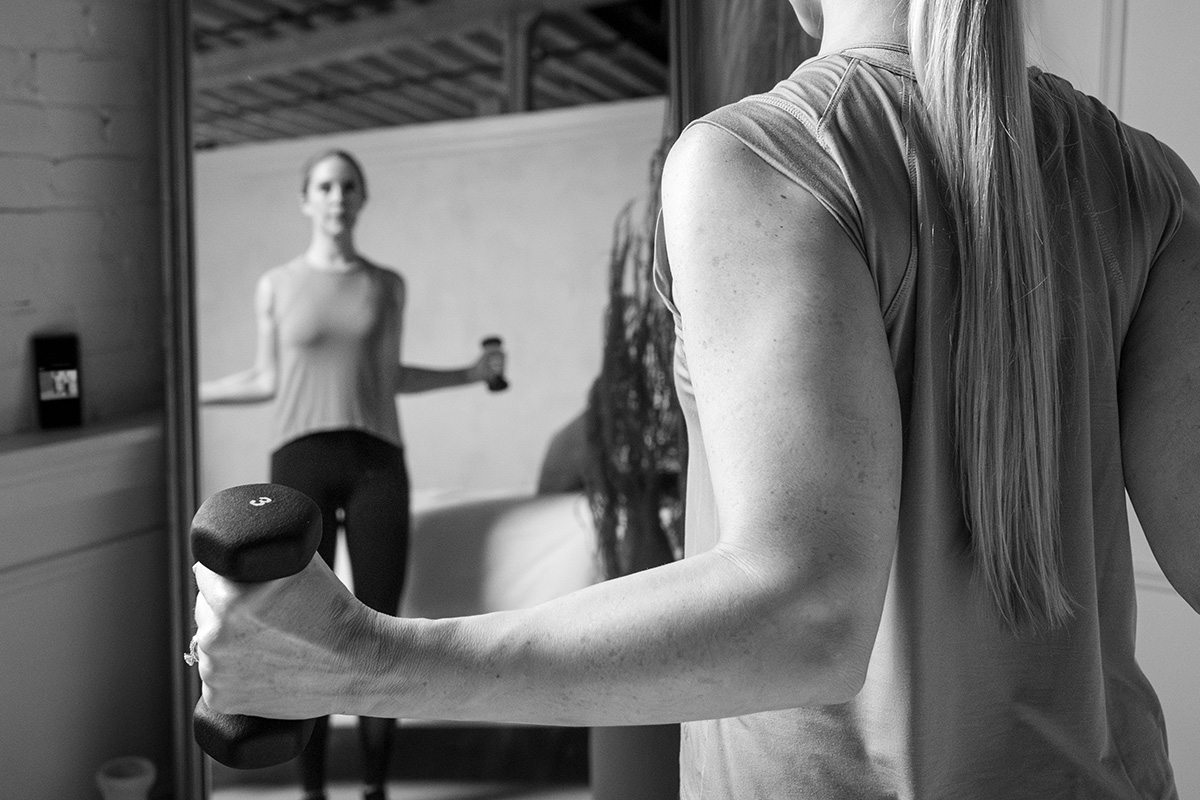
Several barre arm exercises can be practiced at home using equipment you already have (such as lightweight or adjustable dumbbells) or no equipment at all. We recommend attending a class first to familiarize yourself with proper form and receive instructor guidance.
At our studios, you can expect effective upper body and arm-toning exercises such as the following (which you can also practice at home):
- Shoulder walks
- Bent elbow lifts
- Diagonal shoulder walks
- Bicep curls
- Lat pulls
- Rhomboid pulls
- One weight lifts
- Triceps kickbacks
- Shoulder swivels
Note: Our body weight resistance upper body toning exercises include push-ups, planks, and reverse push-ups.
Most of the exercises above are designed to be performed with light weights (2 to 5 pounds) for several minutes, which can be done in or outside the studio. You can also practice the 10-minute arm workout with dumbbells on your own, with the option to repeat the sequence for more intensity if desired.
Frequently asked questions about weight lifting in barre classes
From results to safety considerations to modifications, let’s take a look at several common low-weight, high-reps workout questions — and our answers.
Do high-rep exercises build muscle?
Even with no weights, the high-rep exercises in Bar Method classes build muscle strength using body weight (aka the body’s own resistance). Leg workouts in class include thigh work, which lasts roughly five to seven minutes. During that time, the quadriceps are constantly contracting, which — during high-rep workouts — strengthens the muscle without any external weight.
Do specific muscles respond better to high-rep exercises?
Most muscles are made up of both slow-twitch and fast-twitch muscle fibers. Slow-twitch fibers are important for endurance while fast-twitch fibers are key for speed. Lifting lighter weights with higher reps targets slow-twitch muscle fibers and boosts stamina.
As these muscle fibers are worked, they lengthen, resulting in longer and leaner muscles. Muscles that tend to benefit the most from low-weight, high-reps exercises are those that have more slow-twitch muscle fibers.
These include:
- Calves
- Shoulders
- Glutes
- Abs
- Arms
Is it better to lift heavy or light weights?
Both types of weights are beneficial, but the results differ. Lifting heavier weights (generally, 10-15 pounds or more) in shorter sets is more likely to increase muscle mass and power. Training using lighter weights or no weights for longer periods of time builds muscle strength and endurance.
Is it safe to do a low-weight, high-reps workout daily?
When choosing your fitness training schedule or frequency for high-rep workouts, always listen to your body and prioritize your health. (What looks great on paper or on your calendar might not feel right in practice.) However, Bar Method classes are low-impact and safe for your joints. That means you can do these strength-building, high-rep workouts up to six days a week, if you’re feeling good.
Remember: Even when you’re using lighter weights or no weights, it’s still important to give your muscles time to recover and take a rest day.
Can beginners, seniors, and others modify barre arm exercises to their fitness level?
Arm exercises with light weights for seniors and beginners often look very similar to those listed above. However, if modifications are helpful, beginners, seniors, and anyone who needs to can safely modify barre arm exercises — while still seeing results — by adjusting range of motion, resistance, tempo, and support.
Using lighter weights (or no weights), working in a smaller, comfortable range, and moving at a slower pace helps build strength and endurance without strain. Taking short breaks when needed and focusing on controlled, steady movements also helps ensure the muscles stay engaged while protecting joints and preventing fatigue.
As we’ve covered, certain upper body exercises use body weight as resistance. In these cases, exercises can be done on the knees, at the bar, or using supportive props. (Think: push-ups and planks done on the knees or at the barre, and reverse push-ups with a riser mat under the hands.).
Maintaining muscle tone & strength on a GLP-1
If you’re taking a GLP-1 medication, keep in mind that low-weight, high-rep barre training exercises can be especially helpful. One of the biggest concerns with these medications is the loss of lean muscle during weight loss — without resistance exercise, a large amount of weight lost on GLP-1s can come from muscle. However, strength-based training can help preserve muscle mass, maintain metabolism, and support overall strength.
Here’s why: Our class format can help maintain muscle tone and prevent strength decline during periods of reduced calorie intake. It’s also well-suited to the unique challenges of GLP-1 use, such as lower energy, reduced appetite, and fatigue. The low-impact, moderate-intensity nature of barre provides effective resistance training without excessive strain, while improving muscular endurance, stability, and joint support.
High-rep, low-weight training: A Method designed for the strongest you
High-rep, low-weight training — like arm exercises with small weights — offers a powerful and efficient way to boost muscular endurance, maintain muscle through all stages of life, and improve how your body moves and feels every day. Unlike traditional lifting that prioritizes maximum strength and bulk, this approach emphasizes sustained, controlled movements that keep muscles active, joints supported, and posture strong.
While this style of training doesn’t focus on building maximum strength like heavy lifting, it’s very effective for improving endurance, supporting muscle maintenance, and enhancing overall movement quality when practiced consistently. With consistent practice, you’ll notice stronger, leaner arms, increased stamina, and better overall movement, whether you’re new to fitness or looking to complement your current routine.
Ready to reap the benefits of a low-weight, high-reps workout? Find The Bar Method location nearest you to get started.