New clients! For a limited time, Get 13 Classes for $78 (only $6 per class)

General
What Are Low-Impact Workouts? The Key to Sustainable Results
February 3, 2026
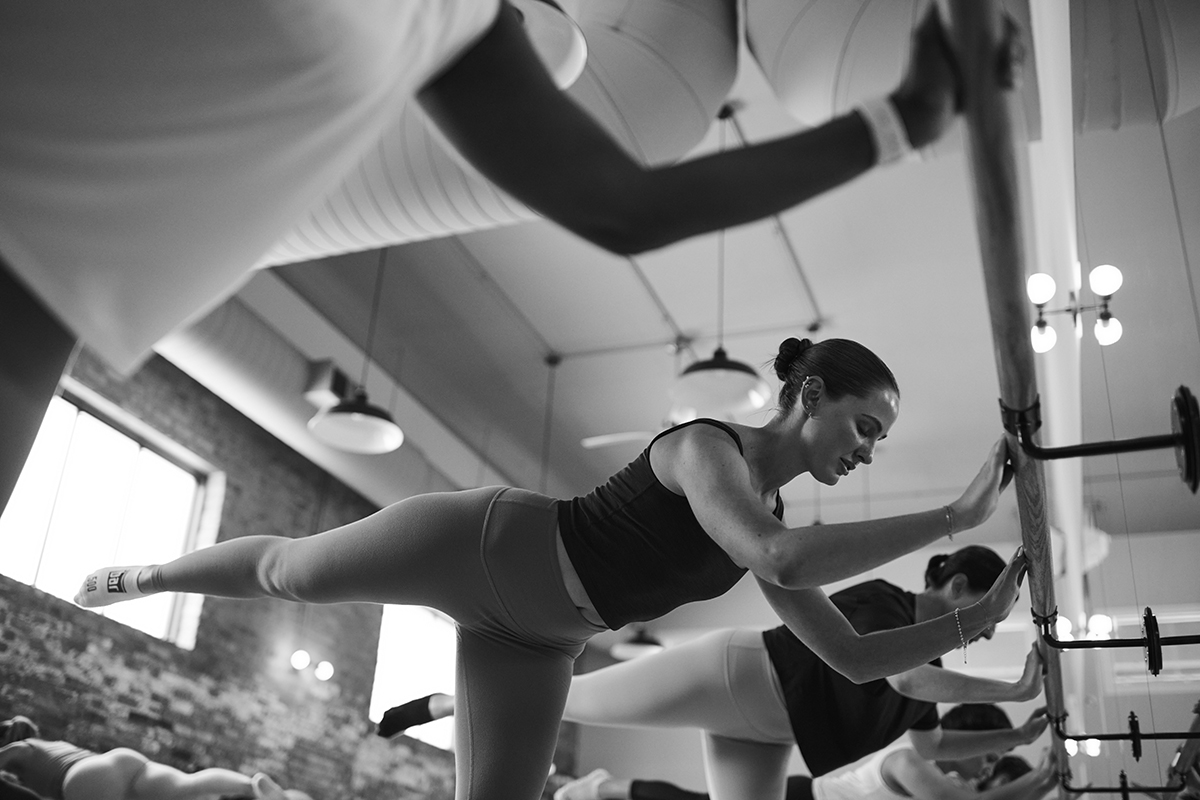
There’s plenty to love about barre, a workout that sculpts and defines your muscles, boosts cardio fitness, and even helps with weight loss. On top of that, it’s also a low-impact workout.
What are low-impact workouts? Read on for a breakdown of their health benefits and how to incorporate them into your fitness routine with The Bar Method.
What are low-impact workouts?
You’ve probably heard the term “low impact” before. But what are low-impact workouts?
A low-impact workout is any activity where one or both feet remain on the ground at all times, limiting the stress placed on your joints. Water workouts are also low impact, as the water absorbs the impact from gravity. Bar Method classes are an excellent example, as they feature low-impact exercises and elements of Pilates, yoga, and ballet.
Low-impact exercises
In addition to barre, here are several examples of low-impact exercises:
- Walking
- Cycling
- Swimming
- Strength training
- Yoga
- Pilates
- Cross-country skiing
- Water aerobics
- Rowing
- Elliptical training
What are the benefits of low-impact workouts?
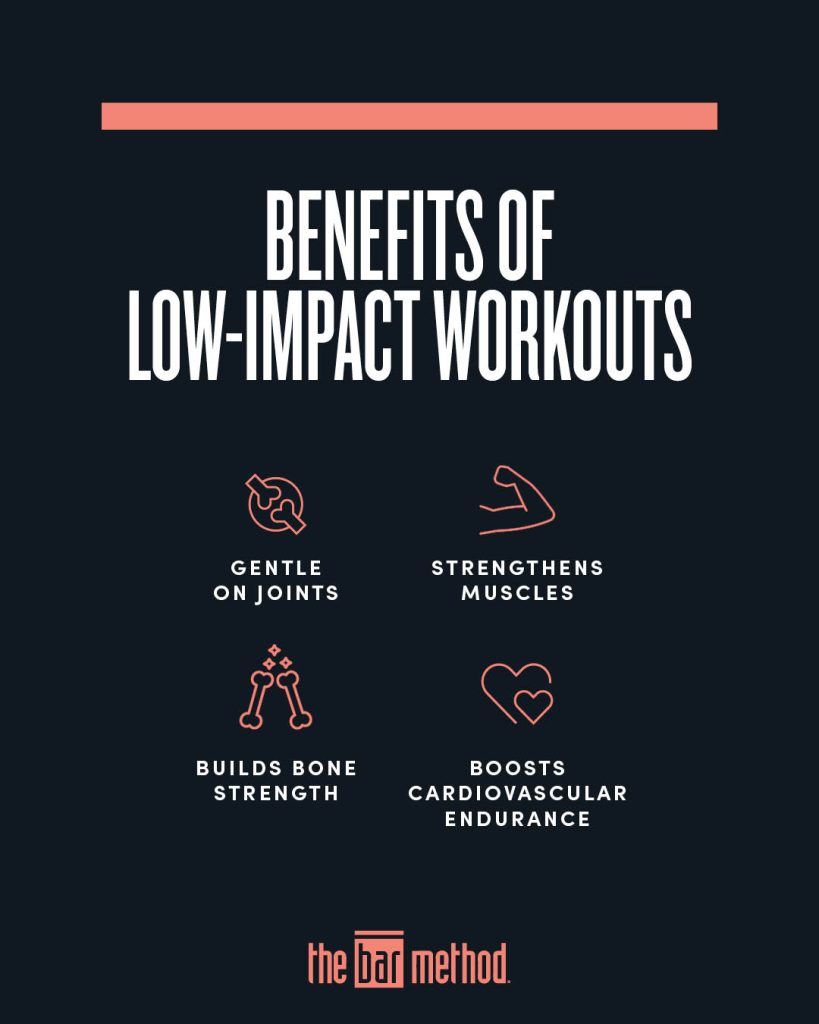
Low-impact workouts are gentle on joints
Keeping one or both feet on the ground at all times is less stressful for your joints than high-impact activities where both feet leave the ground (think: running or jumping rope). This makes barre an excellent option for those with arthritis or touchy joints to reap the benefits of exercise without discomfort or pain — no more pounding your feet on the pavement or treadmill.
The fact that low-impact workouts are gentle on joints also makes them friendly for all fitness levels, from beginners to enthusiasts. If you’re newer to exercise, your muscles, joints, and bones may not be used to doing intense activity. Low-impact workouts introduce gentle movement that can get your body ready for higher-impact exercises.
Low-impact exercises strengthen muscles
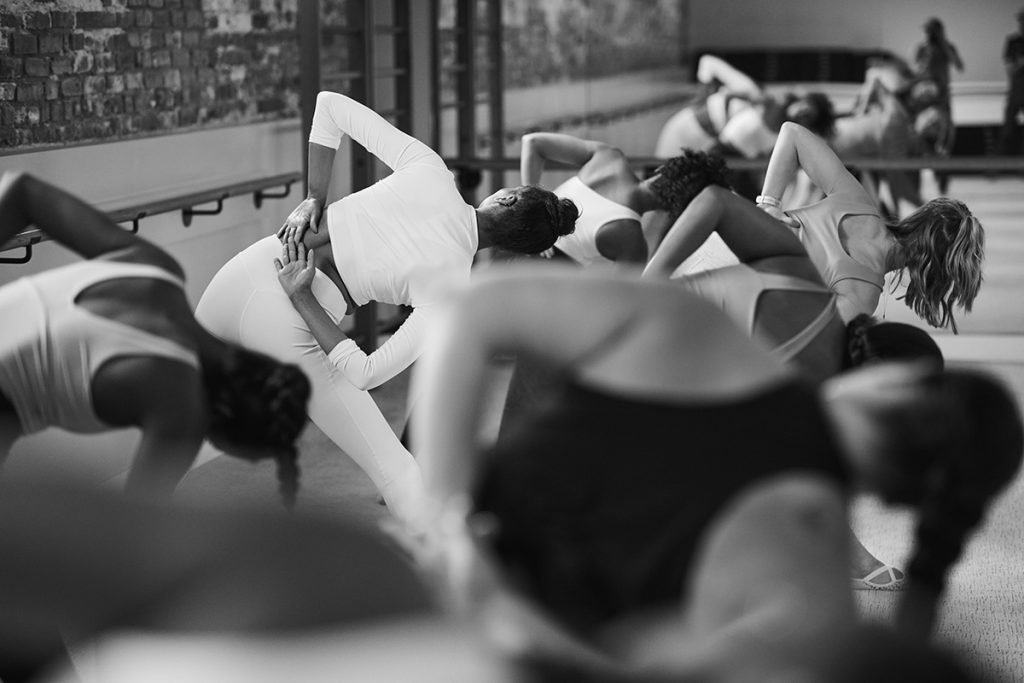
Low-impact activities like walking, swimming, and barre work multiple muscle groups, building strength for everyday life.
Barre is especially effective because it incorporates low-impact strength training. Each Bar Method class targets every major muscle group, with extra focus on the core, legs, and seat. The key is isometric exercises that require contracting your muscles to hold your body in specific poses. At times, your instructor will also add small, controlled movements to take any pose to the next level — expect your muscles to shake!
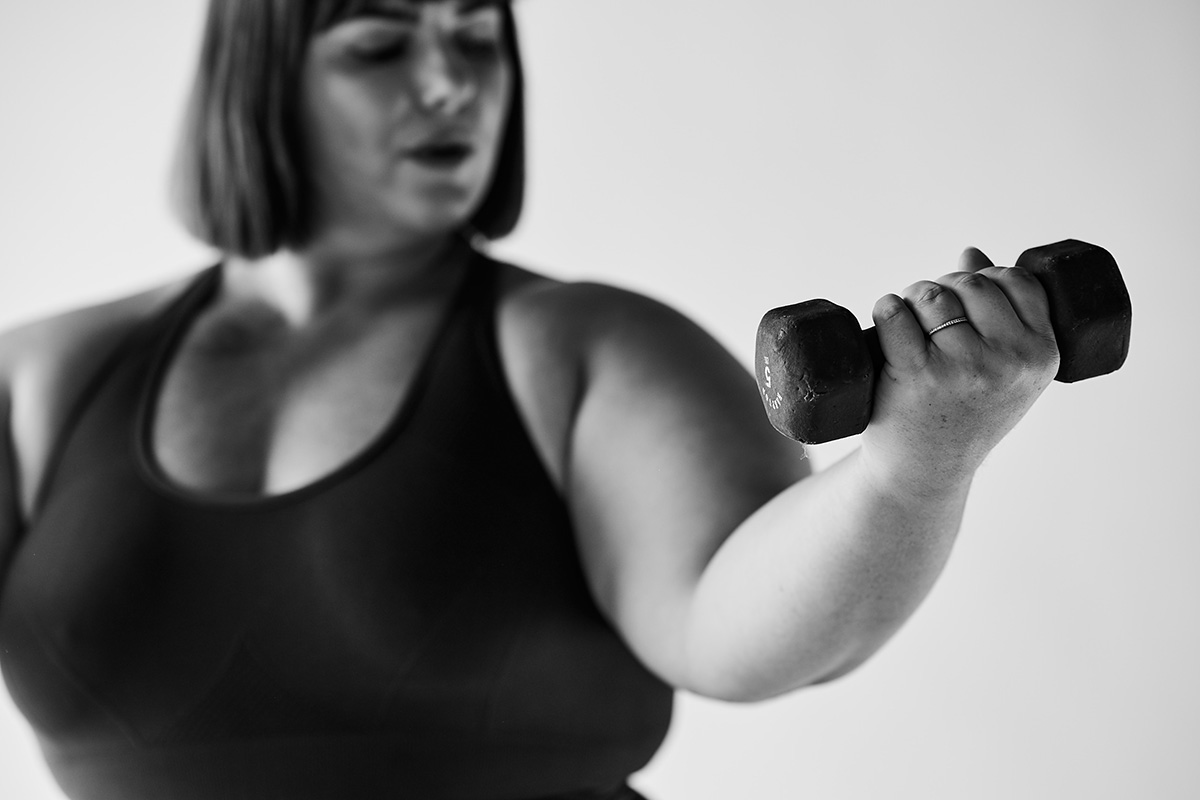
This approach to training sculpts and defines your muscles with lighter weights than traditional strength training. All you need is your body weight and some light dumbbells.
Here are the muscle groups you’ll hit in a Bar Method class.
- The pecs (Pectoralis Major)
- Anterior deltoids (Pars Clavicularis)
- Medial deltoids (Musculus Deltoideus)
- Posterior deltoids (Pars Scapularis)
- The outer quads (Vastus Lateralis)
- The triceps (Triceps Brachii)
- The hamstrings (Biceps Femoris)
- The lower quads (Quadriceps Femoris)
- The abdominals (Rectus Abdominis)
- TA (Transversus Abdominis)
- Hip abductors (Gluteus Medius)
- Buttocks (Gluteus Maximus)
Pro tip: Sign up for a Bar Strength class to see barre’s strength-building benefits in action!
Low-impact workouts build bone strength
Any low-impact workout that incorporates resistance training helps strengthen bones. Working your body during barre, for example, makes your muscles tug and push on the bones they connect to. When this happens, your body responds by making more bone-building cells known as osteoblasts. The result? Stronger bones.
And, building more bone with barre can help slow bone loss with age. This can potentially reduce your risk of osteoporosis or keep it from worsening.
Low-impact workouts boost cardiovascular endurance
Many low-impact workouts qualify as cardio. They get your heart pumping and move large muscles rhythmically and repetitively (like in a high-energy Bar Method class).
Walking and cycling likely come to mind when you think of low-impact cardio workouts. But barre improves cardiovascular endurance, too. How? By recruiting multiple muscle groups and keeping them working for an extended period. This constant effort not only strengthens your muscles but also trains your heart and lungs to work for longer bouts.
Are low-impact workouts good for weight loss?
High-impact workouts like running tend to be popular weight-loss options. But you can also lose weight with low-impact workouts like barre.
Bar Method classes target your biggest muscle groups, such as your legs and glutes. By working your larger muscles at an intense pace for an extended period, you can burn more energy (aka calories) during class.
So, how many calories does barre burn? Approximately 250-500 per session. Combine that with a nutrient-dense diet and you can achieve the calorie deficit needed for weight loss.
And, because barre is gentle on joints, you can do it consistently — key for weight loss results.
How long does it take to see results from barre workouts?
Many students come to The Bar Method looking for sculpted, defined muscles and greater flexibility. Members typically see improvements in both (not to mention: a serious confidence boost) after taking three to five barre classes a week for three to four weeks.
Weight loss can be trickier to predict because it depends on how much body weight you’d like to lose, along with several other factors, including:
- Diet
- Height
- Muscle mass
- Fitness level
- Age
- Sleep
- Hormones
- Overall exertion
Still, many barre-goers notice physical results like increased muscle definition, decrease body fat percentage, or their clothes fitting more loosely after taking three to five barre classes a week for one month. The results you’ll notice right away? Feel-good post-workout endorphins, positive mental health benefits, and feeling more confident and in tune with your body.
Who should do low-impact workouts?
Low-impact workouts like barre are suited for all fitness levels, abilities, and goals. They can build muscular strength, cardiovascular endurance, and bone, while burning calories for weight loss.
Low-impact workouts are especially well suited for people who need exercises that put minimal stress on joints. These include:
- Older adults with fragile bones
- People with joint conditions like arthritis
- Those recovering from an injury
- Anyone with joint pain
Low-impact workouts allow you to exercise without risk of joint pain or damage. Even if you don’t struggle with joint pain or other conditions, low-impact workouts can help you train safely for longer periods of time to maximize your results.
How to incorporate low-impact workouts into your fitness routine
There are many types of low-impact exercises, from walking to barre to cycling to water aerobics. You can build a well-rounded fitness routine that’s entirely low-impact (if you wish).
Whichever activities you choose, be sure to net at least 150 minutes of moderate-intensity aerobic activity and two days of full-body strength training per week. That’s the minimum amount of physical activity you need to see health benefits, per the U.S. Department of Health and Human Services’ Physical Activity Guidelines for Americans.
You can meet those recommendations with barre, as the Bar Method offers five signature class formats that target full-body strength, cardio, and recovery.
- Bar Method
- Bar Strength
- Bar Method Cardio
- Bar Flow
- Bar Restore
Take three to five barre classes per week — just be sure one or two of those classes are Bar Method Cardio. Or, do another form of low-impact cardio, such as walking, cycling, swimming, rowing, or aerobic aerobics on days you’re not in the Bar studio.
A final word on the benefits of low-impact exercise
Low-impact exercises like walking, cycling, swimming, barre, and strength training offer an impressive list of health benefits. They build cardiovascular fitness, muscular strength, and bone while being gentle on joints. Low-impact exercises may even help you lose weight with a consistent routine and a balanced diet.
To build a balanced low-impact exercise routine, be sure to include both strength and cardio activities. The Bar Method makes it easy with five signature class formats that address full-body strength training, cardio, and recovery.
More fitness tips from The Bar Method
- How Does Barre Help With Posture?
- The Best Barre Exercises to Tone Your Stomach
- Does Lactic Acid Burn Fat? Let’s Set the Record Straight