New clients! For a limited time, Get 13 Classes for $78 (only $6 per class)

The Method
What Is Isometric Exercise? The Secret to Barre Results
October 7, 2025
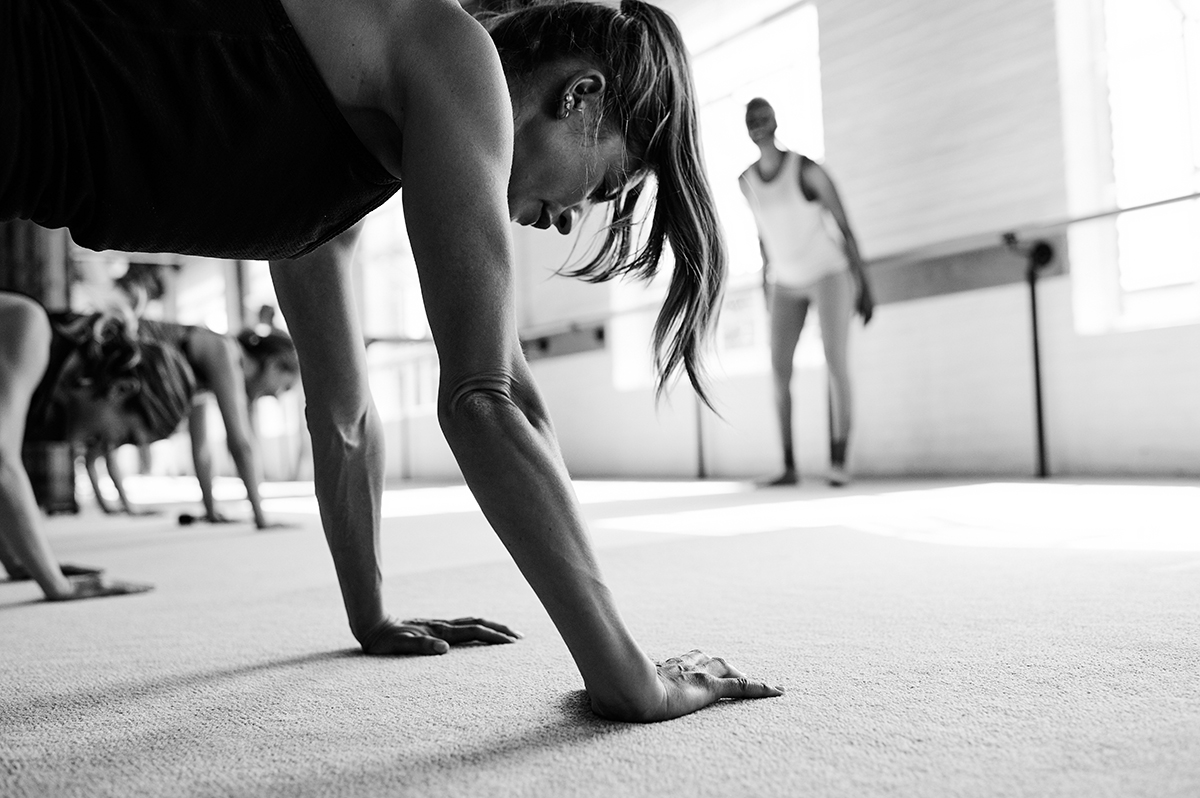
If you’re hooked on barre, you appreciate the many perks of this unique workout: sculpted muscles, greater flexibility, and upright posture, to name a few. The secret to barre’s efficient results? It’s packed with isometric exercises.
So, what is isometric exercise? Keep reading to learn how isometric training works and how it brings the many benefits you see from barre.
What is isometric exercise?
Isometric exercises, also known as static hold exercises, are movements that use isometric muscle contractions.
An isometric muscle contraction is one of three types that occurs during movement. Knowing how each muscle contraction type works can help you recognize isometric exercises during your next Bar Method class.
- A concentric contraction occurs when the muscle shortens. For example, during a biceps curl, the concentric contraction is where you curl the dumbbell upward.
- An eccentric contraction happens when the muscle elongates or lengthens. An example of an eccentric contraction is when you lower the dumbbell to the starting position during a biceps curl.
- An isometric contraction occurs when there’s no change in muscle length. For example, holding the dumbbell at the mid-way point of a biceps curl.
What are examples of isometric exercises?
Still wondering, “What is isometric exercise?” Some examples may help you recognize isometric exercises. Here are some isometric movements from Bar Method classes and traditional resistance workouts:
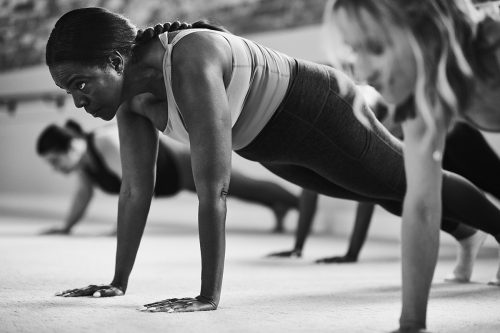
- Plank
- Wall sit
- Glute bridge hold
- Arabesque
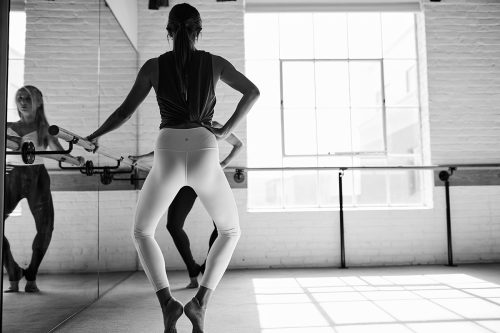
- Plie hold
- Dancer side bend
What are the benefits of isometric exercises?
1. Isometric exercises build strong muscles
Traditional resistance exercises are typically the go-to for strengthening muscles. However, it’s pretty common to rush through more challenging portions of movements (think: the bottom of a squat), leading to weakness in the position.
Isometric exercises can help fill in any gaps. By pausing to apply tension in a traditionally weak position, you can build strong, well-rounded muscles. Remember: Shoring up your weak spots will make you stronger overall!
The best part: Isometric exercises are often challenging enough using just bodyweight or a pair of light dumbbells. So, you can get an effective strength workout without heavy weights or bulky equipment.
Here are the muscle groups you’ll build in barre using isometric movements:
- The pecs (Pectoralis Major)
- Anterior deltoids (Pars Clavicularis)
- Medial deltoids (Musculus Deltoideus)
- Posterior deltoids (Pars Scapularis)
- The outer quads (Vastus Lateralis)
- The triceps (Triceps Brachii)
- The hamstrings (Biceps Femoris)
- The lower quads (Quadriceps Femoris)
- The abdominals (Rectus Abdominis)
- TA (Traversus Abdominis)
- Hip abductors (Gluteus Medius)
- Buttocks (Gluteus Maximus)
2. Isometric exercises boost muscular endurance
Muscular endurance offers many benefits, from greater posture (more on this shortly) to improved performance in other activities. For example, running and cycling require plenty of aerobic and muscular endurance — particularly in the legs and core — to keep the body going mile after mile.
Static strength training is a fantastic way to improve muscular endurance. Holding your body in a specific position will train your muscles to continue firing for extended periods.
3. Isometric movements are safe for pain and injury
Static hold exercises are a great way to rebuild strength in injured or painful body areas without risking damage — they’re even a staple in physical therapy routines. That’s because isometric exercises like those used in barre challenge your muscles without moving them.
Static strength training is also helpful for reducing pain and improving range of motion for those with joint conditions like arthritis. For example, research finds that six weeks of isometric strength training led to significant improvements in pain, range of motion, and functional ability in people with knee osteoarthritis (OA).
Meanwhile, those not participating in isometric strength training saw no change. (OA is a common condition where the cartilage that cushions a joint wears away, causing mild to severe pain in the affected joint.)
4. Isometric exercises improve range of motion
Another reason isometric exercises are a mainstay in physical therapy is they boost mobility. Injured muscles, joints, and connective tissues get swollen, which limits your range of motion and makes it difficult for the nerves to communicate. Isometric exercises get the nerves firing again, helping smooth out bumpy communication. This helps gradually increase your range of motion.
5. Isometric exercises improve posture
Many of the static hold exercises in barre target the muscles that support posture, including:
- Legs
- Core
- Upper back
- Shoulders
When these muscles are weak, they’re more likely to tire out. And when your postural muscles tire out, you’re more prone to slip into weak posture (i.e., rounded spine and shoulders). By teaching these muscles how to maintain tension for long periods, isometric barre exercises make it easier for your muscles to support solid posture in daily life.
Who are isometric strength training workouts for?
Isometric workouts like barre are a particularly good option if you’re recovering from injury or have a joint condition like arthritis. But the beauty of static strength training is that anyone can benefit from it — whether you’re looking to build strength, boost muscular endurance, refine posture, improve mobility, or work out with minimal stress to joints.
Bottom line: Isometric workouts are for everyone!
How often can you do isometric training?
Static strength training is gentle and low-impact, meaning you can do activities like barre often without any issues. How often you perform isometric training depends on your schedule, goals, and fitness level. However, three to five barre classes a week tend to be ideal for most.
How long do you need to hold isometric exercises?
You can hold an isometric exercise for a few seconds or several minutes — it really depends on your fitness level and goals. But in Bar Method classes, static hold exercises typically last between 1 minute and 3.5 minutes, depending on the muscle group. You’ll hold each exercise just long enough to deliver that signature barre shake.
A final word on the benefits of isometric strength training
Isometric movements, which require muscles to contract for a set amount of time, offer plenty of benefits for exercise and daily life. They help boost strength, mobility, posture, and muscular endurance while being gentle on joints. Isometric strength training may even help you lose weight when paired with a healthy diet. In other words, isometric exercises can help you reach any fitness goal. And, because they’re gentle on joints, static hold exercises can be performed frequently without causing pain or injury.
More fitness tips from The Bar Method
- Top Barre Exercises to Improve Posture: Why Bar Method Is the Solution for Better Posture
- 5 Ways to Maximize Your Morning
- Barre Myths: Debunked
Experience the strengthening, sculpting, toning benefits of our Method. Find a Bar Method studio near you and sign up for a class today.