New clients! For a limited time, Get 13 Classes for $78 (only $6 per class)

The Method
Toned Glutes Made Simple: Why Barre Workouts Might Be the Answer
June 18, 2026
Gym workouts aren’t the only — or even necessarily the best — way to sculpt your seat. Barre workouts, on the other hand, are specifically designed to deliver toned glutes by targeting them in ways traditional exercise doesn’t.
How? Read on to learn about barre’s unique approach to toning glutes, along with five barre exercises you can use to start your glute-building journey.
What are the benefits of toned glutes, anyway?
Your glutes do a lot of heavy lifting, both in sports and everyday life. So, building strong, toned glutes offers major pay-offs. You have three glute muscles in your hips:
The gluteus maximus is your primary glute muscle. It comprises most of the real estate in your seat and has several key functions. The gluteus maximus extends the hip, making it crucial for standing up, climbing stairs, and running. It also helps stabilize the pelvis and lower back, rotating the hip outward, and moving the leg toward or away from the body.
The gluteus medius is a smaller muscle located on the side of your hip. It plays a crucial role in stabilizing the pelvis while walking or balancing on one leg. The gluteus medius also helps move the leg away from the body and rotate the hip.
The gluteus minimus is the smallest of the three glute muscles (but it’s no less important!). Located deep in your buttocks, this tiny but mighty muscle helps the gluteus medius move the leg away from the body. It also assists in stabilizing the hip and rotating it inward.
Together, these three glute muscles power every lower-body movement, from standing up to walking to running. They also create a stable base for your arms and legs, allowing you to move with better balance and coordination. The stronger your glutes, the better they’re able to carry out these important tasks. This makes movement easier and reduces your risk of pain and injury.
How barre glute workouts help you build a stronger seat
If you’re looking for an effective glute workout, barre is a low-impact option that continuously challenges your muscles and leads to increased strength, toning, and sculpting. Here are a few reasons we love barre as a glute workout.
Barre repeatedly targets your glute muscles.
Barre targets every major muscle group from head to toe. And because the glutes are involved in so many important functions, they are also activated during nearly every exercise. So, expect to feel your glutes working (and maybe even burning) from warm-up to cooldown.
Barre uses isometric exercises.
Every barre workout utilizes isometric exercises, also known as static hold exercises, to fire up your glutes and keep them working overtime. These exercises use isometric muscle contractions, which occur when the muscle contracts without changing length. Think: planks, wall sits, or plie holds.
This approach challenges your glutes by forcing them to contract for prolonged periods — no bulky weight machines or countless sets of dumbbells needed (all the equipment you need is right in the barre studio!).
Plus, many barre poses incorporate small, ultra-concentrated movements to ramp up the intensity even higher. These movements help you hone in on a specific muscle group. They’re also the cause of the signature barre shake — a sure sign that you’re using proper form and pushing your muscles to their limit!
Barre improves range of motion.
Flexibility is an essential component of barre. Every strength-building pose is immediately followed by a deep stretch to lengthen the muscles you just worked. After all, stretches are most effective when the muscles are warm. By alternating strength and flexibility sets, you’ll improve the range of motion of your hips and the muscles and joints that support them (like the glutes!). The more range of motion you have, the more muscle fibers you’ll recruit during a strength workout. And the more muscle fibers you recruit, the better your results.
Barre instructors are technique experts.
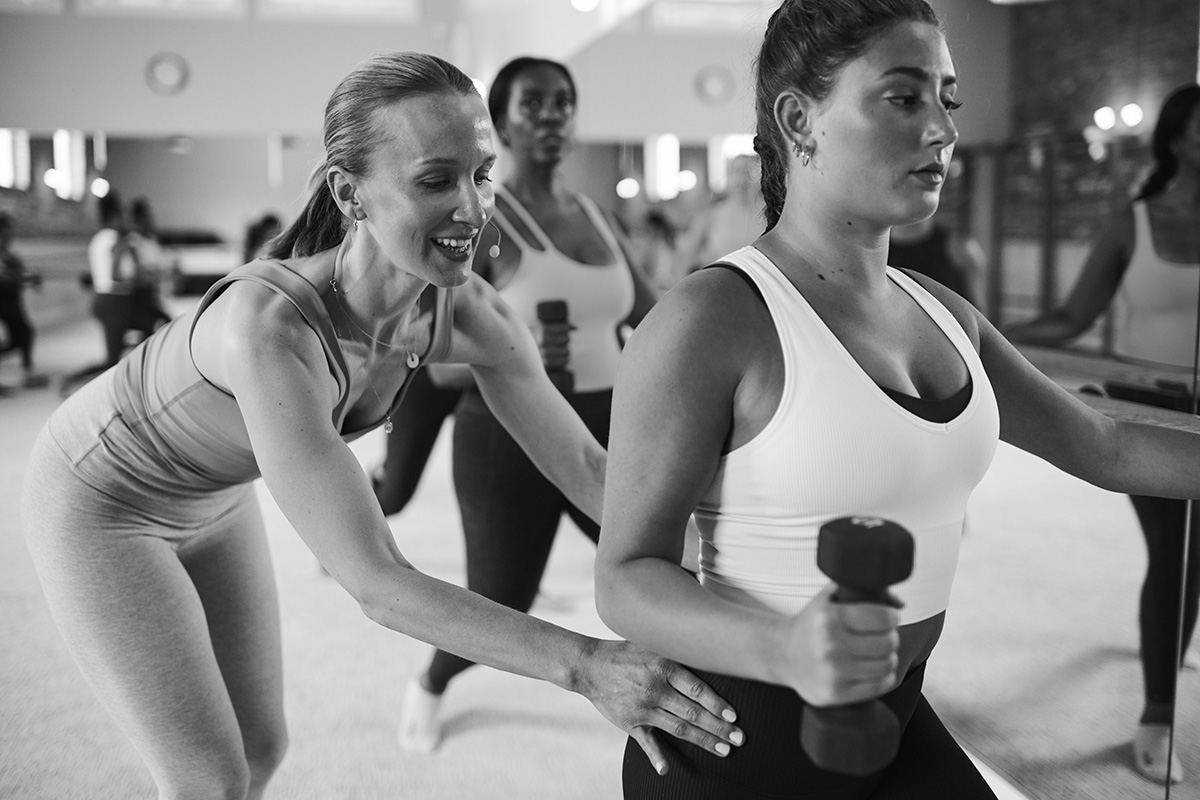
Our instructors are the backbone of every workout. They’re trained to provide form corrections and alignment cues to ensure that the glutes, rather than the lower back or thighs, are doing their part in each pose. This precise, form-focused approach ensures deep, efficient glute engagement from the start, helping you build strength, lift, and definition over time.
What are signs of weak glutes?
If your glutes are weak, your body will show you clues. The most common signs are:
- Poor posture
- Lower back pain
- Knee pain
However, some signs may be more subtle. For example, a weak seat can also translate to a lack of power or stability during movement, which may not show up as poor posture or pain in the lower back or knees — yet.
What are signs of strong glutes?
When this powerful muscle group is working correctly, you’ll likely notice several positive effects in your daily activities and workouts.
Signs of strong glutes include:
- Good posture, hip stability, and pelvic control
- Proper knee and ankle alignment
- Power in daily movements like walking up stairs
- Efficient walking and running
- Absence of pain or injury
If you’re able to move freely without pain and work out with proper form, it’s a good sign that your glutes are steady and strong. But that doesn’t mean you should neglect your glutes during your workouts — there’s always room for improvement!
How to assess your glute strength
If you’re not sure how strong your glutes are, there’s a simple test you can do at home to check. To do it, perform a glute bridge or balance while standing on one leg. If you feel the exercise mostly in your hamstrings or quadriceps (the muscles in the front of the thighs), or if you notice your hips tilt, your glutes may be weak. If you feel the activation primarily in your glutes rather than your hamstrings, it’s a good sign they are firing correctly.
When you’re in the studio, you can also ask your Bar Method instructor to watch your form during class. Our instructors are experts in identifying lagging muscle groups and offering form adjustments to better recruit them. (Notice weak glutes? The exercises below can help!)
5 barre exercises for toned glutes
Now, let’s put it all together. Here are five of our favorite, instructor-approved glute exercises from The Bar Method. Look for them in your next class!
1. B-squats
Similar to a split squat (which challenges one side at a time), this move kicks the heat up a notch and challenges your seat (glutes) as you squat on one leg, using the other leg only for light support.
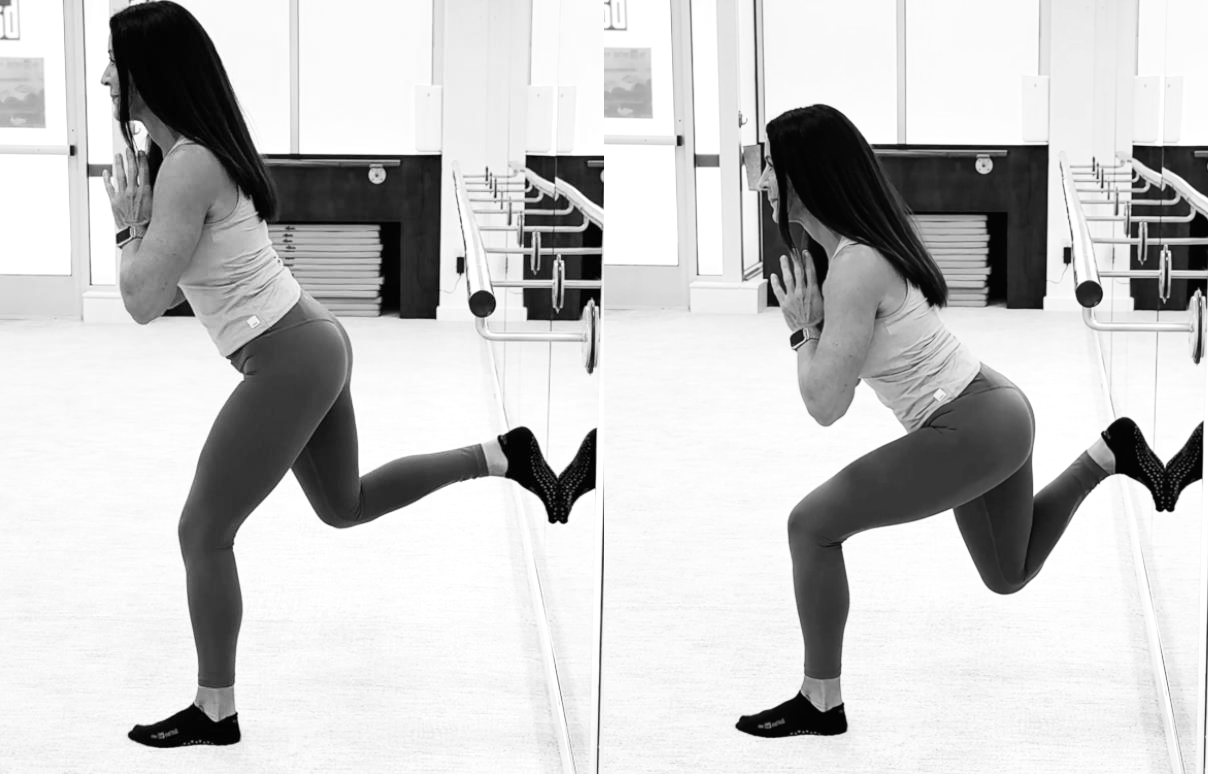
How to:
- Hold onto the barre and turn to face away from it.
- Widen your grip and step forward until your arms are straight and you can barely reach the bar anymore.
- Position your feet hip-width apart and parallel; soften your knees.
- Bend one leg and rest the ball of your foot on the wall behind you (the height is up to your comfort).
- Tilt your torso diagonally forward and shift your weight back slightly into your standing heel.
- Bend your standing leg as much as you can, then return to your original position and squeeze your standing glute. Keep your knee aligned over your ankle as you move diagonally back and down, then up.
- Perform bends at varying tempos and repeat for about two minutes, then switch legs.
2. Tilted seat
Tilted seat fires up the gluteus maximus, gluteus medius, and hamstrings (the muscles on the backs of your thighs). By holding a forward-leaning, angled torso while balancing on one leg, you’ll work your seat from every angle.
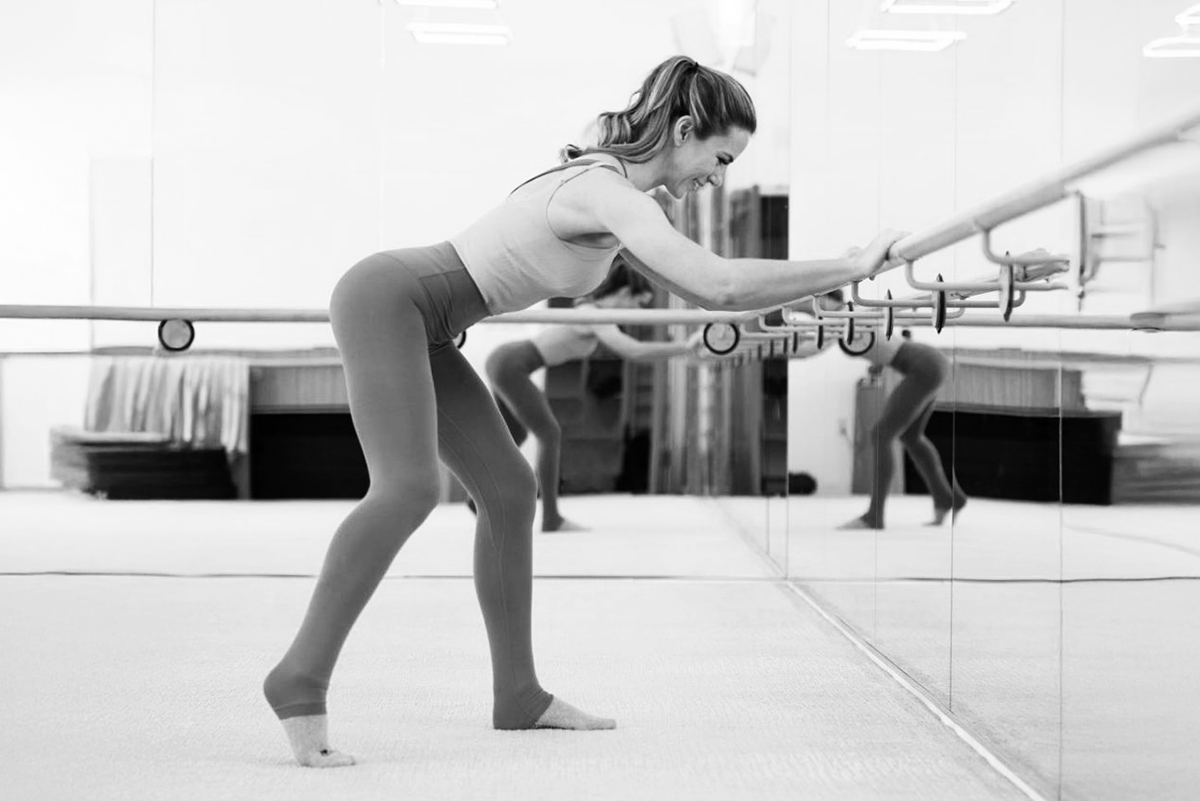
How to:
- Stand about an arm’s length away from a support (e.g., a barre, the wall, or a countertop), with your feet hip-width apart.
- Hinge your torso forward and shift your weight onto the right leg.
- Slide your left leg back and out to the side at an angle; support your back leg on the ball of your left foot and keep your weight in your front heel.
- Check that your front knee is in line with your ankle and your shin is vertical.
- Bend your front knee to lower yourself an inch, and then lift up an inch.
- Continue performing reps for one minute before switching sides.
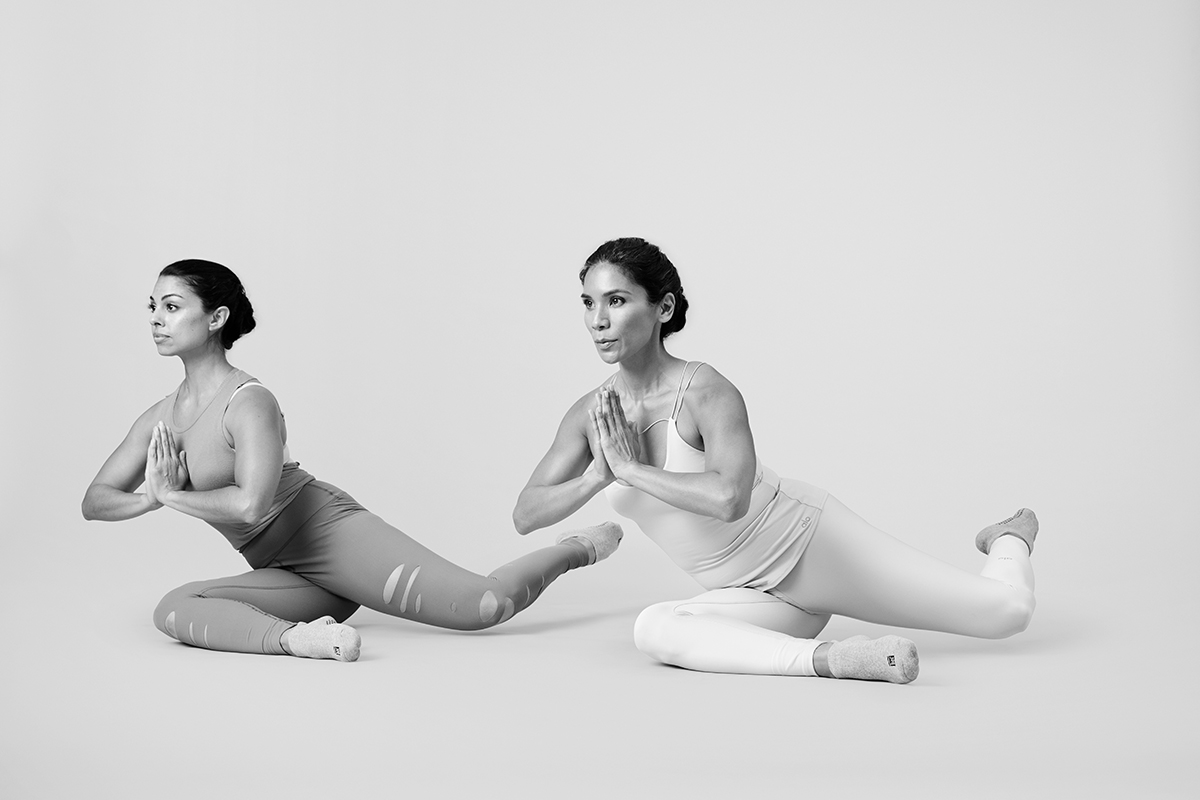
3. Pretzel
Pretzel targets the gluteus medius as you lift your top leg. As an added bonus, it also activates your waist muscles!
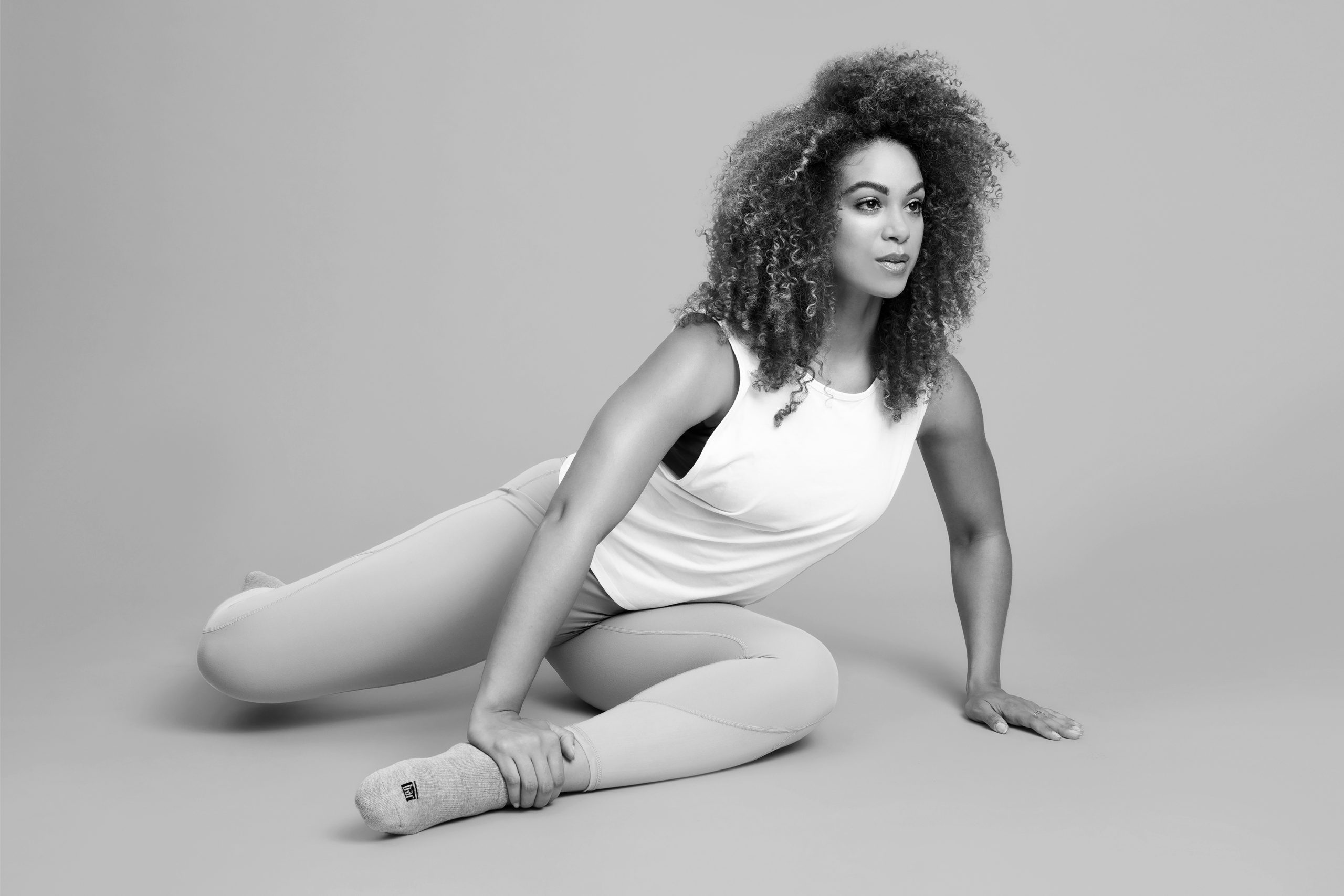
How to:
- Sit on the floor and sweep your right leg in front of you and the left leg behind you.
- Create two 90-degree angles with both legs; slide your left knee back until it’s in line with your left hip.
- Position your right hand on the floor next to your front knee and your other hand on your front shin.
- Lean your torso diagonally to the right and slightly forward.
- Lift your left foot off the floor and press your left hip forward.
- Using the side of your glutes, lift your left knee one inch off the floor, and then down an inch.
- Continue performing reps for one minute before switching sides.
4. Foldover deadlift
The leg lifts in this move target the gluteus maximus, while the gluteus medius is activated to keep your hips stable while balancing on one leg.
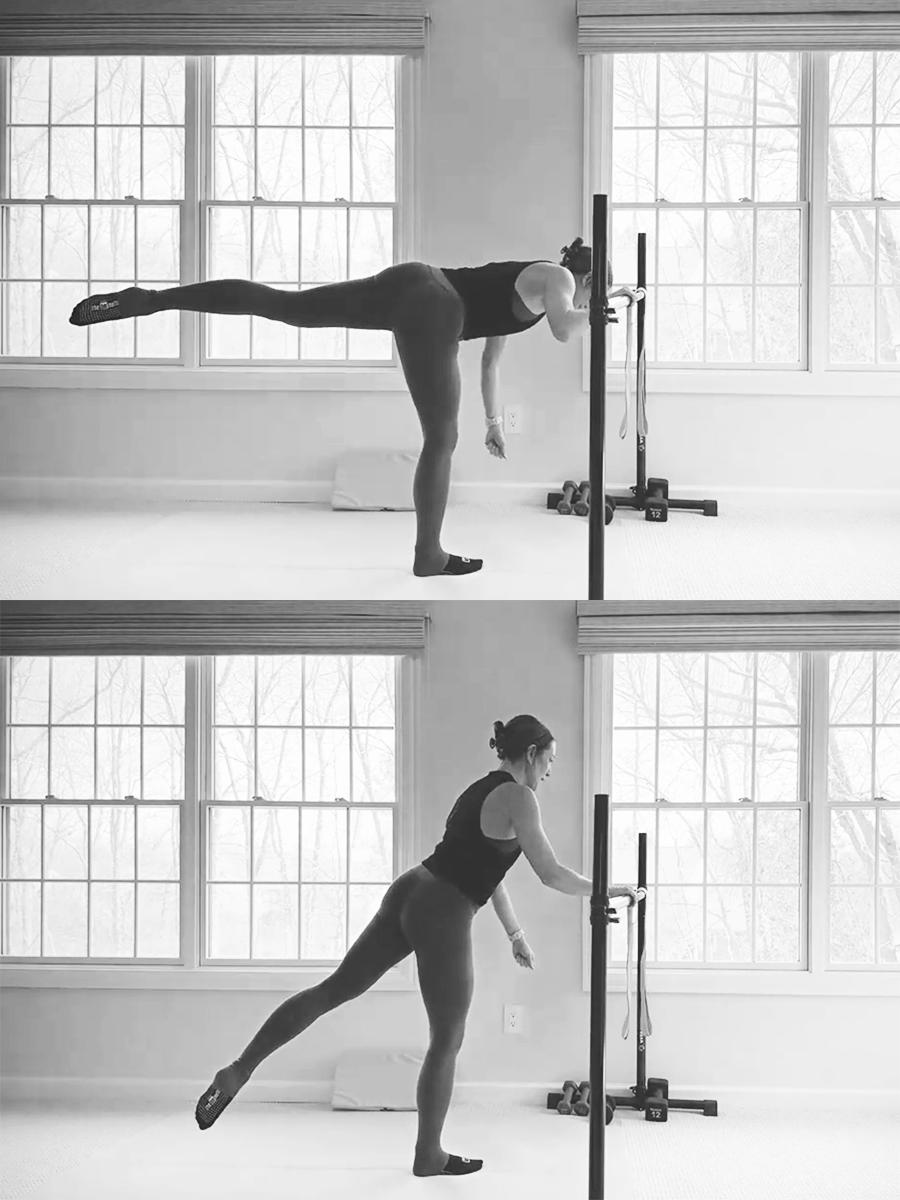
How to:
- Stand about an arm’s-length away from a support (e.g., a barre, the wall, or a countertop), with your feet hip-width apart.
- Hinge your torso forward and shift your weight onto the right leg.
- Slide your left leg back and out to the side at an angle; support your back leg on the ball of your left foot and keep your weight in your front heel.
- Check that your front knee is in line with your ankle and your shin is vertical.
- Soften your front knee and lift the back leg straight behind you until it’s parallel to the floor; your thigh and low back should form a horizontal line in this position.
- Lower your back foot a few inches, allowing your torso to lift.
- Continue performing reps for about two minutes, then switch legs.
- To take the challenge option, grip a light dumbbell in your free hand; allow your arm to hang toward the floor.
5. Strap stretch
The strap stretch is your opportunity to lengthen your glutes right after working them, helping improve your range of motion.
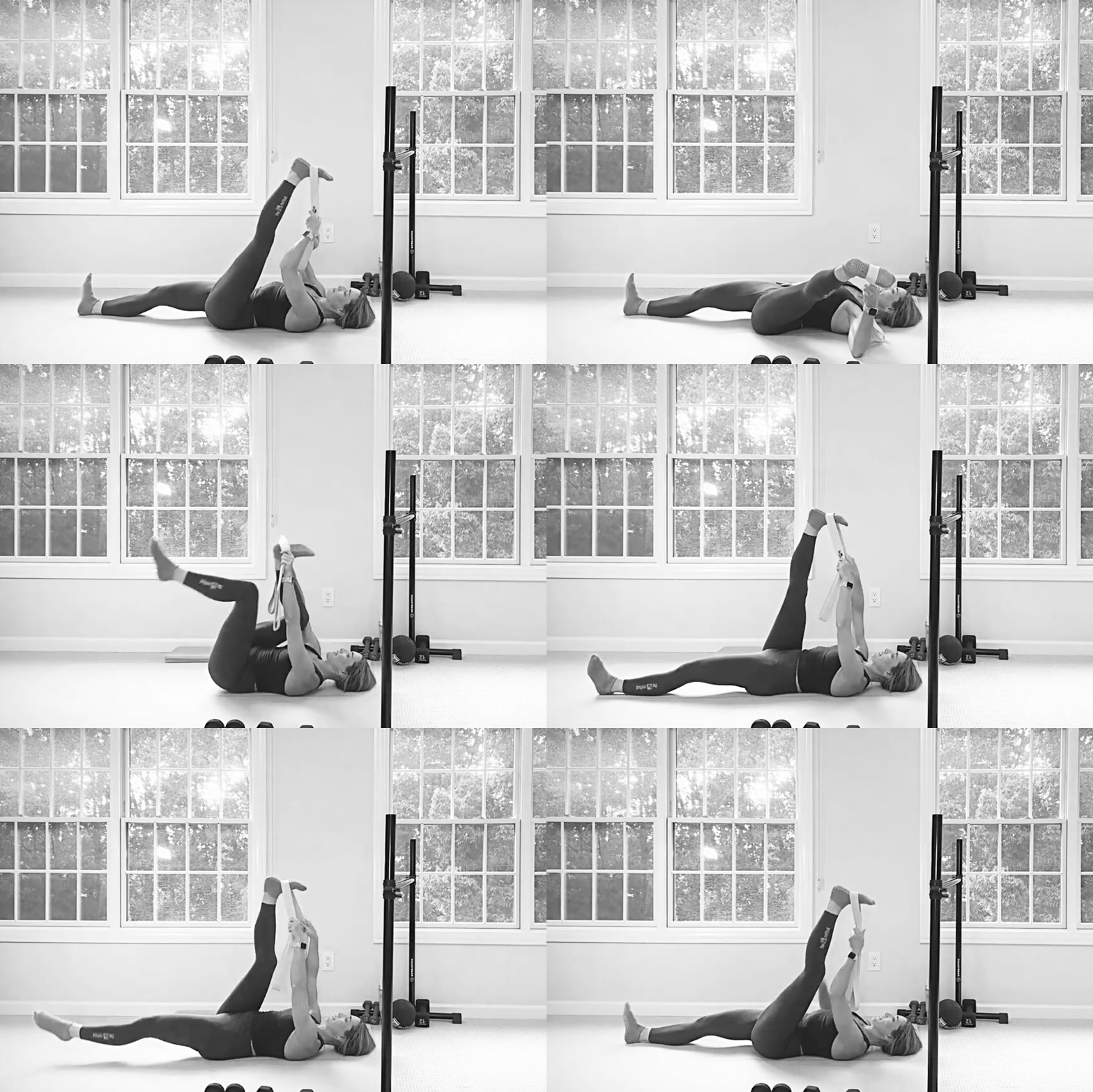
How to:
- Lie on your back on the floor.
- Hold a strap in both hands and place the center of the strap across the bottom arches of your feet.
- While lying on your back, straighten your knees above your hips, keeping the strap in contact with your feet. Find a comfortable grip on your strap that allows you to relax your neck and shoulders while creating tension on your hamstrings.
- Lower one leg to the floor in front of you.
- Straighten both knees and flex both feet. Bend your elbows outward and gently pull your top leg closer to you.
- Breathe deeply and relax your hamstrings.
- Hold this position for about 10 seconds, then change sides.
How long does it take to tone glutes?
Results vary, but most people notice improvements in glute activation and strength after taking three to four barre classes per week for two to three weeks. It typically takes six to eight weeks to see physical changes (i.e., a more toned, sculpted seat).
The Bar Method’s precise, form-focused approach ensures deep, efficient muscle engagement from the start of your barre journey, helping you build lasting strength, lift, and definition.
Consider barre your secret weapon for toned glutes
If toned glutes are on your wish list, look no further than barre. Thanks to isometric exercises, flexibility training, and expert instruction, you’ll build a strong, defined seat in no time.
Aesthetics aside, improving glute strength and definition offers other benefits. Notably, it can boost your power and performance in other sports, make everyday movements easier, and reduce your risk of injury. Those are major wins in our book!
More barre and wellness tips
Want to maximize the glute-toning benefits of barre? Check out these resources:
- What Is Isometric Exercise? The Secret to Barre Results
- How to Recover After a Barre Workout: 5 Must-Do’s
- How to Fuel Your Bar Method Workout