New clients! For a limited time, Get 13 Classes for $78 (only $6 per class)

The Method
How Barre Workouts Target Back Muscles and Help You Become Your Strongest Self | The Bar Method
October 3, 2025
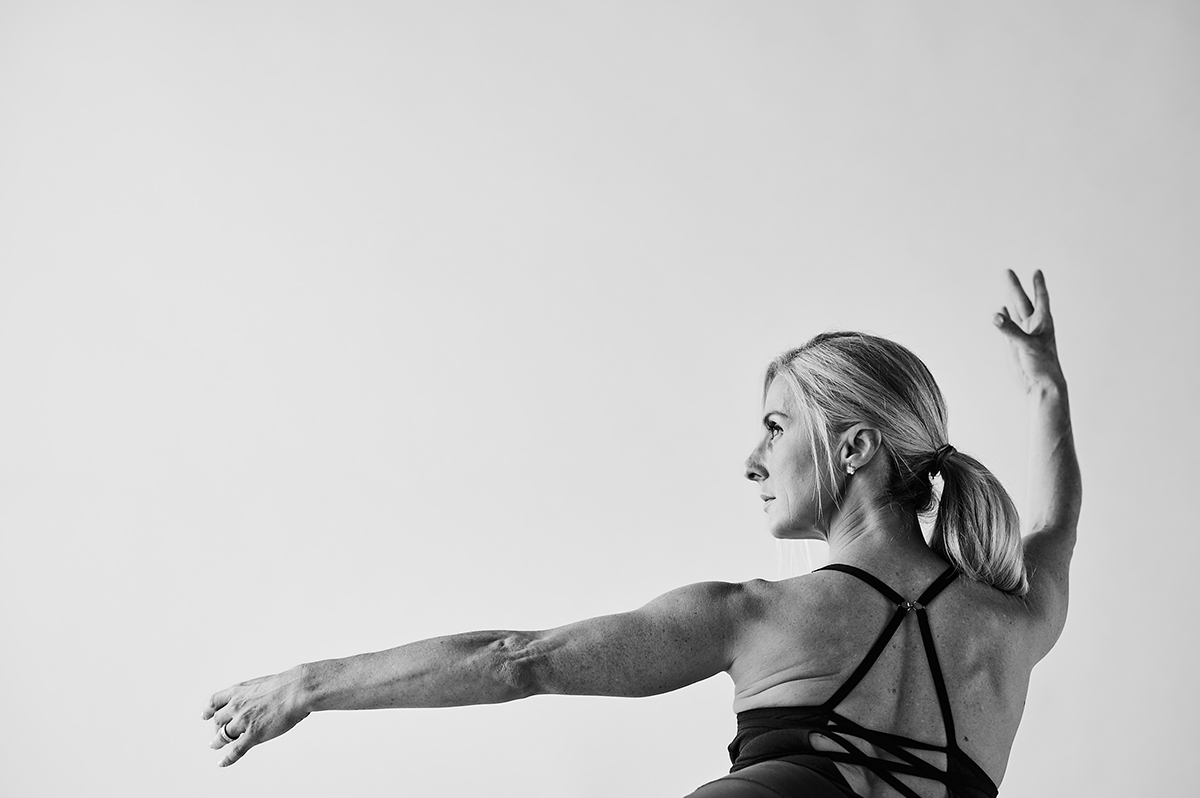
If you’ve taken a class with The Bar Method, you likely know it has full-body results you can feel — and see! One of the most sought-after advantages is how it strengthens the most vulnerable parts of the human body, including the back. Strong back muscles are key for great posture and confidence, helping you look your best. But modern conveniences and office work mean that most people don’t use their back muscles regularly, leading to weakness and pain. This is where barre classes come in — they challenge and strengthen us precisely where we need it most.
In this blog, we’ll cover how barre workouts target back muscles and more, including:
- Best practices to prevent back pain
- How and why barre classes build muscle
- The role of your core in building back strength
- Back and core exercises to try for yourself
Avoiding back pain starts by understanding it
According to The New York Times, people who do not exercise regularly face an increased risk for low back pain. And according to Statista, by 2050, nearly 60 million people will be experiencing low back pain in North America.
When thinking about how barre workouts target back muscles, a common misconception about lower back pain is that we can eliminate it simply by doing abdominal exercises. The logic here is that a strong front of the body will give you a strong back. The truth is, to have a healthy back, you have to strengthen not only the front of your trunk but the back itself to develop good posture and alignment.
How to prevent back pain or injury
According to Harvard Health, “Your back is made up of different types of specialized muscles that enable you to move your body so you can twist, turn, bend, stand, walk, run, and lift. Strengthening your back muscles can help you perform everyday activities.”
To avoid issues, keep the back muscles healthy, and challenge your body to get stronger, it’s important do exercises that require sustained use of the back muscles (hint: like Bar Method classes!). The erector-spinae muscle group, in particular, is an important one to keep toned. This muscle group runs along the spine to stabilize it and support upright posture.
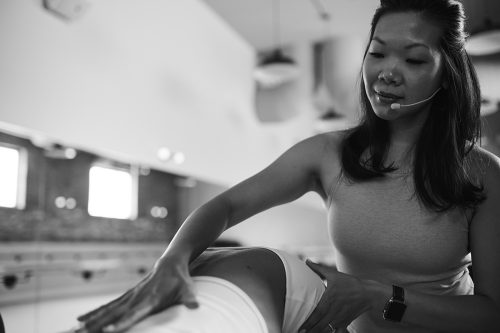
What do barre class exercises have to do with back muscles?
Before and after class, members often talk about how much The Bar Method has helped their backs. The Method does that in a variety of ways. In addition to strengthening the abdominals, it strengthens, stretches, and aligns the back. Stretching at the start and end of class can help lengthen the spine and reverse some of its constant compression from gravity. The first 15 minutes of classes specifically strengthen the shoulders, arms, and upper body muscles, including the posterior deltoids, rhomboids, and lats. The upper back is consistently engaged during this segment.
The Bar Method’s leg exercises also play a role in stabilizing the back. At the barre, the back muscles experience sustained isometric work, which strengthens to protect against lower back pain. Then they work their glutes, which act as a support for the lower back and must be strong to protect it.
How does barre build muscle?
Barre classes are made up of precise exercises that target and challenge specific muscle groups. Repeatedly testing the limits of a muscle’s endurance creates microtears in the muscle that must then repair themselves. This is the process of increasing muscular strength.
The Bar Method does so in a way that is thoughtful and sustainable. Each exercise considers joint impact and the long-term effect on the body and mind. Because our exercises use body weight and lighter weights — unlike traditional strength training — they can be held for longer without risk of injury or overuse. That’s why you can comfortably take Bar Method classes five to seven times a week.
What muscles does barre work?
Every Bar Method exercise is intentionally designed to achieve different goals and target different areas within the body, from glutes to biceps, and everything in between. Read on for specific back exercises that engage the latissimus dorsi, the broadest muscle in your back, which promotes good posture and spinal stability. Located in the lower back, it supports motion across the upper body, so creating strength here benefits your posture and mobility.
Why is it important to strengthen both your core and back?
When only your back or core is strong, your body may overcompensate and rely on the other more. This can cause potential imbalances or even injury, so it’s important to think of your back and core as a team.
Strong back muscles promote good posture, alignment, and spinal stability. Meanwhile, a strong core allows the back to balance the weight it takes to keep us going in our daily lives. When the core is weak, the back has to do more. When the core is strong, it can reduce back pain — a win-win!
As a bonus, did you know that the glutes also contribute greatly to your core and core strength? These muscles are actually part of the core, so when they are strong, they provide foundational support for the pelvis and spine. If you’ve taken any Bar Method classes, you know the glutes are a key focus area for us — and now you know that the benefits of strong glutes extend even further to the core as well!
Try out these Bar Method back exercises for yourself
The posture work section of our classes targets your back muscles with exercises like lat pulls and rhomboid pulls, which are performed with weights. Plus, Bar Method classes are efficient at targeting multiple muscles at once. For example, arabesque is a seat exercise that intensely hits the obliques and upper back while strengthening the glutes. Afterward, we stretch the posture muscles to round out the exercise.
Look out for these three back exercises in your next Bar Method class — and try them for yourself to get ready for your next barre workout.
Lat Pulls
How to:
- Pick up a set of weights.
- Stand with your feet hip-width apart, soften your knees, and grip your glutes to stabilize your core.
- Bend your arms in half, draw your elbows behind your waist, and rotate your weights to the side to form two L-shapes with your arms.
- Squeeze your elbows tightly toward one another to engage your lat muscles.
- Do this rhythmically for about a minute.
Rhomboid Pulls
How to:
- Pick up a set of weights.
- Stand with your feet hip-width apart, soften your knees, and grip your glutes to stabilize your core.
- Bend your arms in half and lift them away from the sides of your body to create a 45-degree angle down from your shoulder to your elbows.
- Draw your elbows backward until you feel the muscles between your shoulders (rhomboids) engage.
- Continue to stand tall and maintain a forward bend at your waist as you squeeze your elbows back rhythmically for about a minute.
Arabesque
How to:
- Stand an arm’s length away from something sturdy that can act as support (countertop, dresser, back of a couch).
- Turn your feet out to form a wide v-shape and soften your knees.
- Pick up one foot and place it on the floor behind you.
- Maintain the turnout in both legs as you see-saw forward at your hips. This will lower your torso and raise your leg into a horizontal position.
- Lift your head and the upper part of your back slightly to engage your posture muscles. If you feel your lower back activate you’ve come up too far.
- Open your working (lifted leg-side) hip 2-3 inches.
- Level your shoulders to turn on your waist muscles.
- Lift your leg an inch at a time for up to 3 minutes.
- After each side, perform a pull-away stretch — hinge your body forward and either let your torso hang through your arms as you hold onto your support, or lower your hands to the floor. Soften one knee at a time.
- Repeat the work and the stretch on the other leg.
Try out these Bar Method abdominal exercises for yourself
Static curl and kickstand curl are two classic Bar Method exercises to look for when working on core strength. Static curl focuses on the transversus abdominis (the deep ab muscles), while kickstand targets the rectus abdominis (the muscle that enables crunches). The high curl is another example. When performed without the ball, it is another deep ab move for the transversus abdominis, but with a ball behind the waist it becomes rectus abdominis focused.
Look for these abdominal exercises in Bar Method classes, or try them for yourself.
Static Curl
How to:
- Come to the floor and rest on your elbows as you tent your legs (knees bent up to the ceiling with feet flat on the floor).
- Grip your glutes and gently secure your lower back down.
- Slide your hands up the backs of your thighs and hold on behind your knees. Keep your elbows softly bent and out to the side to engage your biceps.
- If you feel stress in your neck, shoulders, or like you might fall backwards, use support at your midback to help you stay in position. This can be done with Bar Method props or items you have at home, like a throw pillow.
- Exhale forcefully at varying speeds. Holding on is already working your transversus abdominis muscle, but if you’d like more challenge try letting go for 10-20 breaths before resetting.
- Do this for up to 2 minutes.
Kickstand Curl
How to:
- Come to the floor and rest on your elbows as you tent your legs (knees bent up to the ceiling with feet flat on the floor).
- Grip your glutes and gently secure your lower back down.
- Align your elbows under your shoulders and press them down to give you leverage to curl your upper body forward.
- Curl at varying tempos for up to 5 minutes (this is a long one that can take time to build!). You can keep your elbows down the whole time and effectively work your six-pack muscles, or for more challenge, try raising your elbows to shoulder height for 10-20 reps at a time.
High Curl
How to:
- Sit up and tent your legs in a parallel position.
- Grip your glutes, raise your arms, and slowly lean your torso back until you feel your abs catch. The goal is about a 45-degree angle. If you feel unable to hold this, add mats or pillows against your tailbone for support.
- Bend slightly forward at your waist and exhale for up to 10 slow counts.
- Hold onto the backs of your thighs to reset without sitting all the way up.
- Leg go and repeat the exhale series up to four more times.
Many know that The Bar Method is a rigorous workout that leads to a stronger core, toned thighs, and a lifted seat. What they might not have known until now is how barre workouts target back muscles to give you a strong, healthy back!
More strength tips from our expert instructors
- Sculpt Your Body With Barre
- Top Barre Exercises to Improve Posture: Why Bar Method is the Solution for Better Posture
- How Do You Know When You’re Ready for Bar Strength?
Want to build strength and confidence, so you can feel your best? Find the nearest Bar Method studio to get started!