New clients! For a limited time, Get 13 Classes for $78 (only $6 per class)

The Method
Exercise as Therapy: How Barre Boosts Mental and Physical Recovery
June 24, 2026
If walking up the stairs with sore legs is a nuisance you know all too well, you’ve got a nagging injury that’s holding you back, or you’re feeling mentally exhausted all the time, it might be a sign that it’s time to focus on recovery.
Rest and recovery look different for everyone, but stopping all activity completely often isn’t the solution — instead, gentle movement and exercise as therapy could be what your body needs.
Let’s talk about why physical (and mental) recovery is important and how barre both prevents and helps repair injuries.
The importance of exercise and therapy for recovery
Whether you’re coming off an injury or simply struggling to walk up the stairs due to tired and sore muscles, taking time to recover is essential to achieving long-term results and maintaining healthy movement throughout your lifespan.
Why? Strengthening workouts like barre cause tiny tears in your muscles. This might sound problematic, but it’s actually totally normal — and it’s how your muscles grow. This is also why it’s important to give your body time to recover after an intense workout. During recovery, your body works to repair the torn muscle fibers and builds them back even stronger than before.
Similarly, allowing your body to recover after an injury like a muscle strain or joint issue is essential to restoring proper function and mobility — in other words, your ability to move freely without pain in the gym, barre studio, and daily life.
What recovery really means
Recovery doesn’t necessarily equal “not moving.” In fact, there are two different types of recovery:
- Passive recovery: Complete rest with little to no physical activity. Think: foam rolling, massage, sleeping.
- Active recovery: Gentle, low-impact, less strenuous forms of movement. Think: Walking, swimming, stretching, yoga.
While passive recovery may be recommended for some, active recovery is well known to reduce muscle soreness, improve circulation, and enhance mobility, which leads to improved performance and results in the long term.
It may even be beneficial for injury recovery. Research suggests that eccentric resistance training (more on this later!) and rapid introduction to rehabilitation after an injury lead to significant improvement in time to recovery and reduce the risk of reinjury.
Related: How to Recover After a Barre Workout
Exercise as therapy: It’s about more than muscles
We’d be remiss if we didn’t acknowledge the fact that recovery isn’t always physical. Whether you experience depression and anxiety or you’re simply going through a mentally tough season, exercise can be an effective form of “therapy.” Here’s why: It naturally increases endorphins (aka feel-good chemicals in your brain), improves sleep, reduces stress and anxiety, and enhances self-esteem and social support — and along with medication and psychotherapy, it can enhance treatment outcomes overall.
Science says it’s true, but members’ experiences are the real proof that exercise is therapy. Check out these stories of how barre has transformed members from the inside out:
- The Light at the End of the Tunnel: Meg’s Story
- Brynn’s Story: Rediscovering Happiness at The Bar Method
- A Bar Method Owner Shares Her Battle With Domestic Violence and How She’s Working to Find Peace and Healing
What kind of workout is barre — and how does it relate to exercise as therapy?
Before we talk about barre, let’s go back to eccentric resistance training. This is any form of exercise that emphasizes the lengthening phase of a muscle contraction under a load. Think: Slowly lowering a dumbbell during bicep curls or the elongation of your quads that leads to that intense burn as you lower into a squat.
So, how does barre fit in? Similar to eccentric resistance training, barre classes incorporate slow and controlled movements, isometric holds, and small pulses that challenge your muscles and increase time under tension, especially in the lengthening phase of movements.
Mindful stretching segments are also programmed into each workout to counter the more intense barre and weight work. This emphasis on precise movement and consistent tension makes barre a safe and effective workout for muscle recovery, whether it’s after a workout or part of post-injury therapy.
Our Method, uniquely designed
At The Bar Method, we take barre workouts a step further to ensure every workout works for every body. How? Every class format and exercise is reviewed and approved by a licensed physical therapist, and our technique team follows a rigorous process, including testing in select studios to get real-time feedback. This ensures each exercise is safe, effective, and thoughtfully placed in every workout for maximum impact.
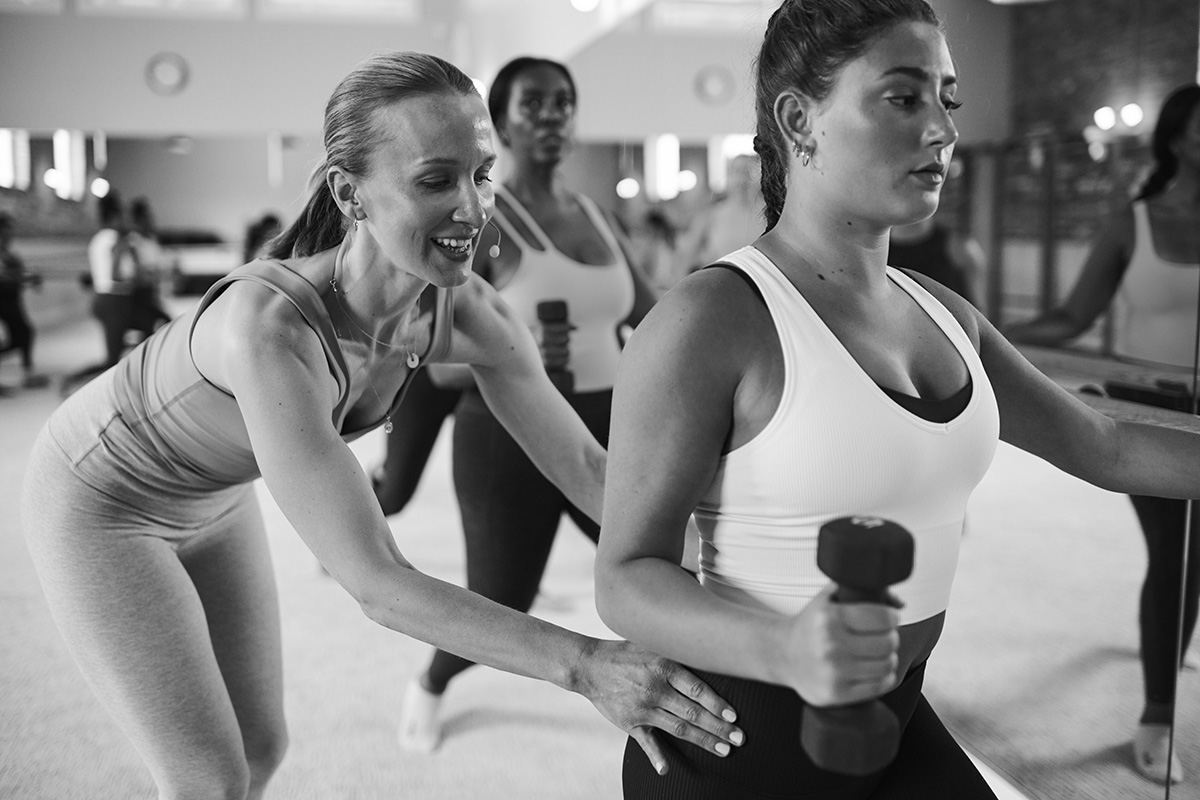
Instructors also offer modifications during class to help you challenge your body safely and move in a way that works for you, so the benefits are twofold: barre workouts prevent injury and help you recover from it.
5 ways barre helps prevent injury
Barre’s unique combination of strength, stability, and mobility training — along with expert instruction — provides a well-balanced workout that benefits your whole body. Here’s how those benefits help prevent injury inside and outside the studio.
Barre builds strength.
Barre workouts strengthen every muscle group, including your small stabilizer muscles, to improve muscle and joint function and help you move better.
Barre improves balance.
Barre improves balance through unilateral movements and joint stability exercises. This translates to efficient movement during workouts and in daily life.
Barre increases flexibility.
Barre incorporates mindful stretching into every sequence to improve your range of motion, control, and stability, decreasing your risk of injury during exercise and everyday movements like lifting or squatting.
Barre builds muscular endurance.
Barre builds your muscular endurance through high reps and small(ish) weights, helping you maintain control and proper form during the workout.
Barre improves posture.
Barre also improves posture, which is key to injury prevention and healthy movement.
How barre exercise can help with injury recovery
What if you’re recovering from an injury like a muscle strain or joint and lower back issues from sports, your job, or even playing with your kids? Barre can help with that, too.
Whether you’re new to the workout or a regular, barre can help you ease back into exercise because it emphasizes controlled, low-impact movement, proper alignment, and core stability. Plus, our Method’s small, supported motions help you rebuild strength and balance with minimal stress on your joints, and all our instructors are trained in anatomy and common injuries to ensure each movement is safe yet challenging.
With the right modifications (and clearance from a medical professional), barre can be a safe bridge between physical therapy and more high-impact workouts.
Related: How Barre Workouts Target Back Muscles and Help You Become Your Strongest Self
7 tips to incorporate barre into your recovery routine
Ready to add barre to your recovery routine? We recommend starting with short sessions focused on stretching and form, like a Bar Online class at home or a Bar Restore session in the studio.
For general recovery, one to two classes per week can complement other low-impact activities like walking or stretching. After an injury, barre can help retrain balance, activate stabilizing muscles, and rebuild joint support (with clearance from a healthcare provider) so you can get back to doing the things you love.
Use these tips from our expert instructors to get started and ease back into movement after an intense workout or during injury recovery.
1. Start slow and build gradually.
It may be tempting to go back to full-intensity workouts right away after an injury, but easing in and letting your body adapt before adding intensity or increasing weights can help you recover better in the long run. This also helps you build confidence to move your body without risking re-injury.
2. Listen to your body.
Remember: Fatigue is normal (hello, shake!), but pain is not. If something doesn’t feel right during a workout, pause or ask your instructor for a modification.
3. Communicate with your barre instructor.
Your instructor is there to help you maximize the physical and mental results of every workout — and make each movement work for you. Let them know about any injuries or limitations before class so they can guide you through each exercise safely and effectively, or help you practice mindfulness during class.
4. Focus on form over depth or intensity.
“Quality over quantity” holds true in the barre studio — focus on proper alignment and muscle engagement during each rep rather than pushing into larger ranges of motion before your body is ready.
5. Use support as needed.
It’s called barre for a reason! The ballet barre is there to help with balance, stability, and control, especially during recovery when your muscles might be tired or sore. Feel free to take advantage of other support props like straps or mats to ensure proper positioning during floor work, too.
6. Keep your core muscles engaged.
Your core is involved in every movement you do, whether it’s in the barre studio, gym, or everyday life. Keeping your core engaged supports and protects your spine, improves posture, and prevents injury.
Related: The Best Barre Core Exercises to Tone Your Stomach
7. Prioritize recovery in your fitness routine.
Rest days, stretching, and mobility work help your body repair, recharge, and come back even stronger after a tough workout or injury — or just a long, tiring week. (Might we recommend a Bar Restore class?)
Exercise as recovery: Add barre to your routine
Whether you’re a barre regular, a routine lifter, preparing your body for high-impact exercise after injury, or looking for a mental reset, barre as therapy could be the key you need to unlock better, faster recovery — and improved mental wellness.
With its unique combination of strength, cardio, ballet, stretching, and yoga, barre challenges your body and mind consistently while kickstarting the recovery process — and our Method is scientifically designed to be safe enough to do every day, so it’s simple to incorporate into your routine. Remember: A body in motion stays in motion!
More fitness and recovery tips for you
- Barre During Pregnancy: Why It’s a Safe and Effective Workout
- Benefits of Stretching During Barre
- Three Body-Changing Active Stretches You Can Do at Home
- Not Seeing Results? How Fitness and Nutrition Support Your Wellness Goals
- What to Eat Before a Workout: How to Fuel Your Next Bar Method Class
Ready to see and feel how barre can shake up and improve your recovery routine? Find a Bar Method studio near you to get started.