New clients! For a limited time, Get 13 Classes for $78 (only $6 per class)

General
Try This Barre Back Workout to Take Stress Off Your Lower Back
August 24, 2026

Ever feel like your back is (literally) holding you back? Maybe it’s from a past injury or sitting at a desk from 9 to 5. Nagging tightness, constant slouching, a wobbly feeling during workouts, or everyday tasks that somehow feel harder than they should could all be signs that your back muscles need a little love.
Enter: barre back workouts, which target often-overlooked muscles to improve posture and stability while building strength that actually shows up in real life. Seriously — building a strong back doesn’t just make for better mirror pics in the studio (but we’ll admit that’s a nice perk!). More importantly, it keeps you moving strong, confident, and injury-free for the long haul. Let’s talk about how.
We’ll cover:
- The benefits of strong back muscles
- How barre strengthens the back
- How to incorporate back exercises into your strength routine
- 10 of our favorite back exercises for strength, posture, and definition
A strong back = a strong foundation
Strengthening the back provides a strong foundation for all types of movement, from lifting to bending to squatting, inside and outside the barre studio. Why? The back muscles (part of a large muscle group called the posterior chain) are closely linked to the core muscles. Together, back and core strength provide the stability needed for everyday movements like jumping and running, in addition to improving pelvic posture and supporting pain-free movement.
Not to mention: Overall muscle mass may be a strong indicator of longevity, and overall strength helps you move efficiently and stay active in the long term. In short: Don’t turn your back on the posterior chain!
Related: How Does Barre Help With Posture?
How barre strengthens the back muscles
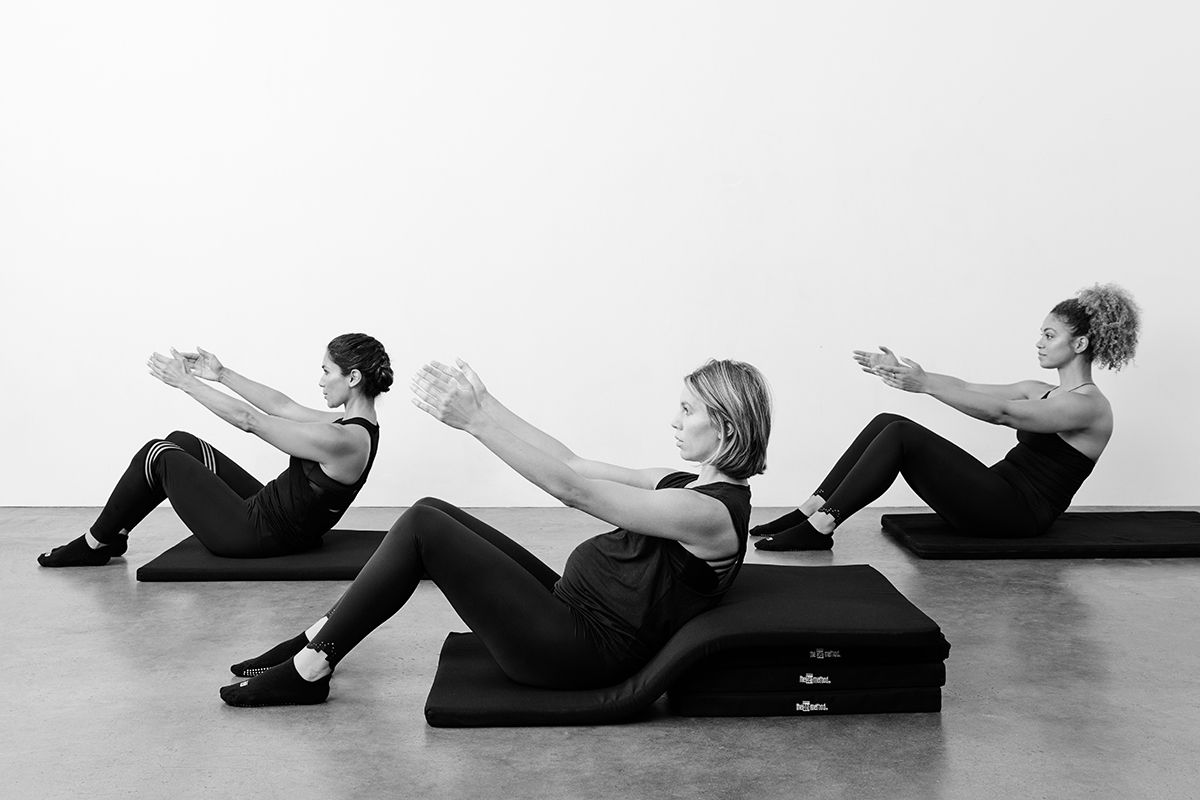
Barre seamlessly blends ballet-inspired movements with strength training, stretching, cardio, Pilates, and yoga to challenge your body (including your back) in ways no other workout can.
Our classes are centered around stretching, strengthening, and stabilization to ensure every workout is efficient and effective.
For example, many of our posture exercises provide a stretch for the front of the body. Then, when the focus returns to the muscles in the chest, shoulders, and biceps, the muscles in the back stabilize and are stretched. This focus on stretching and mobility throughout class means there isn’t a required recovery period — you can safely keep moving without risk of injury.
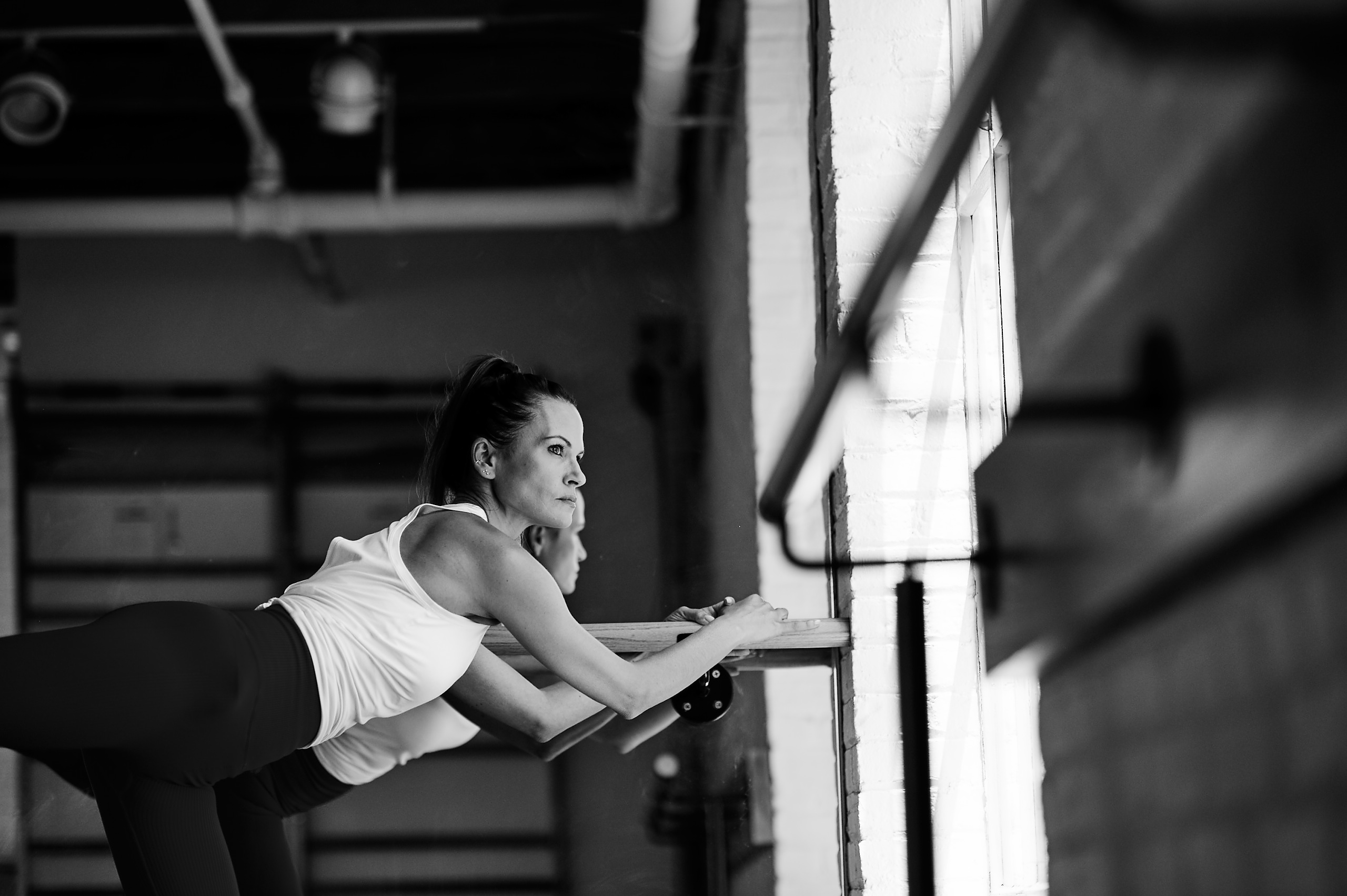
Our Method also strengthens postural muscles during isometric exercises like arabesque, pretzel under the barre, and flat back.
Holding onto or pressing into the barre (actively resisting against it) strengthens key postural muscles, including the lower trapezius, latissimus dorsi, and rhomboids, through controlled isometric engagement.
Finally, every part of class involves the core, and our instructors are trained to ensure everyone is working with proper alignment.
Barre helps with back pain, too
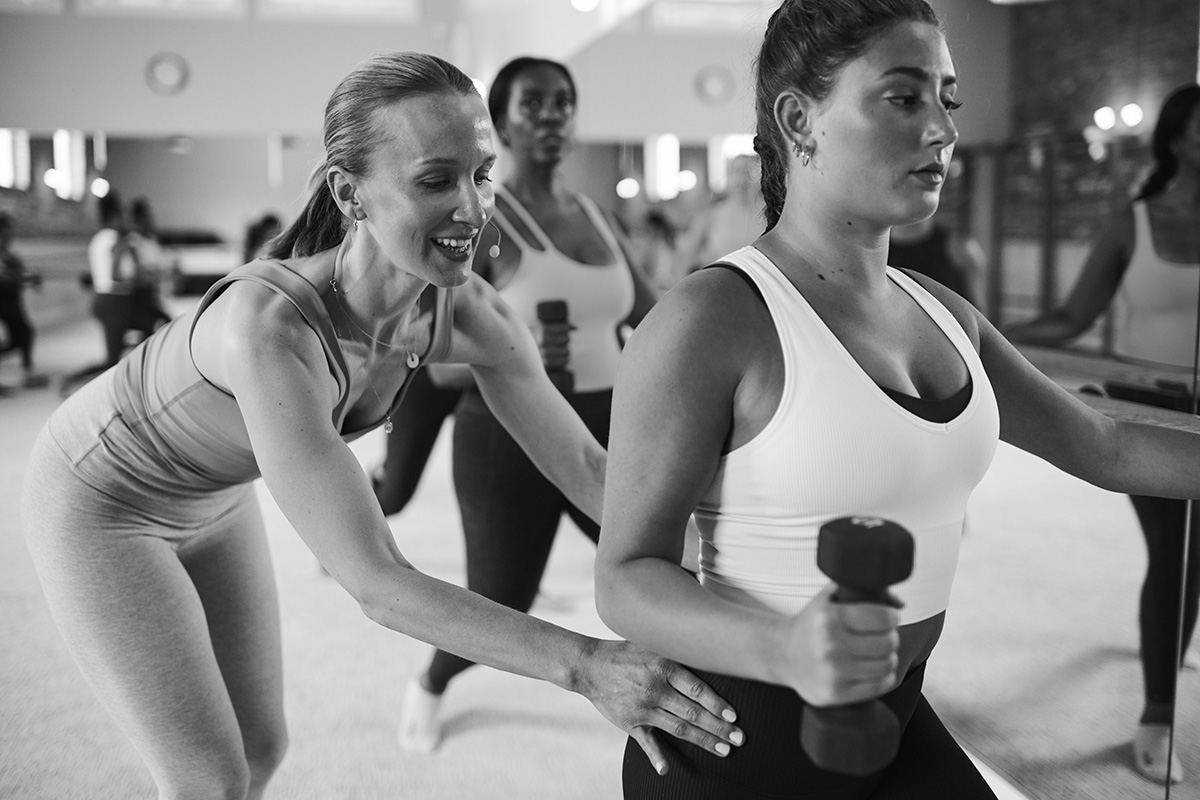
It’s true! Instructors emphasize proper alignment and form during every movement to both protect and strengthen the spine, core, and back muscles. They’re also trained in anatomy, so they can offer personalized guidance, including adjustments and modifications for injuries or muscle imbalances.
Plus, every Bar Method exercise and workout is programmed alongside kinesiologists and physical therapists to ensure safety and effectiveness.
Putting barre into practice: The 3-2-8 method
The 3-2-8 method is a popular framework for encouraging regular movement and a balanced fitness routine. This allows you to build deep postural and back strength while still supporting recovery, balance, and long-term sustainability. Here’s how it breaks down:
- Three strength-training workouts per week
- Two low-impact or recovery-focused workouts per week
- 8,000 steps per day (or a similar daily movement goal)
While there’s no right or wrong way to plan your workout split, the 3-2-8 framework can be a useful tool for getting started and establishing a regular fitness routine.
How to incorporate barre into your routine
The best part about barre and the 3-2-8 framework is that it gives you the flexibility to build a routine that works for you, your schedule, and your fitness goals.
The Bar Method can be used flexibly as either a strength day or a low-impact recovery session, depending on the class format you choose. You could opt for more intense, muscle-fatiguing classes like Bar Strength or Bar Method for your three strength workouts, or go for gentler, restorative styles like Bar Restore for your two low-impact or recovery days.
Here’s an example of a routine focused on building strength in the back muscles:
- Day 1: Bar Strength (or a back/full-body workout at the gym)
- Day 2: Bar Flow (or an invigorating yoga session)
- Day 3: Bar Method (or a back/full-body workout at the gym)
- Day 4: Rest day (with at least 8,000 steps)
- Day 5: Bar Strength (or a back/full-body workout at the gym)
- Day 6: Bar Restore (or a low-impact workout like walking or swimming)
- Day 7: Rest day (with at least 8,000 steps)
Barre back workout: 10 exercises for strength and definition
Let’s put it all together with 10 of our instructors’ favorite back-strengthening exercises. This workout includes a mix of bodyweight exercises and dumbbell exercises — try them at home or look out for them in your next studio session.
1. Push-ups
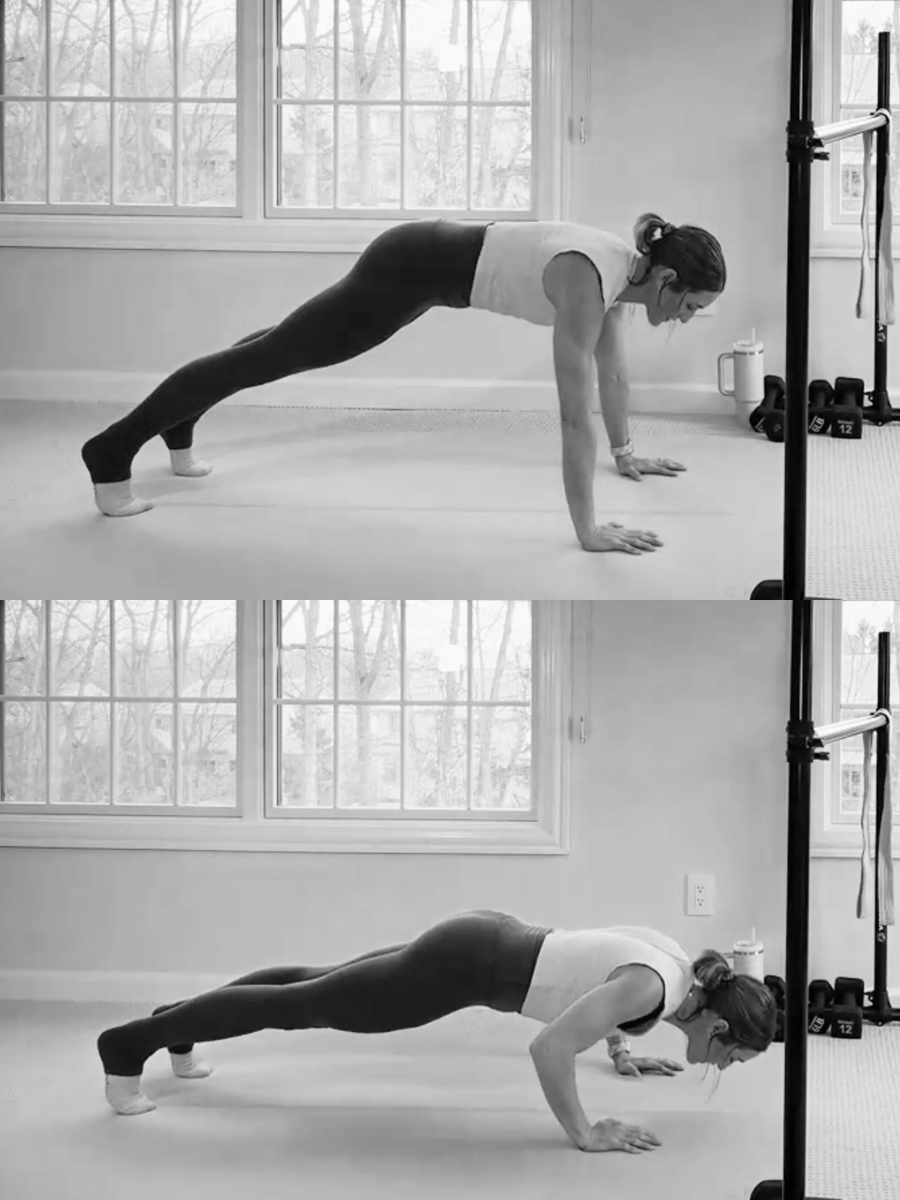
How to:
- Lie face down on the floor and place your hands below your shoulders with your feet hip-width apart. Straighten your legs for the most challenge, or perform push-ups on your knees if it allows you to sustain better form.
- Raise your hips in line with your ribs, grip your glutes, and pull in your abs. (Imagine there is a string connecting your belly button to your spine.)
- Bend your elbows diagonally toward your waist to perform the push-up. Slowly lower your body to the ground.
- Push away from the floor to slowly return to the starting position.
- Complete 15-40 reps.
2. Planks

3. Shoulder walks
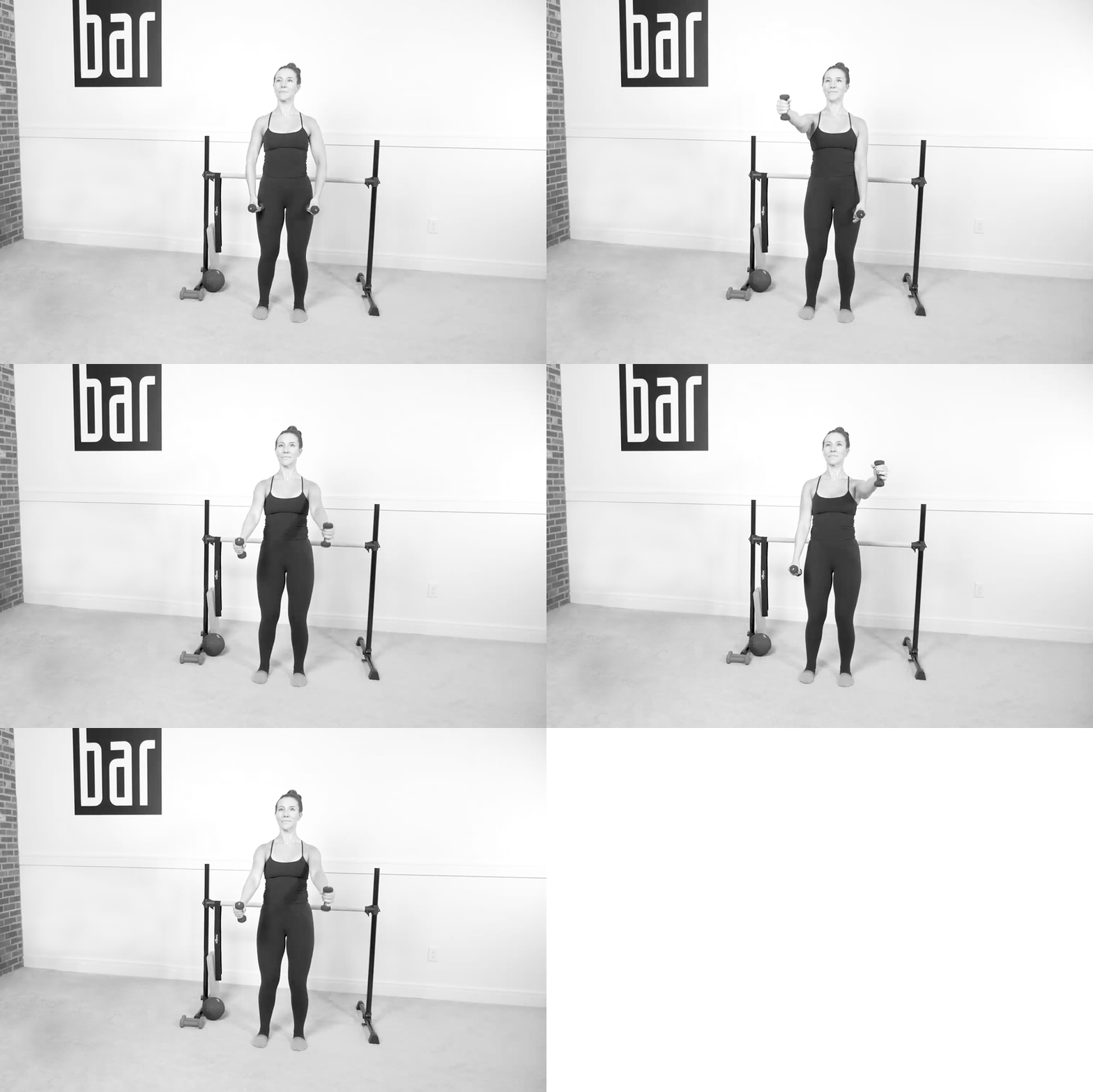
How to:
- Stand with your feet hip-width apart and pick up a set of light weights.
- Soften your knees, grip your glutes, and align your shoulders over your hips and feet.
- Straighten your arms on your thighs with your palms facing each other.
- Reach one arm straight out to shoulder height and begin to cross your arms at any pace that feels challenging yet controllable.
- To deepen the engagement in your chest, raise your arms higher than your shoulders at the top (stop short of vertical). Tap your thighs or the sides of them at the bottom.
- Cross at your preferred tempo for up to three minutes.
4. Bent-elbow lifts
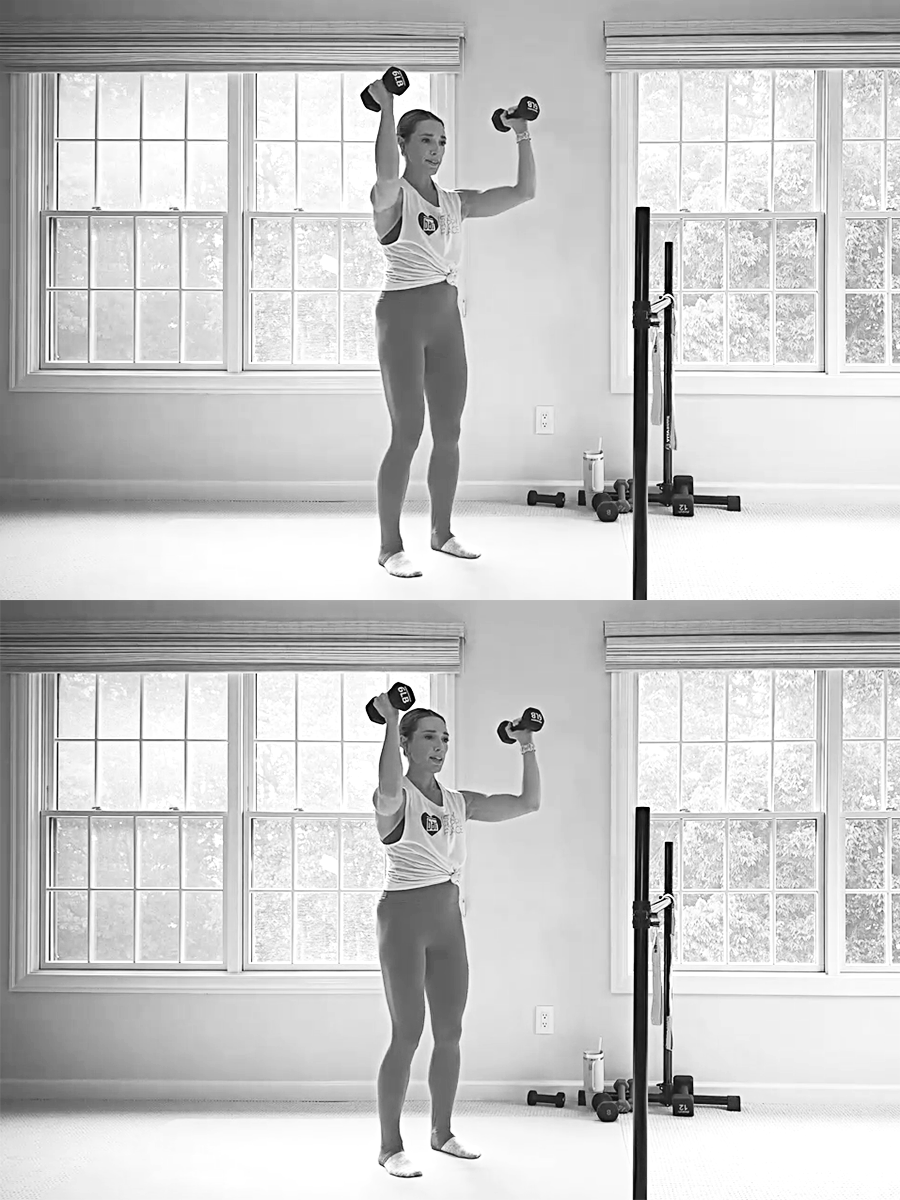
How to:
- Hold a pair of weights in each hand.
- Place your arms at a 90-degree angle and raise your elbows to shoulder height.
- Move your arms up an inch and down an inch at a time.
- Complete up to 5 sets of 8 reps at a time. Reset your elbows down to your waist between sets to allow your shoulders a moment to recover.
5. Snow angels
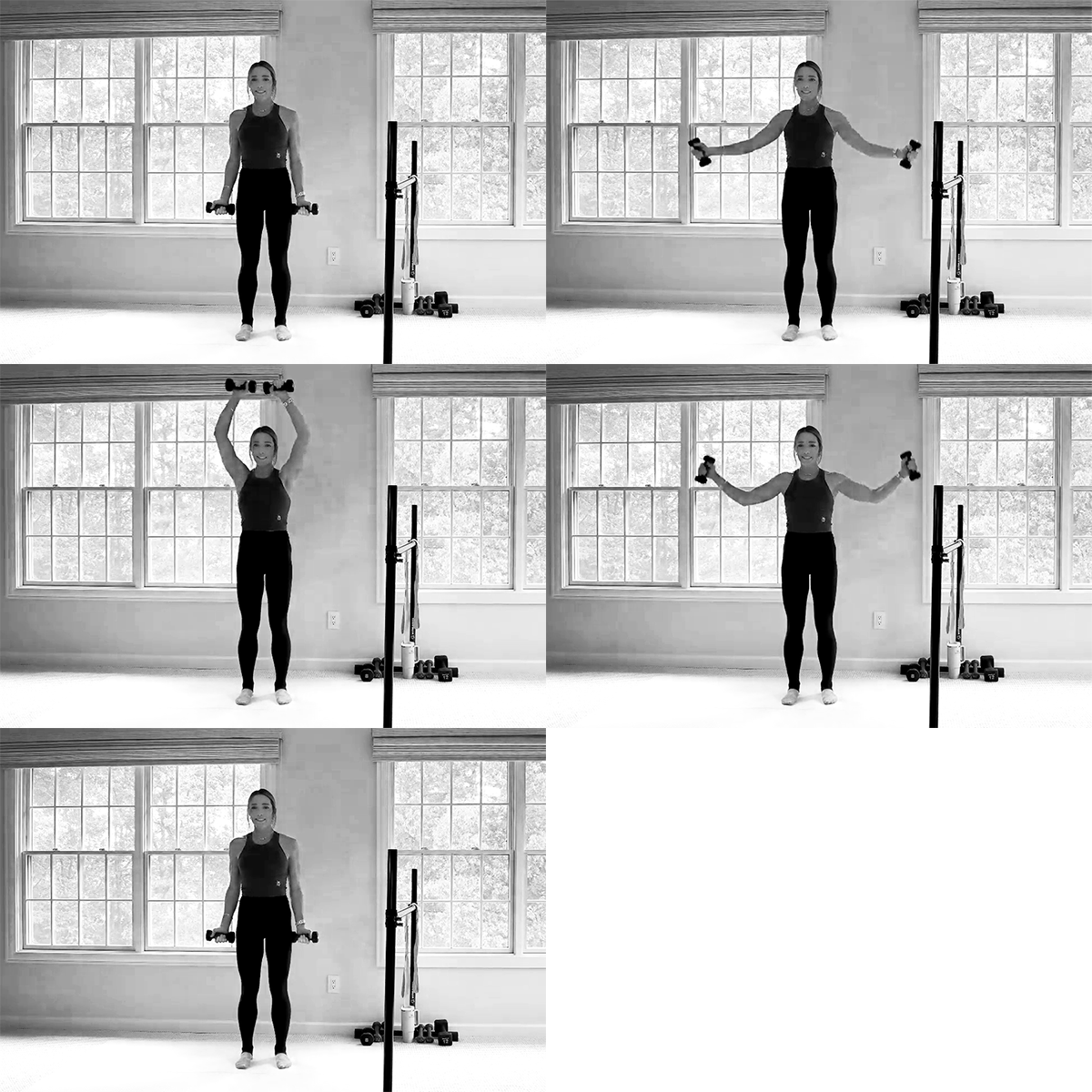
How to:
- Stand with your feet hip-width apart and pick up a set of light weights.
- Soften your knees, grip your glutes, and align your shoulders over your hips and feet.
- Place your hands to the outside of your thighs with your palms facing forward and soften your elbows.
- At a slow pace, draw both arms outward and upward to meet overhead and lightly tap your weights together before coming back down.
- Perform for one to two minutes.
6. Bicep curls
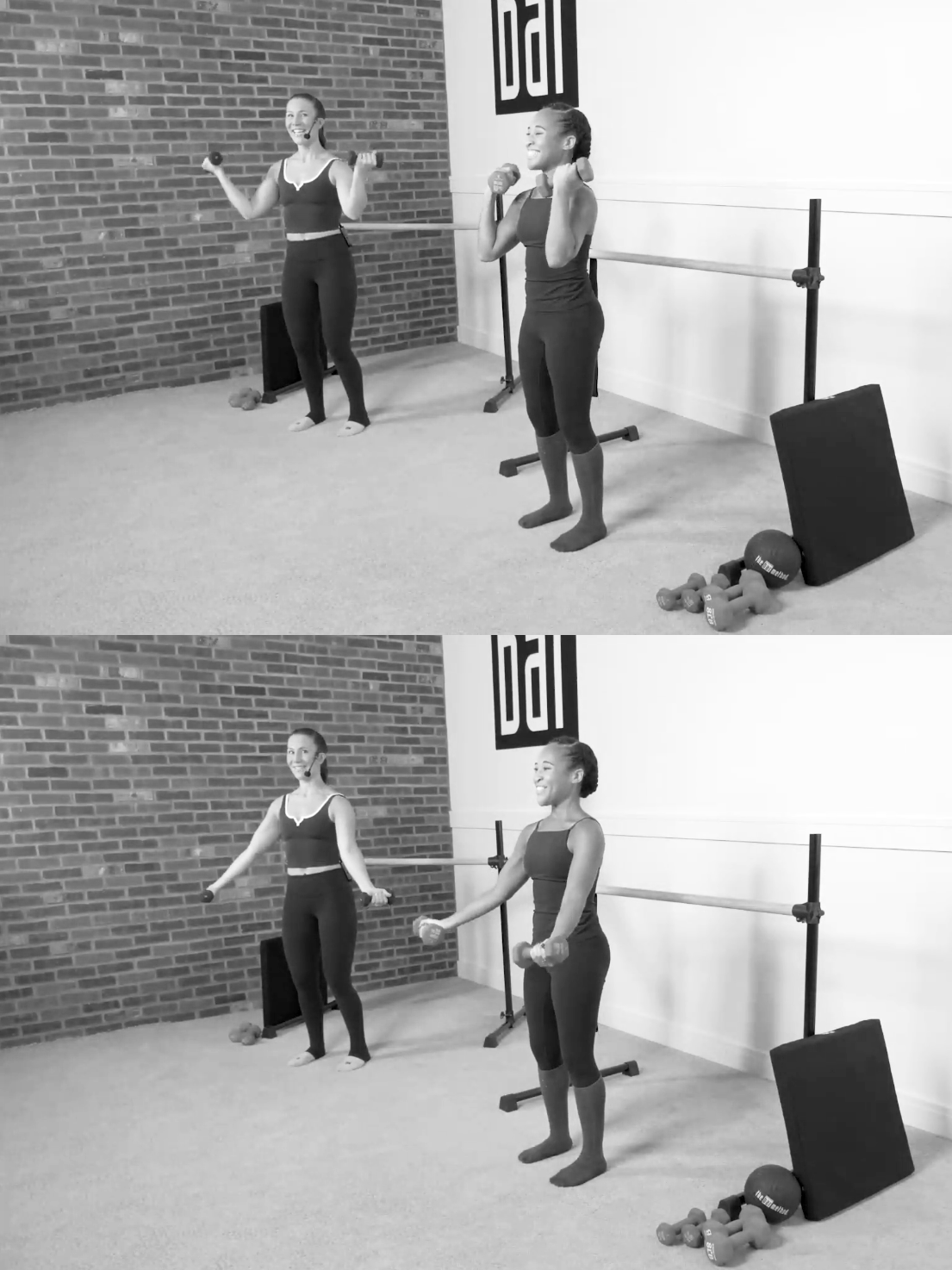
How to:
- Hold one weight in each hand with an underhand grip.
- Draw your weights a foot off of your thighs and keep your elbows floating in front of your ribs.
- Curl your weights up toward your shoulders, and extend fully as you uncurl. Keep your upper arms completely still throughout and avoid rocking your upper body back and forth.
- Complete 20-30 reps.
7. Tricep kickbacks
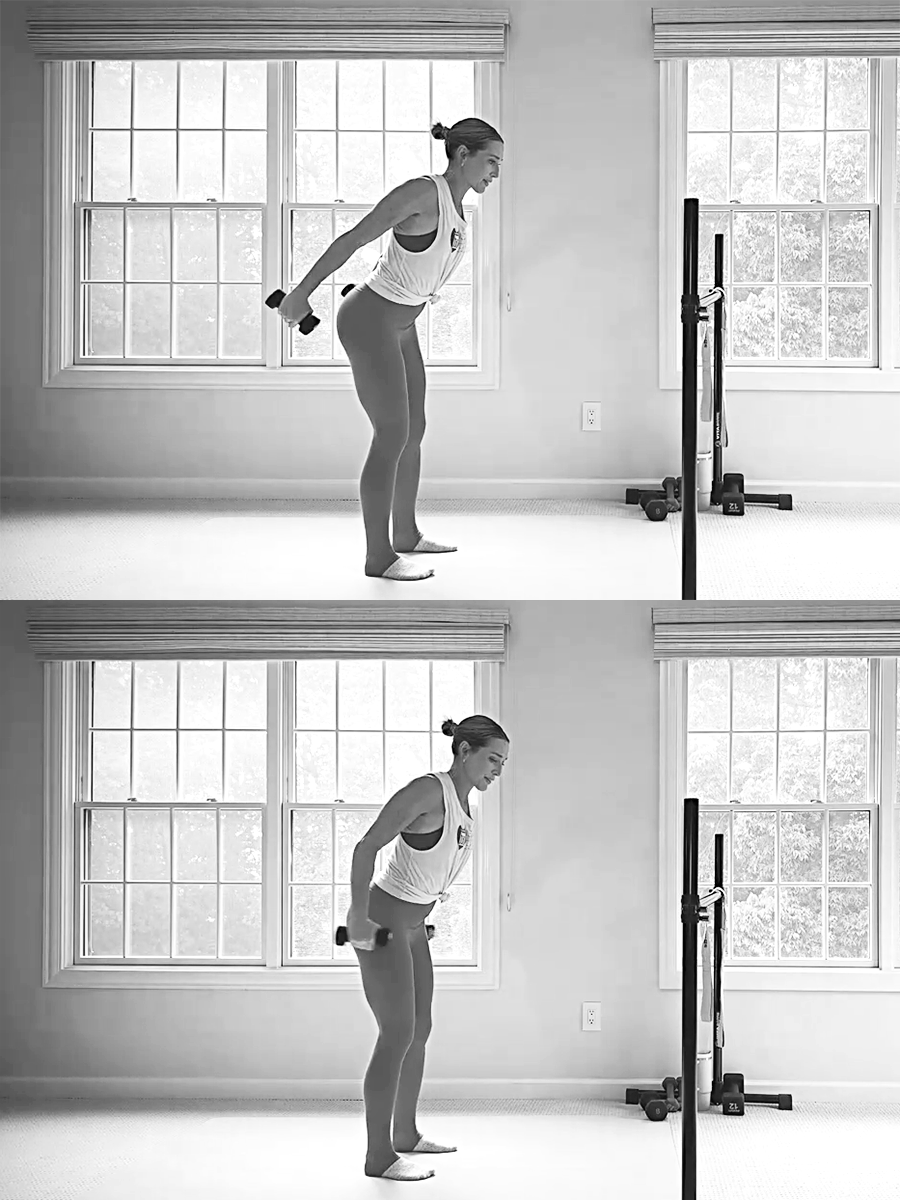
How to:
- Pick up a set of light weights.
- Place your feet hip-width apart and soften your knees.
- Hinge your torso forward on a slight diagonal and sweep your straight arms behind you, higher than the break of your hips.
- Maintain the height of your arms and perform small lifts, squeezes, or stretches for up to one minute.
8. Rhomboid pulls
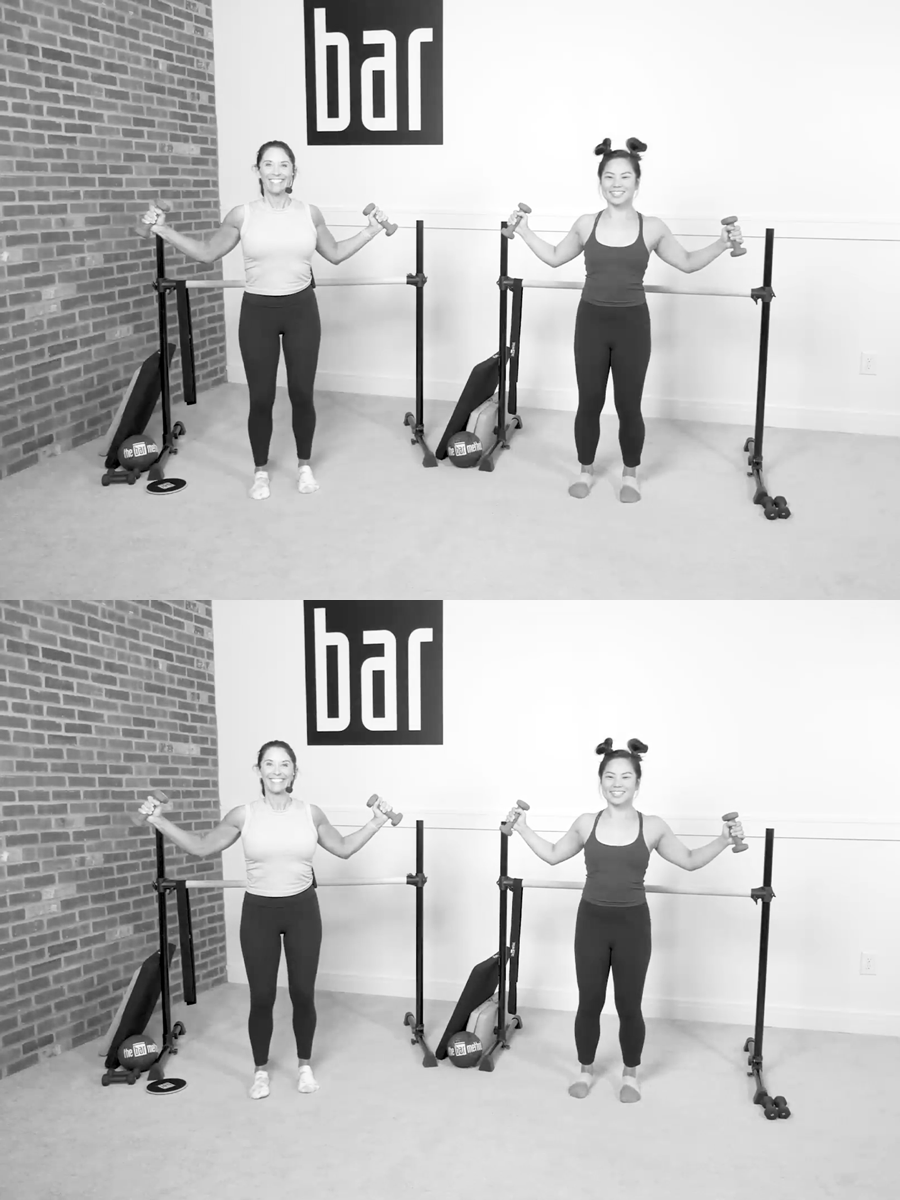
How to:
- Focus on bending your arms back into 90-degree angles and lifting your arms away from your torso until your elbows are 45 degrees lower than your shoulders.
- Pull your elbows behind the plane of your spine while keeping forearms parallel to the floor.
- Allow your weights to open slightly wider than your elbows, and angle your weights diagonally in towards each other.
- Pull your elbows toward one another in a one-inch motion back.
- Complete 20-30 reps.
9. Chair
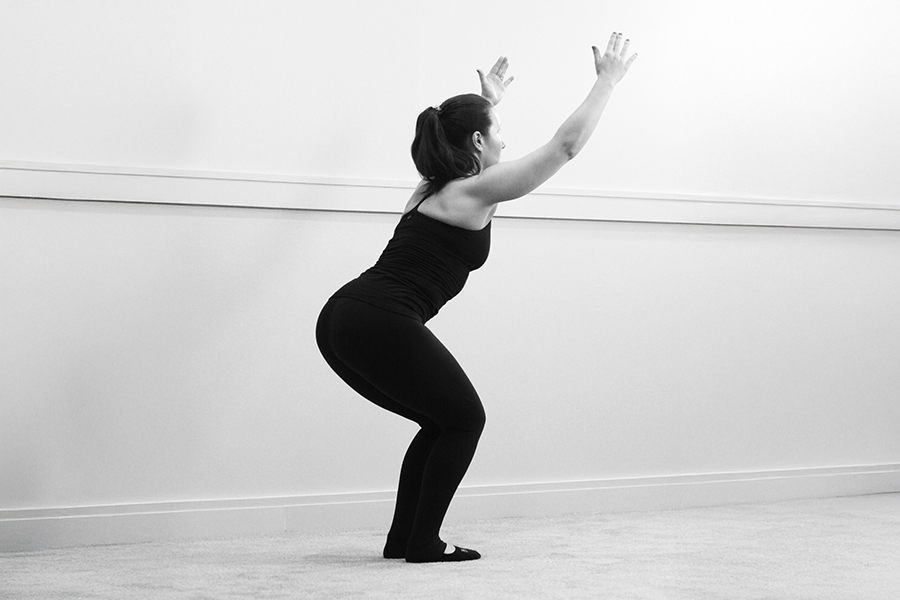
How to:
- Face the barre and hold on with an overhand grip.
- Walk your feet forward to align your toes with the barre.
- Straighten your arms and bend your knees like you’re sitting in a chair.
- Keep your back upright as you hold, or perform 1-inch movements down and up.
- Hold for 30 seconds, or as long as you can without sacrificing form.
10. Arabesque
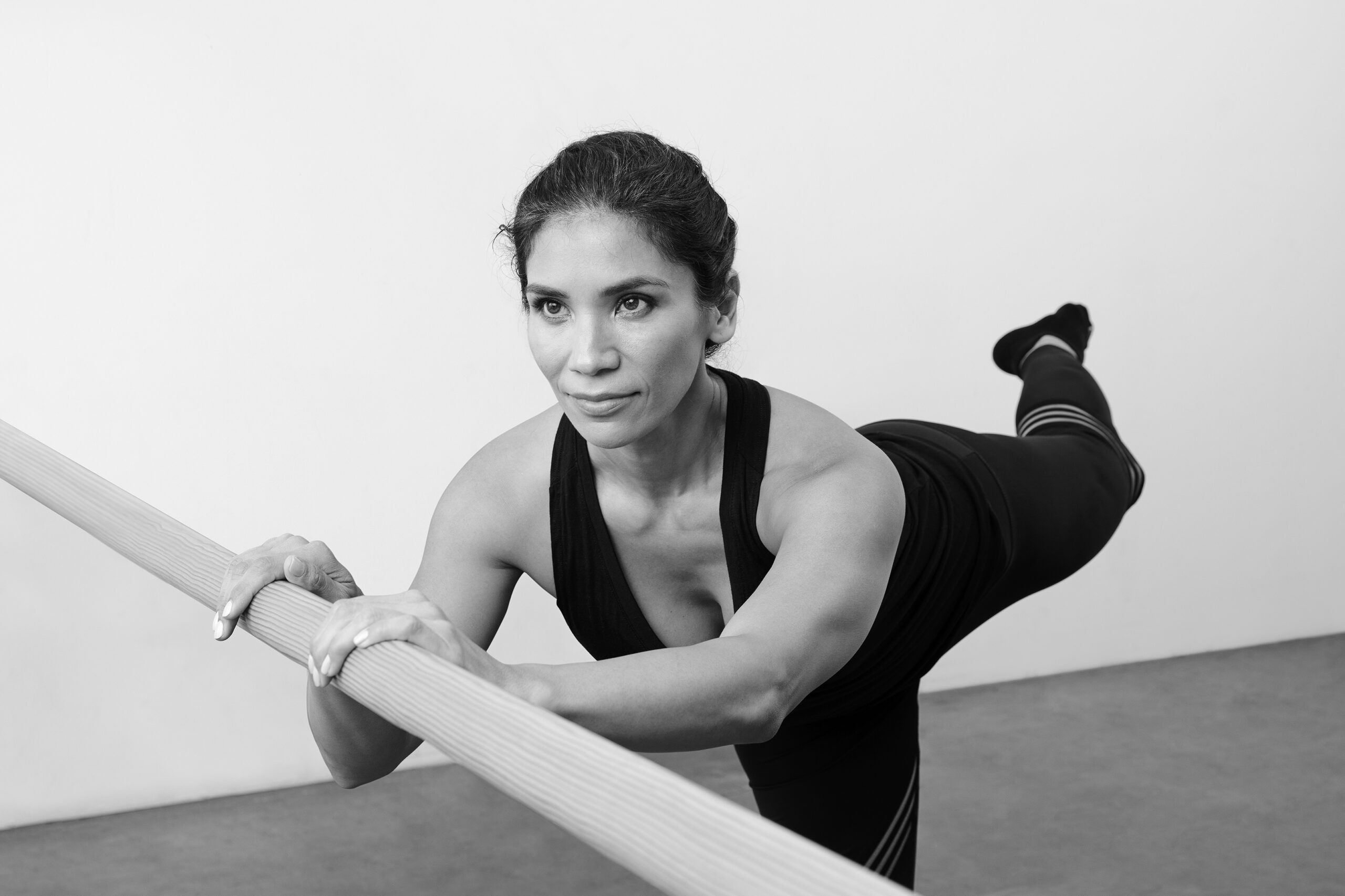
How to:
- Rest your hands on your support and stand an arm’s length away.
- Place your feet in a wide V and soften your knees.
- Place your right foot on the floor behind you and maintain the turnout in your legs.
- As you raise your right leg to hip height, lower your torso down to nearly horizontal.
- Use the muscles under your shoulder blades to lift your head and upper torso.
- Lift your right hip slightly higher than your other hip.
- Square your ribs and shoulders toward your support to engage the muscles in your waist.
- Use the side of your glute to lift your leg at varying tempos.
- Perform for up to two minutes.
Build functional strength for life with barre back exercises
Every barre workout targets the deepest muscles to support your spine and core — and ultimately, your whole body — through every movement in and out of the studio.
With consistent practice, barre workouts not only strengthen your back and core muscles but also lead to better posture, more efficient movement, and ultimately, confidence that shows up in your everyday life. (Think: strength to move that heavy box in your attic, pick up your child, or simply carry you through the workday.) When it comes to strength, we’ve got your back!
More strength tips for you
- How Barre Workouts Target Back Muscles and Help You Become Your Strongest Self
- What Is Isometric Exercise? The Secret to Barre Results
- Achieving Together: Benefits of Working Out in a Group
Get strong results you can see and feel — try our Method at your nearest Bar Method studio.